
Relationship Processes: 5 Relationship Counter Intentions That May Influence Trust, Communication and Success
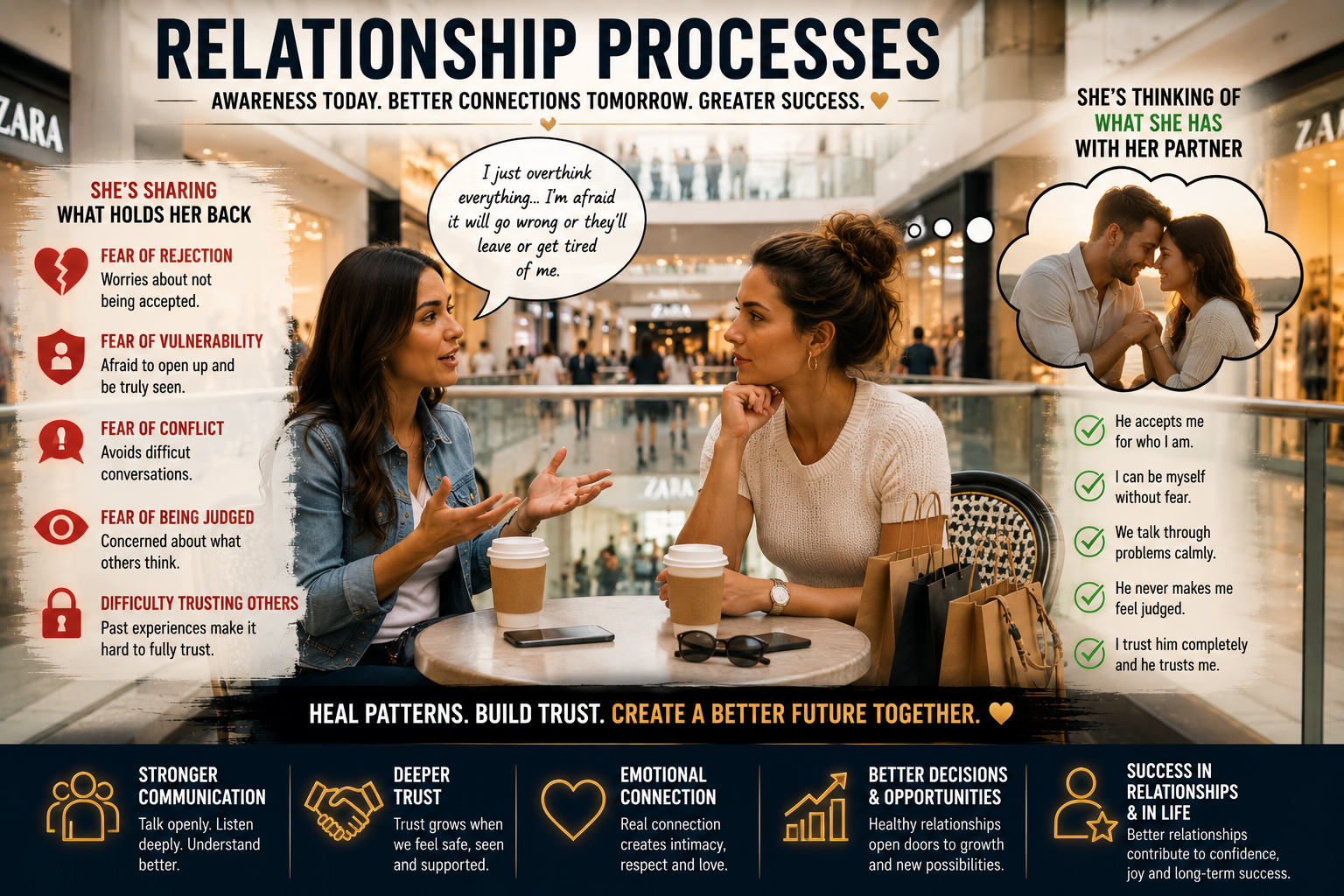
Many people view relationships as separate from personal success, confidence, opportunity, and personal growth. However, communication, trust, emotional connection, and relationship patterns often influence many areas of life.
The Relationship Processes are designed to help participants better understand Relationship Counter Intentions that may affect communication, trust, confidence, emotional connection, and relationship satisfaction.
According to the Relationship Processes framework, individuals may consciously desire healthy relationships, strong communication, and meaningful connection while simultaneously carrying subconscious patterns that influence behaviour in conflicting ways.
These patterns may affect not only personal relationships but also confidence, decision-making, leadership, teamwork, business partnerships, and opportunity recognition.
In this guide, we’ll explore how Relationship Counter Intentions may influence trust, communication, personal growth, and life success, and why many participants view self-awareness as an important foundation for stronger relationships and better outcomes.
How Relationships Influence Daily Decisions
Many people think of relationships as something separate from success, confidence, decision-making, and personal growth. In reality, relationships influence many aspects of daily life.
Communication, trust, emotional connection, and relationship confidence often affect how individuals make decisions, pursue opportunities, solve problems, and interact with others.
Healthy relationships can provide support, encouragement, feedback, accountability, and emotional stability. Challenging relationship patterns may sometimes create stress, uncertainty, conflict, or hesitation when important decisions need to be made.
Whether in personal relationships, business partnerships, friendships, family relationships, or professional environments, the quality of communication and trust often influences outcomes.
The Relationship Processes encourage participants to explore how subconscious relationship patterns may affect these interactions and influence everyday decisions.
Many participants discover that greater awareness of relationship dynamics can improve communication, strengthen confidence, and support healthier personal and professional relationships.
What Are Relationship Counter Intentions?
Relationship Counter Intentions are one of the central concepts explored throughout the Relationship Processes.
The term refers to subconscious patterns that may influence communication, trust, emotional connection, confidence, and relationship experiences while working against conscious relationship goals.
For example, a person may consciously want stronger relationships, better communication, and deeper connection while simultaneously carrying fears, expectations, beliefs, or emotional habits that influence behaviour in conflicting ways.
Many people describe these patterns as emotional blocks, relationship challenges, or recurring relationship issues. Within the Relationship Processes framework, they are referred to as Relationship Counter Intentions because they may influence behaviour beneath conscious awareness.
These patterns can affect how people communicate, respond to conflict, express emotions, build trust, and develop meaningful connections with others.
The purpose of identifying Relationship Counter Intentions is not to assign blame or create labels. Instead, the goal is to develop greater awareness of the patterns that may influence relationship experiences and personal growth.
5 Relationship Counter Intentions That May Influence Trust, Communication and Success
Many relationship challenges can often be traced back to recurring subconscious patterns that influence communication, trust, confidence, and decision-making.
Below are five commonly discussed Relationship Counter Intentions that may affect personal and professional relationships.
1. Fear of Rejection
The desire for connection may sometimes be accompanied by a fear of criticism, rejection, or disappointment. This can influence communication and willingness to express thoughts openly.
2. Fear of Vulnerability
Many people want deeper relationships while simultaneously feeling uncomfortable sharing emotions, concerns, or personal experiences.
3. Fear of Conflict
Avoiding difficult conversations may feel safer in the short term, but unresolved issues can often affect trust and communication over time.
4. Fear of Being Judged
Concerns about criticism or disapproval may influence how openly people communicate and participate in relationships.
5. Difficulty Trusting Others
Past experiences, disappointments, and learned beliefs may sometimes make it difficult to fully trust others, affecting communication, teamwork, and relationship satisfaction.
The Relationship Processes encourage participants to become more aware of these patterns while exploring how they may influence relationships, confidence, communication, and long-term success.
Communication, Trust and Opportunity Recognition
Communication and trust influence far more than personal relationships. They often affect professional relationships, leadership opportunities, business partnerships, teamwork, networking, and personal confidence.
People who communicate clearly and build trust effectively are often better positioned to develop meaningful relationships and recognise opportunities that align with their goals.
Strong communication can help individuals express ideas more confidently, resolve misunderstandings more effectively, and build stronger connections with colleagues, clients, friends, family members, and partners.
Trust also plays an important role in opportunity recognition. Whether someone is considering a new career path, business partnership, leadership role, or personal relationship, trust often influences decision-making and willingness to move forward.
According to the Relationship Processes framework, Relationship Counter Intentions may sometimes influence how people approach opportunities, relationships, communication, and collaboration.
Many participants discover that improving communication and trust creates positive effects across multiple areas of life, including relationships, confidence, teamwork, leadership, and personal growth.
How Healthy Relationships Support Personal Growth
Healthy relationships often create an environment where personal growth becomes easier to pursue.
Supportive relationships can encourage learning, confidence, accountability, emotional resilience, and personal development. They can also provide valuable feedback and perspective during challenging situations.
When communication is strong and trust is present, individuals often feel more comfortable pursuing goals, taking calculated risks, learning new skills, and exploring new opportunities.
Healthy relationships do not eliminate challenges or guarantee success. However, they often provide encouragement and emotional support that can help individuals navigate uncertainty more effectively.
The Relationship Processes encourage participants to examine the subconscious patterns that may influence communication, trust, confidence, and emotional connection while developing greater self-awareness and emotional intelligence.
Many participants find that improving relationship awareness supports not only stronger relationships but also broader personal development and life satisfaction.
Potential Benefits of Relationship Processes
People participate in the Relationship Processes for many different reasons.
Some individuals are interested in improving communication and trust, while others want to develop greater confidence, emotional awareness, self-awareness, and relationship effectiveness.
Potential areas of focus may include:
Improved Communication
Participants often develop greater awareness of how communication patterns influence relationships and daily interactions.
Increased Relationship Confidence
Greater awareness can help individuals feel more confident expressing themselves, setting boundaries, and building meaningful connections.
Stronger Trust and Emotional Connection
Many participants report becoming more conscious of the factors that influence trust, vulnerability, and relationship satisfaction.
Greater Self-Awareness
Understanding Relationship Counter Intentions may help individuals recognise patterns that influence communication, confidence, and emotional responses.
Improved Personal and Professional Relationships
The concepts explored in the Relationship Processes can often be applied to romantic relationships, friendships, family relationships, business partnerships, and workplace communication.
Personal Growth and Emotional Intelligence
Many participants view the Relationship Processes as both a relationship development program and a broader personal growth experience.
Because every participant has different goals and circumstances, outcomes will naturally vary. However, many people value the opportunity to better understand the patterns that may influence communication, trust, confidence, and relationship success.
Relationship Processes and Success
Success is often influenced by more than skills, knowledge, education, or experience. Relationships, communication, trust, and emotional intelligence can also play important roles in personal and professional outcomes.
Strong relationships often create opportunities for collaboration, mentorship, leadership, networking, teamwork, and personal development. People who communicate effectively and build trust frequently find it easier to create meaningful connections and work successfully with others.
The Relationship Processes do not claim to create success directly. Instead, they encourage participants to develop greater awareness of the patterns that may influence communication, trust, confidence, and relationship effectiveness.
Many participants discover that improving relationship awareness supports better decision-making, stronger communication, greater confidence, and healthier interactions with others.
For this reason, many people view relationship development as an important part of long-term personal growth, leadership, career development, and overall life satisfaction.
Frequently Asked Questions About Relationship Processes
What are Relationship Processes?
Relationship Processes are a personal development program designed to help participants better understand Relationship Counter Intentions that may influence communication, trust, emotional connection, confidence, and relationship satisfaction.
What are Relationship Counter Intentions?
Relationship Counter Intentions are subconscious patterns that may influence relationship behaviours, communication, trust, emotional responses, and personal interactions.
Are Relationship Processes only for romantic relationships?
No. Many participants apply the concepts to romantic relationships, friendships, family relationships, workplace relationships, business partnerships, and communication in general.
Can Relationship Processes help improve communication?
Many participants report gaining greater awareness of communication patterns and relationship dynamics. Individual experiences and outcomes will vary.
Who are Relationship Processes designed for?
The program may be suitable for individuals interested in communication, trust, emotional intelligence, self-awareness, personal development, and relationship growth.
Recommended Resources
If you found this guide helpful, the resources below can help you continue exploring Relationship Processes, communication, trust, emotional connection, and personal development.
Most Relevant Resources
👉 Relationship Processes Review
Related Kevin Trudeau Programs
👉 Accelerator Processes Review
Additional Learning Resources
👉 Kevin Trudeau Money Processes Review
👉 3 Keys to Internet Millions Review
External Resources
👉 Get access to Kevin Trudeau’s Relationship Processes
Final Thoughts on Relationship Processes
The Relationship Processes are designed to help participants develop greater awareness of the subconscious patterns that may influence communication, trust, emotional connection, confidence, and relationship satisfaction.
Many people spend years focusing on external relationship advice while overlooking the beliefs, expectations, habits, and emotional responses that may influence relationship experiences.
The concept of Relationship Counter Intentions encourages individuals to explore these patterns and better understand how they may affect communication, trust, vulnerability, confidence, and personal growth.
The purpose of the Relationship Processes is not to guarantee specific outcomes. Instead, the program focuses on awareness, personal development, and understanding the subconscious influences that may contribute to relationship experiences.
Many participants find that increased awareness leads to more intentional communication, stronger relationships, greater confidence, and healthier interactions with others.
Whether you are interested in communication, trust, emotional connection, relationship confidence, or personal growth, the Relationship Processes provide a framework for exploring the patterns that may influence relationships and long-term fulfilment.
Pingback: 3 Keys to Internet Millions – Kevin Trudeau Wealth System