How to Build Self-Confidence Naturally: 10 Proven Strategies for Personal Growth
Self-confidence plays a major role in personal success, relationships, career growth, and overall wellbeing. People with strong self-confidence tend to make decisions more easily, communicate more effectively, and pursue opportunities that others may avoid. The good news is that confidence is not something people are simply born with. It is a skill that can be developed and strengthened over time.
Many people searching for ways to build self-confidence naturally are looking for practical strategies they can apply in everyday life. The ability to build self-confidence naturally often comes from consistent action, personal growth, and developing a stronger belief in your abilities over time.
If you have ever wondered how to build self-confidence naturally, this guide explores practical strategies that can help improve self-belief, overcome self-doubt, and support long-term personal growth. Whether your goal is greater confidence at work, stronger relationships, improved communication skills, or increased personal success, the strategies below can help you develop lasting confidence and a more positive mindset.
Learning how to build self-confidence naturally is not about becoming perfect. It is about creating positive habits, strengthening self-awareness, and consistently taking action that supports long-term growth and personal development.
Table of Contents
What Is Self-Confidence?
Self-confidence is the belief in your ability to handle challenges, make decisions, and achieve goals. It does not mean thinking you are perfect or better than others. Instead, it means trusting yourself and recognizing your strengths while continuing to learn, improve, and grow.
People with healthy self-confidence are often more resilient when facing setbacks because they understand that mistakes are part of personal growth rather than evidence of failure. Confidence allows individuals to take action despite uncertainty and maintain a positive outlook when facing challenges.
Confidence is not a fixed personality trait. It can be developed through experience, learning, self-awareness, and consistent action. By strengthening confidence over time, individuals often become more willing to pursue opportunities, develop new skills, and work toward meaningful goals.
Those who build self-confidence naturally often develop greater emotional resilience, stronger communication skills, and a healthier relationship with themselves and others.
Why Self-Confidence Matters
Strong self-confidence can positively impact nearly every area of life, including career advancement, personal relationships, communication skills, emotional wellbeing, and decision-making. Individuals who believe in their abilities are often more willing to take action, embrace challenges, and pursue opportunities that support personal and professional growth.
Self-confidence also plays an important role in resilience. Confident individuals are more likely to view setbacks as learning experiences rather than permanent failures. This mindset allows them to recover more quickly from challenges and maintain momentum toward their goals.
Developing confidence creates a positive cycle where small successes lead to greater belief in your abilities, which then encourages further growth and achievement. Over time, this process can contribute to higher levels of success, satisfaction, and personal fulfilment.
Many people who successfully build self-confidence naturally discover that confidence influences not only how they see themselves but also how they interact with others and respond to opportunities.
"Confidence doesn't come from never failing. It comes from proving to yourself, one action at a time, that you are capable of handling whatever comes next."
Kevin Trudeau's Teaching Tweet
The Building Blocks of Self-Confidence
Self-confidence is built through consistent action rather than waiting to feel ready. The qualities below help strengthen confidence over time.
| Confidence Builder | How It Helps |
|---|---|
| Self-Awareness | Recognise strengths, weaknesses, and opportunities for growth. |
| Positive Habits | Create momentum through consistent daily action. |
| Courage | Build confidence by taking action despite fear. |
| Personal Growth | Develop new skills and increase resilience. |
| Consistency | Small daily improvements create long-term confidence. |
Confidence grows every time you choose progress over perfection and action over hesitation.
10 Proven Strategies to Build Self-Confidence Naturally
1. Keep Promises to Yourself
One of the fastest ways to build self-confidence naturally is to follow through on the commitments you make to yourself. Whether it is exercising regularly, learning a new skill, waking up earlier, or completing a small daily task, keeping your promises strengthens self-trust.
Every time you follow through, you create evidence that you are capable, reliable, and disciplined. Over time, this evidence builds confidence because you begin to trust yourself more deeply.
Start with small promises you can realistically keep. Consistent action matters more than dramatic changes. As your self-trust grows, your confidence will naturally become stronger and more sustainable.
2. Focus on Progress, Not Perfection
Many people struggle with confidence because they expect perfection from themselves. When perfection becomes the standard, even small mistakes can feel like failures. This often creates self-doubt and prevents people from taking action.
Instead of focusing on perfection, focus on consistent progress. Small improvements made regularly often create greater confidence than waiting for perfect results. Every step forward provides evidence that you are capable of learning, growing, and improving.
Building self-confidence naturally requires patience and persistence. The goal is not to be perfect but to become better than you were yesterday. Over time, these small improvements can lead to significant personal growth and stronger self-belief.
3. Challenge Negative Self-Talk
The way you speak to yourself has a powerful impact on confidence. Negative self-talk can undermine self-belief, create unnecessary fear, and reinforce limiting beliefs that hold you back from achieving your goals.
Pay attention to your internal dialogue and identify patterns of negative thinking. When you catch yourself thinking something overly critical or unrealistic, challenge that thought and replace it with a more balanced perspective.
Positive self-talk does not mean pretending everything is perfect. It means developing a realistic and supportive mindset that encourages growth and resilience. Over time, improving your internal dialogue can significantly strengthen self-confidence and emotional wellbeing.
4. Develop New Skills
Learning new skills is one of the most effective ways to build self-confidence naturally. Every new skill acquired provides evidence that you are capable of growth, improvement, and achievement.
Whether you learn public speaking, a new language, leadership skills, or a professional qualification, developing competence naturally increases confidence. The more capable you become, the more comfortable you will feel facing challenges and pursuing opportunities.
Continued learning also helps expand your comfort zone. As you gain experience and knowledge, tasks that once seemed intimidating often become easier and more manageable, leading to greater confidence over time.
5. Set Achievable Goals
Setting achievable goals helps create momentum and provides regular opportunities for success. Large goals can sometimes feel overwhelming, but breaking them into smaller steps makes progress easier to measure and celebrate.
Every goal achieved reinforces positive beliefs about your abilities. These small victories help build confidence and encourage continued action toward larger objectives.
When building self-confidence naturally, focus on goals that are challenging enough to encourage growth but realistic enough to achieve. Consistent success creates a strong foundation for long-term confidence and personal development.
6. Take Care of Your Physical Health
Physical health and self-confidence are closely connected. Regular exercise, quality sleep, and proper nutrition can improve energy levels, mood, and overall wellbeing. When you feel physically stronger and healthier, it often becomes easier to approach challenges with confidence and maintain a positive mindset.
Exercise is particularly beneficial because it helps reduce stress, improve mental clarity, and create a sense of accomplishment. Even small improvements in physical health can positively influence how you view yourself and your abilities.
Taking care of your body is also a form of self-respect. By prioritising your health, you reinforce the belief that you are worthy of care and attention, which can contribute to stronger self-confidence over time.
7. Surround Yourself with Positive Influences
The people around you can significantly influence how you see yourself and your potential. Spending time with supportive, encouraging, and growth-oriented individuals can strengthen confidence and help you maintain motivation during challenging times.
Positive influences often provide constructive feedback, encouragement, and examples of what is possible. In contrast, constant negativity or criticism can undermine confidence and reinforce self-doubt.
Take time to evaluate the relationships and environments that shape your daily life. Surrounding yourself with people who encourage personal growth can make a meaningful difference in your confidence, mindset, and overall success.
8. Accept Failure as Part of Growth
Every successful person experiences setbacks, mistakes, and unexpected challenges. Rather than viewing failure as evidence that you are not capable, learn to see it as an opportunity for growth and learning.
Many people lose confidence because they interpret failure as a reflection of their worth. In reality, failure often provides valuable feedback that helps improve skills, decision-making, and future performance.
When building self-confidence naturally, it is important to understand that mistakes are a normal part of personal development. The willingness to learn from setbacks and continue moving forward is one of the key characteristics of confident and resilient individuals.
9. Practice Gratitude
Gratitude helps shift your focus away from what is lacking and toward what is already positive in your life. By recognising achievements, strengths, opportunities, and supportive relationships, you can create a more balanced and optimistic perspective.
Many people naturally focus on their weaknesses or mistakes, which can contribute to self-doubt. Practising gratitude helps counteract this tendency by highlighting progress and personal strengths.
Simple habits such as keeping a gratitude journal or reflecting on daily achievements can improve confidence and reinforce a more positive mindset over time.
10. Invest in Personal Development
Personal development is one of the most effective long-term strategies for building confidence. Books, courses, workshops, coaching programs, and educational resources can help increase self-awareness, strengthen mindset, and develop valuable skills.
As you continue learning and growing, you gain evidence that you are capable of improvement and success. This increased competence naturally contributes to stronger confidence and a greater willingness to pursue opportunities.
Many successful individuals actively invest in personal development because they understand that confidence is built through continuous learning, consistent action, and a commitment to becoming the best version of themselves.
The Connection Between Confidence and Personal Growth
Confidence and personal growth are closely connected. As individuals gain new experiences, develop skills, and overcome challenges, their confidence naturally increases. Likewise, increased confidence often encourages people to pursue larger goals and embrace new opportunities.
This creates a positive cycle where personal growth strengthens confidence, and confidence supports further personal growth. The more evidence you create that you can succeed, the stronger your belief in yourself becomes.
People who build self-confidence naturally often discover that confidence is not the result of a single achievement. Instead, it develops through consistent effort, learning, and a willingness to step outside their comfort zone. Every challenge overcome contributes to a stronger sense of self-belief and personal capability.
For this reason, many personal development experts encourage individuals to focus on continuous improvement rather than perfection. Small improvements made consistently over time often lead to significant changes in confidence, mindset, and overall success.
Confidence Building Methods Comparison
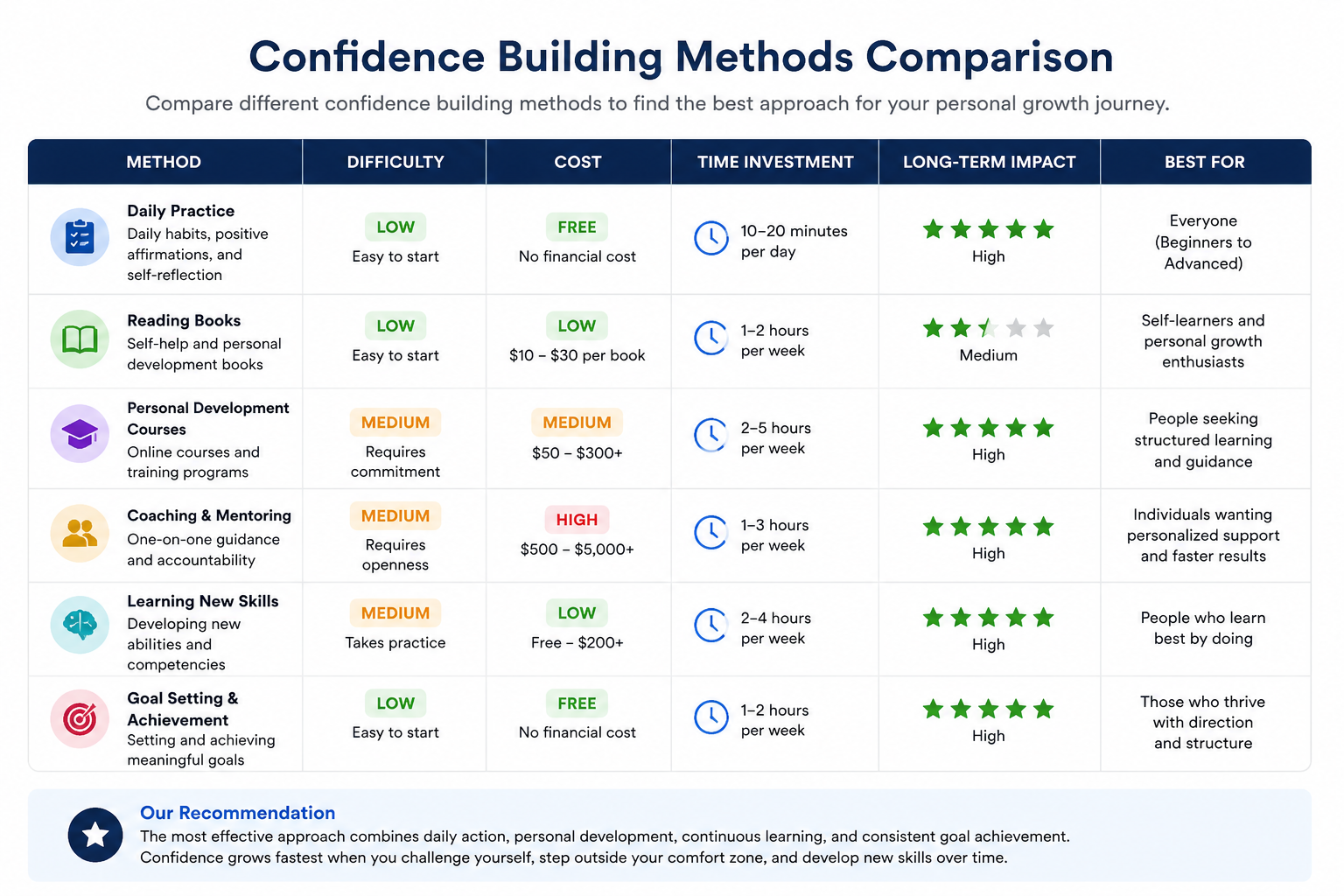
Our Recommendation:
The most effective approach combines daily action, personal development, continuous learning, and consistent goal achievement. Confidence grows fastest when individuals actively challenge themselves and develop new skills over time.
Recommended Resources for Building Confidence
If you found this guide helpful, the resources below can help you continue building self-confidence, personal empowerment, and long-term personal growth.
• Negative Thinking: 14 Hidden Ways It May Be Affecting Your Success
• How to Build Personal Power: 9 Practical Ways to Feel More Confident and in Control
• What Is Personal Empowerment? 7 Ways to Take Control of Your Life
• Overcoming Limiting Beliefs: 7 Proven Strategies for Personal Growth
• Goal Achievement: Why It Matters More Than Goal Setting
• 7 Powerful Success Habits of Highly Successful People
• 11 Signs You Are Holding Yourself Back (And How to Break Free)
Related Kevin Trudeau Programs
• Superpower Processes: 9 Powerful Benefits of Kevin Trudeau’s Live Training
• Accelerator Processes: 9 Powerful Benefits of Kevin Trudeau’s Live Training
• Money Processes: 9 Powerful Benefits of Kevin Trudeau’s Live Training
• Kevin Trudeau Products: 11 Popular Programs Reviewed in 2026
Additional Learning Resources
External Resources
• Positive Psychology – https://positivepsychology.com/
• James Clear – https://jamesclear.com/
• Mind Tools – https://www.mindtools.com/
• Harvard Business Review – https://hbr.org/
Frequently Asked Questions
Can self-confidence be developed?
Yes. Self-confidence is generally developed through repeated positive experiences, learning new skills, and taking consistent action despite uncertainty.
What causes low self-confidence?
Low self-confidence can be influenced by past experiences, limiting beliefs, negative self-talk, fear of failure, and a lack of self-awareness.
How long does it take to build confidence?
Confidence develops gradually. Consistent practice, personal growth, and small daily successes often create lasting improvements over time.
Which Kevin Trudeau program focuses most on confidence?
The Superpower Processes focus on activating positive qualities such as confidence, courage, self-belief, personal power, and emotional resilience.
Build Unshakable Self-Confidence
Need a Flexible Payment Option?
Many participants choose a payment plan so they can begin their personal development journey sooner. Explore the available options and choose the plan that best supports your goals.
Final Thoughts
Learning how to build self-confidence naturally is a lifelong journey that is not about becoming someone different. Instead, it involves developing trust in your abilities, strengthening your mindset, and taking consistent action toward your goals.
Confidence grows through experience, self-awareness, personal growth, and a willingness to step outside your comfort zone. Every small step forward helps create evidence that you are capable of handling challenges and achieving meaningful results.
By applying the strategies discussed in this guide and continuing to invest in your personal development, you can strengthen self-belief, improve resilience, and create greater success in both your personal and professional life.
Remember that confidence is not built overnight. It is developed through consistent action, continuous learning, and a commitment to becoming the strongest version of yourself. Those who build self-confidence naturally often discover that confidence becomes a foundation for success in every area of life.