7 Failure Habits That Keep Successful People Stuck (And How to Replace Them)
Most people know what they should do to improve their lives.
They know they should exercise regularly, save money, improve their relationships, start important projects, and follow through on their goals.
Yet many people find themselves repeating the same behaviours, making the same mistakes, and achieving the same results year after year.
The problem is not always a lack of knowledge.
In many cases, the problem is failure habits.
Failure habits are automatic behaviours, thought patterns, and routines that quietly work against success. They often operate below conscious awareness, making them difficult to recognize and even harder to change.
Many successful people struggle with failure habits. The difference is that highly successful people learn to identify these patterns and replace them with success habits that support growth and achievement.
In this guide, we’ll explore seven common failure habits that keep people stuck, why they develop, and practical ways to replace them with habits that support confidence, productivity, consistency, and long-term success.
What Are Failure Habits?
Failure habits are repeated behaviours, thoughts, and actions that consistently move a person away from their goals rather than toward them.
Many failure habits begin as small choices that become automatic over time. Eventually, they become part of a person’s daily routine and may continue operating without much conscious thought.
Examples include procrastination, negative self-talk, avoiding difficult conversations, fear-based decision making, and failing to follow through on commitments.
The challenge is that failure habits often feel normal because they have been repeated so many times. People may not realize these patterns are limiting their success until they begin actively examining their behaviour.
The good news is that habits can be changed. Once a person becomes aware of a habit, they can begin replacing it with a more productive and empowering alternative.
Why Smart People Still Struggle With Failure Habits
Intelligence does not automatically protect someone from failure habits.
Many highly capable people understand exactly what they should do but still struggle to consistently take action.
This happens because habits often operate independently of knowledge. A person may know that procrastination is harmful while continuing to procrastinate. They may understand the importance of confidence while continuing to engage in negative self-talk.
The gap between knowing and doing is where many failure habits live.
Changing behaviour requires more than information. It requires awareness, consistency, and a willingness to replace old patterns with new ones.
Why Failure Habits Are So Difficult to Change
Many people assume that changing behaviour should be simple.
If a person knows a habit is harmful, why don’t they simply stop?
The answer is that habits often become automatic through repetition.
The more frequently a behaviour is repeated, the more natural it feels. Eventually, the habit operates with very little conscious effort.
This is why people often continue procrastinating even when they know it is hurting their progress.
It is why people continue engaging in negative self-talk despite understanding the damage it causes.
Failure habits become familiar.
And people naturally move toward familiar behaviours, even when those behaviours no longer serve them.
The key to changing failure habits is awareness. Once people become aware of their automatic patterns, they can begin making different choices and creating new routines that support success.
"Your future is not determined by occasional success. It is shaped by the habits you choose to practise every day."
Kevin Trudeau's Teaching Tweet
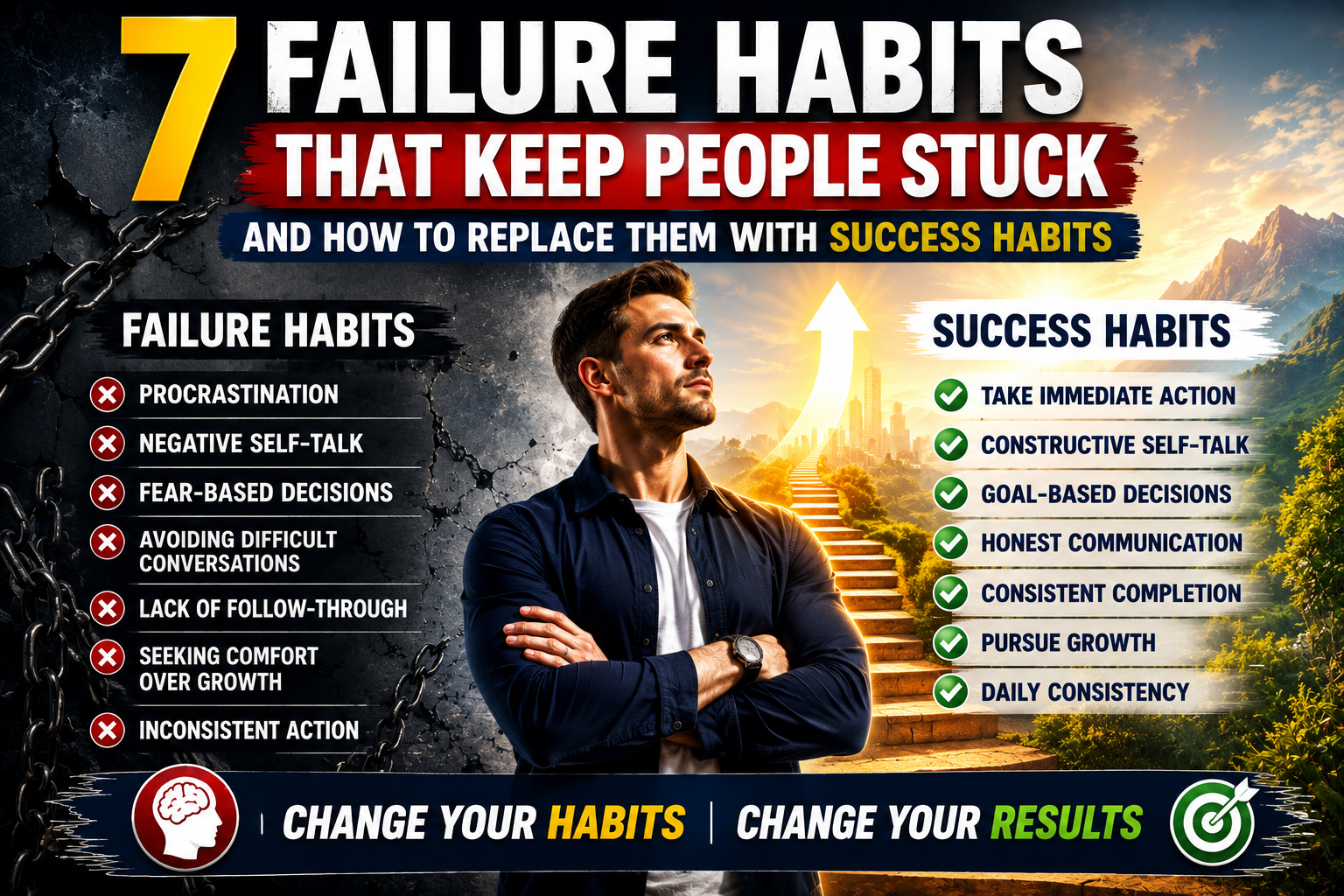
7 Failure Habits That Keep Successful People Stuck
1. Procrastination
Failure Habit:
Putting off important tasks until later.
Many people delay important actions because they feel overwhelmed, uncertain, or uncomfortable. Unfortunately, delayed action often creates stress, missed opportunities, and slower progress toward goals.
Success Habit:
Take one small action immediately.
Momentum is often created by action rather than motivation. Even a small step can help break the cycle of procrastination and build confidence.
2. Negative Self-Talk
Failure Habit:
Constantly criticizing yourself.
Negative self-talk can quietly undermine confidence, motivation, and decision-making. Over time, repeated self-criticism may become an automatic pattern that limits growth and achievement.
Success Habit:
Replace criticism with constructive feedback.
Instead of focusing on personal flaws, focus on what can be improved. Productive self-reflection encourages growth while maintaining confidence and self-respect.
3. Fear-Based Decision Making
Failure Habit:
Avoiding opportunities because of fear.
Fear often causes people to delay decisions, avoid challenges, or remain in situations that no longer serve them. While fear may provide temporary comfort, it can also prevent long-term growth.
Success Habit:
Make decisions based on long-term goals rather than short-term discomfort.
Successful people often acknowledge fear while continuing to take action toward meaningful goals.
4. Avoiding Difficult Conversations
Failure Habit:
Ignoring problems instead of addressing them.
Many personal and professional challenges become larger because people avoid conversations that need to happen. Avoidance may create temporary relief but often leads to greater stress later.
Success Habit:
Communicate early and honestly.
Direct communication helps build trust, resolve problems more quickly, and create healthier relationships.
5. Lack of Follow-Through
Failure Habit:
Starting projects but rarely finishing them.
Many people enjoy the excitement of new ideas but struggle with consistency and completion. As a result, opportunities remain unfinished and goals remain unmet.
Success Habit:
Create systems that encourage completion.
Successful people focus on progress, accountability, and finishing what they start. Completion often creates confidence and momentum for future success.
6. Seeking Comfort Over Growth
Failure Habit:
Choosing easy tasks instead of meaningful challenges.
Growth often requires stepping outside familiar routines. People who consistently avoid discomfort may limit their personal and professional development.
Success Habit:
Get comfortable being uncomfortable.
Many of life’s greatest opportunities exist beyond the comfort zone. Learning to embrace challenges can accelerate growth and achievement.
7. Inconsistent Action
Failure Habit:
Taking action only when motivated.
Motivation naturally rises and falls. People who depend entirely on motivation often struggle to maintain consistent progress toward their goals.
Success Habit:
Build routines that work regardless of motivation.
Successful people rely on systems, habits, and consistency rather than waiting to feel inspired. Consistent action over time often produces extraordinary results.
Replacing Failure Habits with Success Habits
Long-term success is often achieved by consistently replacing behaviours that hold you back with habits that move you forward.
| Failure Habit | Success Habit |
|---|---|
| Procrastination | Take immediate action |
| Negative thinking | Develop an optimistic mindset |
| Lack of consistency | Build daily routines |
| Fear of failure | Learn through action |
| Making excuses | Take personal responsibility |
Small improvements in your daily habits can produce significant long-term success
How to Replace Failure Habits With Success Habits
The first step in changing failure habits is awareness.
Many people repeat the same behaviours for years without fully recognizing how those behaviours affect their results. Once a habit becomes automatic, it often operates below conscious awareness.
Start by identifying one failure habit that may be limiting your progress.
Ask yourself:
• What behaviour keeps showing up repeatedly?
• What result does it create?
• When does it typically appear?
• What triggers it?
Once you identify the pattern, choose a replacement behaviour that supports your goals.
For example:
Procrastination → Immediate Action
Negative Self-Talk → Constructive Self-Talk
Avoidance → Direct Communication
Fear-Based Decisions → Goal-Based Decisions
The goal is not perfection.
The goal is to gradually replace failure habits with success habits that support growth, confidence, consistency, and long-term achievement.
Examples of Success Habits Used by High Performers
Highly successful people are not necessarily more talented than everyone else.
In many cases, they simply develop habits that consistently move them toward their goals.
Examples of common success habits include:
• Taking action before feeling ready.
• Following through on commitments.
• Learning from mistakes.
• Seeking feedback and improvement.
• Maintaining consistent routines.
• Taking responsibility for results.
• Prioritizing long-term goals over short-term comfort.
• Investing in personal growth and education.
Over time, these success habits create momentum and produce significantly different outcomes compared to failure habits.
What the Accelerator Processes Teach About Habit Change
Kevin Trudeau teaches that many people unknowingly operate through failure habits that influence their decisions, actions, and results.
According to Kevin, awareness is one of the most important steps in creating lasting change. Once people become aware of automatic behaviours that no longer serve them, they can begin replacing those patterns with more productive success habits.
One of the core ideas discussed in the Accelerator Processes is that many behaviours become so automatic that people stop noticing them. They continue repeating the same actions while expecting different results.
The Accelerator Processes focus on helping participants become more aware of these patterns so they can consciously choose behaviours that support success, growth, productivity, confidence, and achievement.
Rather than focusing solely on motivation, the program emphasizes awareness, behaviour change, and the development of stronger success habits.
FAILURE HABITS VS SUCCESS HABITS
The Small Behaviours That Create Big Results
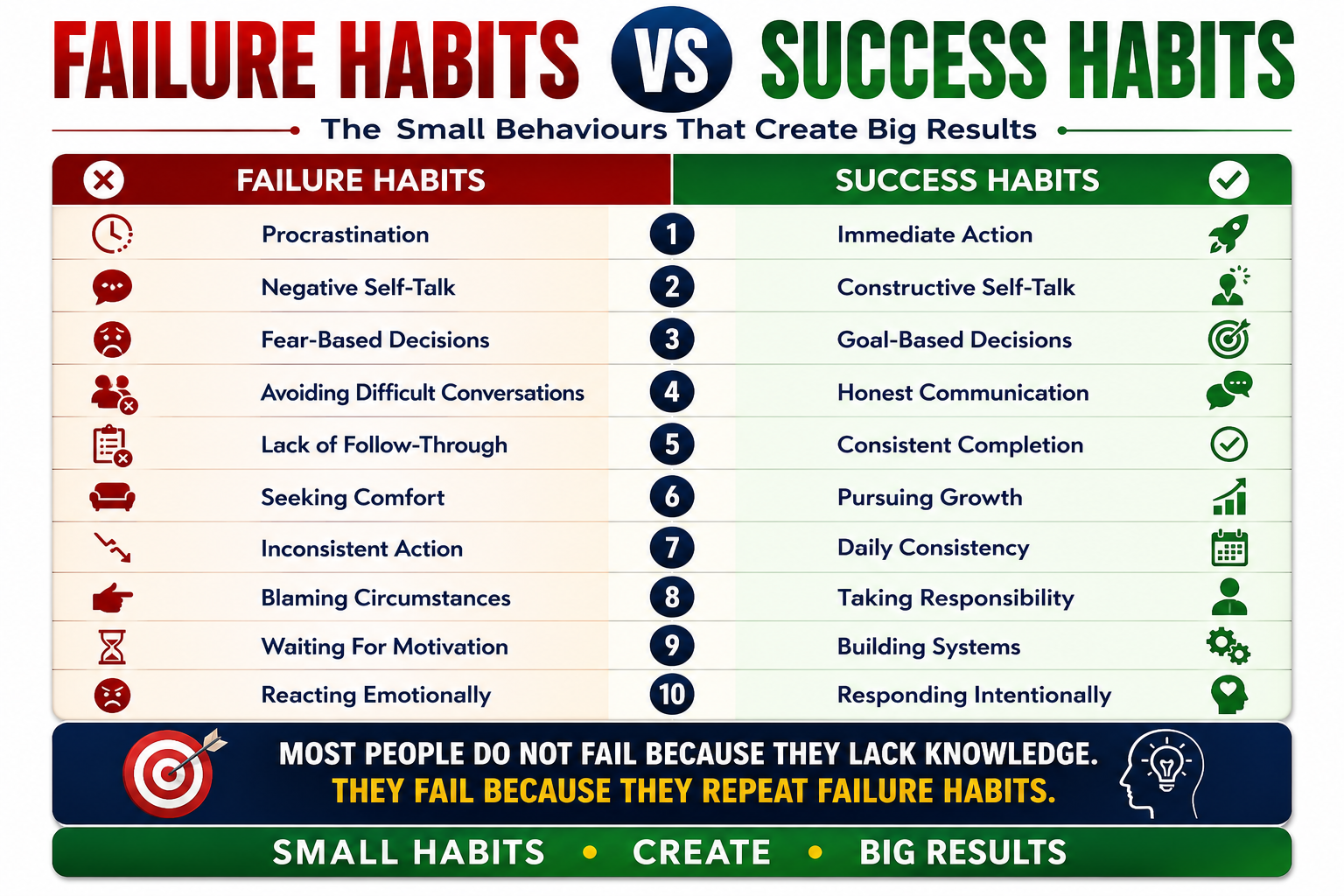
The difference between successful and unsuccessful outcomes is often less dramatic than people imagine.
Many results are created by small daily habits repeated consistently over time.
Failure habits tend to create delay, inconsistency, self-sabotage, and frustration.
Success habits create momentum, confidence, productivity, and achievement.
While no habit guarantees success, replacing failure habits with success habits can significantly improve the likelihood of reaching important personal and professional goals.
The Hidden Cost of Failure Habits
Failure habits often appear harmless in the moment.
A single delayed task, a missed opportunity, or one negative thought may not seem significant. However, the cumulative effect of these behaviours over months and years can be substantial.
Failure habits may impact:
• Career growth
• Financial progress
• Relationships
• Confidence
• Health and wellbeing
• Personal achievement
Many people assume they need more knowledge, motivation, or talent to succeed. In reality, their biggest obstacle may simply be a collection of habits that repeatedly move them away from their goals.
The good news is that habits are learned, and learned behaviours can be changed.
Frequently Asked Questions
Q: What are failure habits?
A: Failure habits are repeated behaviours, thoughts, and actions that consistently move a person away from their goals rather than toward them.
Q: Can failure habits be changed?
A: Yes. Most habits can be changed through awareness, consistency, and deliberate practice.
Q: Why do people repeat failure habits?
A: Habits often become automatic through repetition. Many people continue repeating behaviours without fully recognizing how they affect their results.
Q: What is the difference between failure habits and success habits?
A: Failure habits tend to limit progress, while success habits support growth, consistency, productivity, and achievement.
Q: How long does it take to replace a habit?
A: There is no universal timeline. The process depends on the individual, the habit, and the consistency of practice.
Related Personal Development Resources
Success is rarely determined by talent alone. It is often shaped by the daily habits you develop, the decisions you make, and your willingness to replace behaviours that hold you back. The resources below can help you build stronger success habits and achieve lasting personal growth.
• Accelerator Processes: 9 Powerful Benefits of Kevin Trudeau’s Live Training
• 7 Powerful Success Habits of Highly Successful People
• Why Successful People Think Differently: 7 Success Mindset Habits
• Why Goal Achievement Matters More Than Goal Setting
• Goal Setting: 9 Powerful Strategies to Achieve Your Goals Faster
• 11 Signs You Are Holding Yourself Back (And How to Break Free)
Related Personal Growth Articles
• How to Build Self-Confidence Naturally: 10 Proven Strategies for Personal Growth
• 7 Proven Strategies for Overcoming Limiting Beliefs and Personal Growth
• How to Build Personal Power: 9 Practical Ways to Feel More Confident and in Control
• What Is Personal Empowerment? 7 Ways to Take Control of Your Life
Related Kevin Trudeau Programs
• Superpower Processes: 9 Powerful Benefits of Kevin Trudeau’s Live Training
• Money Processes: 9 Powerful Benefits of Kevin Trudeau’s Live Training
• Kevin Trudeau Products: 11 Popular Programs Reviewed in 2026
Additional Learning Resources
External Resources
Are Failure Habits Holding You Back?
Many people already know the answer to this question.
If you frequently procrastinate, avoid opportunities, struggle to follow through, or repeat the same unproductive patterns, failure habits may be limiting your progress.
The encouraging news is that habits can be changed.
Awareness creates choice.
Choice creates action.
Action creates results.
By identifying and replacing failure habits with success habits, you can create greater consistency, confidence, productivity, and momentum toward your goals.
Common Signs That Failure Habits Are Holding You Back
Many people are unaware that failure habits are influencing their results.
Here are several warning signs that failure habits may be limiting your progress:
• You frequently procrastinate on important tasks.
• You struggle to follow through on goals.
• You repeatedly make the same mistakes.
• You avoid opportunities because of fear.
• You engage in negative self-talk.
• You start projects but rarely finish them.
• You wait for motivation before taking action.
• You feel stuck despite having knowledge and ability.
Recognizing these patterns is often the first step toward meaningful change.
Once a person becomes aware of a failure habit, they gain the opportunity to replace it with a more productive success habit.
My Review
Of all the concepts discussed in personal development, the idea of failure habits may be one of the most important.
Many people spend years searching for new strategies, courses, books, and opportunities while overlooking the behaviours that repeatedly undermine their progress.
The reason this topic is so powerful is that it shifts attention away from external circumstances and toward personal responsibility and behaviour change.
Small habits often create large results.
The people who achieve extraordinary outcomes are not necessarily extraordinary people. More often, they consistently practice behaviours that support their goals while minimizing behaviours that work against them.
Our Rating:
9.5/10
Best For:
Individuals interested in productivity, self-improvement, personal growth, confidence, achievement, and behaviour change.
Replace Failure Habits with Success Habits
Need a Flexible Payment Option?
Many participants choose a payment plan so they can begin replacing failure habits and developing success habits sooner. Explore the available payment options and choose the plan that best supports your goals.
Final Thoughts
Failure habits affect nearly everyone at some point in life.
The difference between people who remain stuck and those who continue growing is often their willingness to recognize and replace behaviours that no longer serve them.
Knowledge is important.
But behaviour ultimately determines results.
The habits you repeat every day influence your future far more than occasional moments of motivation.
By becoming aware of failure habits and intentionally developing success habits, you can create meaningful improvements in your confidence, productivity, relationships, finances, and overall quality of life.
Small changes repeated consistently often create extraordinary results over time.
Failure Habits Self-Assessment
Answer Yes or No.
• Do you often procrastinate on important tasks?
• Do you struggle to stay consistent with your goals?
• Do you avoid challenges because of fear of failure?
• Do you regularly make excuses instead of taking action?
• Do you find it difficult to finish what you start?
• Do negative thoughts often stop you from progressing?
• Do you repeat the same mistakes without changing your approach?
• Do you feel frustrated by slow progress?
If you answered “Yes” to four or more questions, failure habits may be limiting your progress. Developing greater self-awareness and replacing those habits with positive routines can lead to lasting personal and professional success.