
Goal Setting: 7 Steps to Achieve Your Goals Faster

Many people set goals with enthusiasm and good intentions, yet only a small percentage follow through and achieve the results they want. Motivation often fades, distractions appear, and unexpected challenges can make progress feel difficult.
The problem is rarely a lack of ambition. More often, it is a lack of clarity, planning, consistency, and effective goal-setting strategies.
Successful people understand that achieving meaningful goals requires more than wishful thinking. It involves creating a clear vision, taking consistent action, tracking progress, and adapting when obstacles arise.
This guide explores practical goal-setting strategies that can help you stay focused, maintain motivation, and increase your chances of achieving personal and professional success.
What Is Goal Setting?
Goal setting is the process of identifying a desired outcome and creating a plan to achieve it. Goals provide direction, focus, and motivation by helping individuals clarify what they want and how they intend to achieve it.
Effective goal setting transforms ideas and aspirations into actionable steps. Rather than simply hoping for better results, individuals create specific objectives that can be measured, tracked, and improved over time.
Whether the goal relates to health, finances, relationships, education, or personal development, having a clear target often increases the likelihood of success.
Why Goal Setting Matters
Without clear goals, it is easy to become distracted or lose focus on what truly matters. Goals provide a sense of purpose and help individuals prioritise their time, energy, and resources.
Goal setting also improves motivation because progress becomes easier to measure. Each milestone achieved provides evidence that effort is producing results, which can strengthen confidence and encourage continued action.
For this reason, goal setting is often considered one of the most important habits for personal growth, productivity, and long-term success.
7 Steps to Achieve Your Goals Faster
1. Define Exactly What You Want
One of the biggest reasons goals fail is a lack of clarity. Many people have a general idea of what they want, but their goals are often too vague to create meaningful action.
Instead of saying, “I want to be successful,” define exactly what success means to you. For example, you may want to earn a specific income, improve your health, develop a new skill, or build stronger relationships.
The clearer your goal becomes, the easier it is to create a plan and measure progress. Clarity removes confusion and helps you focus your efforts on the outcomes that matter most.
2. Write Your Goals Down
Writing goals down transforms them from ideas into commitments. It provides a clear reminder of what you are working toward and helps maintain focus when motivation begins to fade.
Research and practical experience both suggest that individuals who write down their goals are often more likely to follow through on them. A written goal creates accountability and encourages regular review.
Consider keeping your goals somewhere visible, such as a journal, planner, or digital document, so they remain at the forefront of your attention.
3. Break Large Goals into Smaller Steps
Large goals can feel overwhelming when viewed as a single task. Breaking them into smaller, manageable actions makes progress easier and reduces the likelihood of procrastination.
For example, writing a book may seem intimidating, but writing one page each day feels achievable. Over time, small actions accumulate into significant results.
This approach also creates more opportunities to experience progress, which helps maintain motivation and confidence throughout the journey.
4. Create a Plan and Schedule Action
A goal without a plan is often just a wish. Successful people do not rely solely on motivation; they create systems and schedules that support consistent action.
Identify the specific steps required to achieve your goal and assign deadlines where appropriate. Schedule time in your calendar to work on those tasks just as you would any other important commitment.
Planning reduces uncertainty and helps transform intention into action.
5. Focus on Consistency Rather Than Perfection
Many people abandon their goals because they believe every step must be perfect. In reality, consistent action is often far more valuable than occasional bursts of perfection.
Progress rarely follows a straight line. There will be setbacks, mistakes, and unexpected challenges. The key is to continue moving forward and maintain momentum.
Small actions performed consistently over time often produce far greater results than sporadic periods of intense effort.
6. Track Your Progress Regularly
Tracking progress helps maintain focus, identify areas for improvement, and reinforce motivation. When individuals can see evidence of progress, they are often more likely to remain committed to their goals.
Regular reviews provide an opportunity to celebrate achievements, adjust strategies, and address potential obstacles before they become major problems.
Whether you use a journal, spreadsheet, mobile app, or planner, tracking progress can help ensure that your daily actions remain aligned with your long-term objectives.
7. Stay Flexible and Adapt When Necessary
Even the best plans sometimes require adjustment. Unexpected challenges, changing circumstances, and new opportunities can influence the path toward achieving a goal.
Successful individuals understand that flexibility is not the same as giving up. Instead, it involves adapting strategies while remaining committed to the desired outcome.
The ability to adjust course when necessary often improves resilience and increases the likelihood of long-term success because it allows individuals to continue making progress despite obstacles.
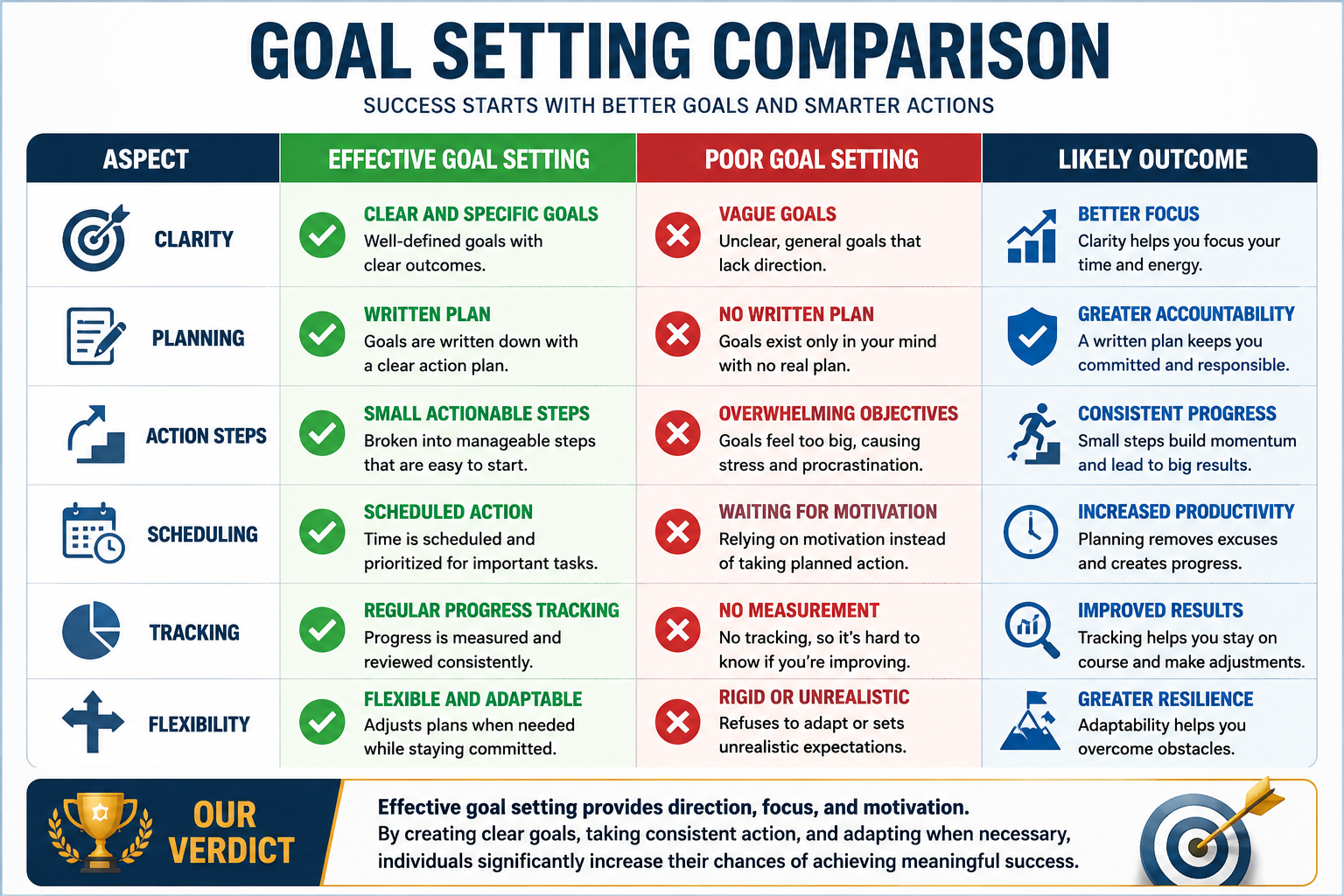
Goal Setting Comparison Table
Recommended Resources for Goal Achievement
Achieving meaningful goals often requires more than motivation. It involves confidence, resilience, self-awareness, and a commitment to continuous improvement.
Recommended next steps:
• Read our How to Build Self-Confidence Naturally guide
• Explore our Overcoming Limiting Beliefs article
• Learn how to strengthen personal responsibility in our Personal Empowerment guide
• Develop a stronger Success Mindset
• Discover the Superpower Processes Review
• Learn evidence-based personal development strategies through Positive Psychology
• Develop productivity, leadership, and planning skills with Mind Tools
The most successful individuals are not necessarily the most talented. They are often the people who remain focused, consistent, and committed to achieving their goals.
Frequently Asked Questions
Q: What is goal setting?
A: Goal setting is the process of identifying a desired outcome and creating a plan to achieve it. Goals provide direction, focus, and motivation.
Q: Why is goal setting important?
A: Goal setting helps individuals prioritise their efforts, measure progress, and stay focused on meaningful objectives. It increases the likelihood of achieving desired outcomes.
Q: What makes a goal effective?
A: Effective goals are clear, specific, measurable, and supported by actionable steps. They provide a clear target and make progress easier to track.
Q: How can I stay motivated when pursuing a goal?
A: Break large goals into smaller tasks, track progress regularly, celebrate milestones, and focus on consistent action rather than perfection.
Q: What should I do if I fail to achieve a goal?
A: Review what happened, identify lessons learned, adjust your strategy, and continue moving forward. Setbacks often provide valuable information that can improve future results.
Final Thoughts
Goal setting is one of the most powerful tools for creating positive change. Clear goals provide direction, purpose, and motivation while helping individuals focus on what truly matters.
Achieving meaningful results rarely happens by accident. It requires clarity, planning, consistent action, and the willingness to adapt when challenges arise.
Remember that success is not determined by a single action but by the small decisions and habits repeated over time. Every step forward, no matter how small, contributes to long-term progress.
By setting clear goals, taking consistent action, and maintaining a growth-oriented mindset, you can significantly increase your chances of achieving the outcomes you desire.
Keep learning. Keep growing. Keep moving forward.
And may your future shine as brightly as the flame within you.