Success Mindset: 7 Habits of Highly Successful People
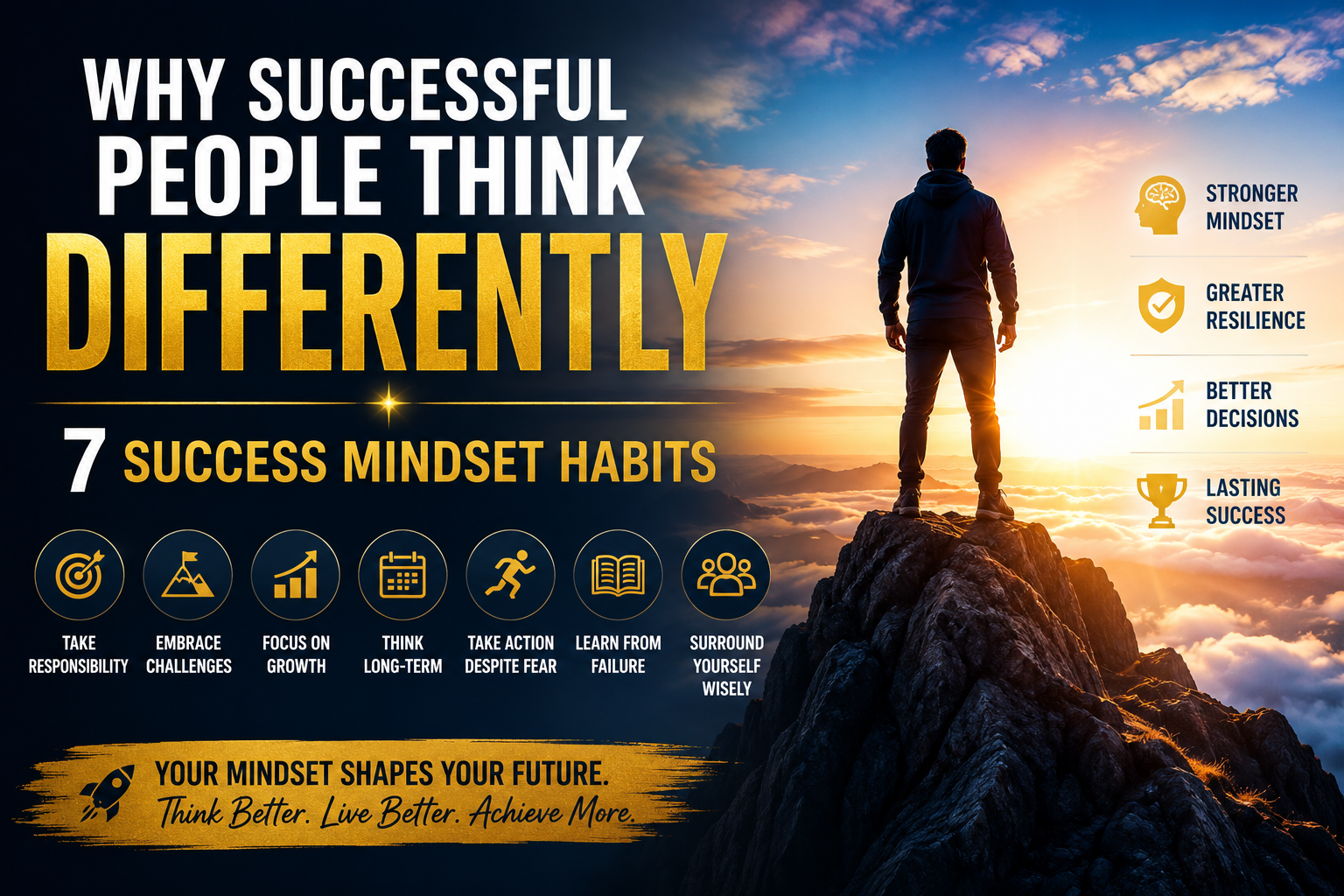
Success is often viewed as the result of talent, intelligence, luck, or opportunity. While these factors can influence outcomes, many successful individuals share something even more important: a success mindset.
A success mindset is the collection of beliefs, attitudes, and habits that influence how a person approaches challenges, opportunities, goals, and personal growth. It affects decision-making, resilience, confidence, and the willingness to take action even when uncertainty exists.
People who achieve meaningful success often think differently from those who remain stuck. They focus on solutions rather than problems, view setbacks as learning opportunities, and maintain a long-term perspective when pursuing their goals.
This guide explores the key principles of a success mindset and examines seven habits that successful people commonly use to achieve growth, confidence, and long-term success.
Table of Contents
What Is a Success Mindset?
A success mindset is a way of thinking that encourages growth, learning, resilience, and personal responsibility. It is based on the belief that improvement is possible through effort, knowledge, and consistent action.
Individuals with a success mindset tend to focus on opportunities rather than obstacles. They understand that challenges are a natural part of growth and that setbacks often provide valuable lessons for future success.
Rather than waiting for perfect conditions, people with this mindset take action, adapt when necessary, and remain committed to achieving their goals. Over time, these behaviours often contribute to greater confidence, stronger decision-making, and improved results.
"Successful people do not think differently because they are successful. They become successful because they learn to think differently."
Kevin Trudeau's Teaching Tweet
7 Success Mindset Habits of Highly Successful People
1. They Take Responsibility for Their Results
People with a strong success mindset understand that personal responsibility is one of the most important foundations of achievement. Rather than blaming circumstances, other people, or bad luck, they focus on the actions they can take to improve their situation.
This does not mean they control everything that happens in life. Instead, they recognise that they control their responses, decisions, and level of effort. By focusing on what they can influence, they create greater opportunities for growth and success.
Taking responsibility often leads to improved confidence because it reinforces the belief that your actions matter and that positive change is possible through consistent effort.
2. They View Challenges as Opportunities
Individuals with a success mindset understand that challenges are a natural part of progress. Rather than avoiding difficulties, they see them as opportunities to learn, develop new skills, and become more resilient.
Every obstacle contains lessons that can contribute to future success. While setbacks can be frustrating, successful people often focus on what can be learned rather than dwelling on what went wrong.
This perspective helps them remain motivated and continue moving forward even when results are not immediate.
3. They Focus on Continuous Improvement
Successful individuals rarely believe they have learned everything there is to know. Instead, they commit to continuous improvement through learning, practice, and self-development.
They regularly seek new knowledge, develop valuable skills, and look for ways to improve their performance. This commitment to growth allows them to adapt to change and remain competitive in an evolving world.
Over time, small improvements can produce significant results, making continuous learning one of the most powerful habits for long-term success.
4. They Think Long-Term
A success mindset encourages individuals to focus on long-term outcomes rather than immediate gratification. Successful people often understand that meaningful achievements require patience, persistence, and consistent effort.
Rather than becoming discouraged by short-term setbacks, they maintain focus on their larger goals and continue taking action. This long-term perspective helps them stay committed during periods when progress may not be immediately visible.
Thinking long-term also supports better decision-making because it encourages individuals to consider future consequences rather than temporary rewards.
5. They Take Action Despite Fear
Fear is a natural part of growth and achievement. Even highly successful individuals experience uncertainty, self-doubt, and fear of failure. The difference is that they do not allow fear to stop them from taking action.
People with a success mindset understand that confidence often develops after action rather than before it. They are willing to take calculated risks, learn from mistakes, and continue moving forward despite uncertainty.
By acting in the presence of fear, they expand their comfort zone and create opportunities that might otherwise have been missed.
6. They Learn from Failure
Failure is often viewed as something to avoid, but people with a success mindset understand that failure can be one of life’s greatest teachers. Mistakes, setbacks, and disappointments provide valuable feedback that can improve future decisions and performance.
Rather than seeing failure as proof of inadequacy, successful individuals view it as part of the learning process. They analyse what happened, identify lessons, and use those insights to make better choices moving forward.
This ability to learn from failure helps build resilience, confidence, and the persistence required to achieve meaningful goals.
7. They Surround Themselves with Growth-Oriented People
The people you spend time with can significantly influence your mindset, habits, and expectations. Successful individuals often choose to surround themselves with people who encourage growth, learning, and positive action.
Supportive relationships can provide valuable feedback, motivation, and accountability. They can also expose individuals to new ideas, opportunities, and perspectives that support personal development.
While independence is important, success is rarely achieved entirely alone. Building a network of positive and growth-oriented people can accelerate learning and increase the likelihood of achieving long-term goals.
Characteristics of a Success Mindset
Successful people often share similar ways of thinking and behaving that support long-term achievement.
| Success Mindset Habit | Positive Outcome |
|---|---|
| Continuous Learning | Develops new skills and knowledge. |
| Resilience | Recovers quickly from setbacks. |
| Personal Responsibility | Creates ownership and accountability. |
| Consistency | Builds momentum through daily action. |
| Self-Belief | Encourages confident decision-making. |
Success is rarely the result of one decision. It is usually created through the habits and mindset you strengthen every day.
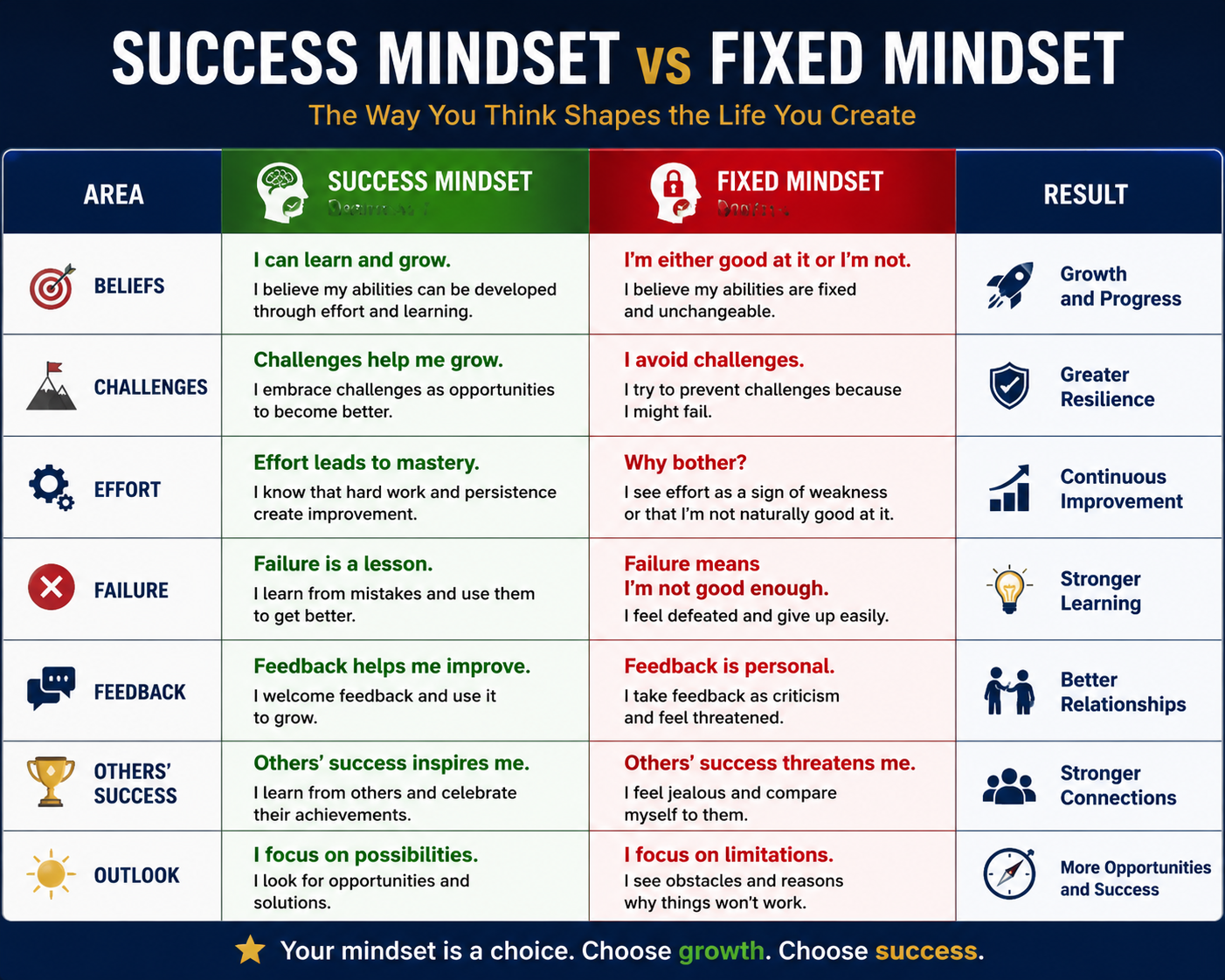
Success Mindset vs Fixed Mindset Comparison Table
Recommended Resources for Developing a Success Mindset
Building a success mindset is an ongoing process that requires learning, self-awareness, resilience, and consistent action. The resources below will help you strengthen the habits and thinking patterns that support long-term personal and professional success.
• Negative Thinking: 14 Hidden Ways It May Be Affecting Your Success
• 7 Powerful Success Habits of Highly Successful People
• Why Goal Achievement Matters More Than Goal Setting
• Goal Setting: 9 Powerful Strategies to Achieve Your Goals Faster
• How to Build Personal Power: 9 Practical Ways to Feel More Confident and in Control
• How to Build Self-Confidence Naturally: 10 Proven Strategies for Personal Growth
• 11 Signs You Are Holding Yourself Back (And How to Break Free)
Related Personal Growth Articles
• 7 Proven Strategies for Overcoming Limiting Beliefs and Personal Growth
• What Is Personal Empowerment? 7 Ways to Take Control of Your Life
• Superpower Processes: 9 Powerful Benefits of Kevin Trudeau’s Live Training
• Accelerator Processes: 9 Powerful Benefits of Kevin Trudeau’s Live Training
Related Kevin Trudeau Programs
• Money Processes: 9 Powerful Benefits of Kevin Trudeau’s Live Training
• Kevin Trudeau Products: 11 Popular Programs Reviewed in 2026
Additional Learning Resources
External Resources
Frequently Asked Questions
Q: What is a success mindset?
A: A success mindset is a way of thinking that focuses on growth, learning, resilience, and personal responsibility. It encourages individuals to take action, overcome challenges, and pursue meaningful goals.
Q: Can a success mindset be learned?
A: Yes. Mindset is not fixed. Through consistent learning, self-reflection, and practice, individuals can develop habits and beliefs that support long-term success.
Q: Why is mindset important for success?
A: Mindset influences decisions, behaviours, confidence, and resilience. A positive and growth-oriented mindset helps individuals persist through challenges and continue working toward their goals.
Q: What is the difference between a success mindset and a fixed mindset?
A: A success mindset focuses on growth, learning, and improvement, while a fixed mindset assumes abilities cannot be significantly developed. This difference often influences how individuals respond to challenges and opportunities.
Q: How can I develop a stronger success mindset?
A: Focus on personal responsibility, continuous learning, goal setting, resilience, and taking action despite fear. These habits help strengthen the attitudes and behaviours associated with long-term success.
Develop a Success Mindset
Need a Flexible Payment Option?
Many participants choose a payment plan so they can begin strengthening their mindset and developing lasting success habits sooner. Explore the available payment options and choose the plan that best supports your goals.
Final Thoughts
Success is rarely the result of luck alone. More often, it is the result of consistent habits, continuous learning, resilience, and a willingness to take action when opportunities arise.
A success mindset helps individuals focus on growth rather than limitation, solutions rather than problems, and progress rather than perfection. These perspectives influence daily decisions and can create meaningful improvements over time.
Whether your goal is greater confidence, stronger relationships, financial success, or personal fulfilment, developing the right mindset can help you move closer to achieving those outcomes.
Remember that success is not a destination. It is an ongoing journey of learning, adapting, and becoming the best version of yourself.
Keep learning. Keep growing. Keep taking action.
And may your future shine as brightly as the flame within you.
Success Mindset Self-Assessment
Answer Yes or No.
• Do you see challenges as opportunities to learn?
• Do you remain committed when progress is slow?
• Do you take responsibility for your results?
• Do you consistently invest in your personal growth?
• Do you believe your abilities can improve over time?
• Do you regularly review and improve your habits?
• Do you focus on solutions rather than problems?
• Do you continue learning even after achieving success?
If you answered “Yes” to four or more questions, you are developing many of the habits associated with a strong success mindset. Continue strengthening these habits through learning, resilience, and consistent action.