13 Signs of a Healthy Relationship (And How to Build One)

Most people want a healthy relationship, but many are never taught what a truly healthy relationship looks like.
Movies, social media, and popular culture often create unrealistic expectations about love and relationships. As a result, many people confuse intensity with connection, control with care, or constant excitement with genuine compatibility.
A healthy relationship is not perfect. Every relationship experiences challenges, disagreements, and periods of growth. What makes a relationship healthy is how both people communicate, support one another, and work through difficulties together.
This guide explores 13 signs of a healthy relationship and practical ways to strengthen trust, communication, connection, and long-term happiness.
Table of Contents
What Is a Healthy Relationship?
A healthy relationship is one where both individuals feel respected, valued, supported, and emotionally safe. Healthy relationships encourage personal growth while also strengthening the connection between two people.
Rather than relying on control, manipulation, fear, or constant conflict, healthy relationships are built on trust, communication, honesty, mutual respect, and shared effort.
Although every relationship is unique, certain qualities consistently appear in strong and successful partnerships.
"The strongest relationships are not built by perfect people. They are built by two people who choose trust, communication, and growth every day."
Kevin Trudeau's Teaching Tweet
13 Signs of a Healthy Relationship
1. You Communicate Openly and Honestly
Communication is one of the most important foundations of a healthy relationship.
Healthy couples are able to discuss their thoughts, feelings, concerns, and expectations without constantly fearing criticism or rejection.
Open communication reduces misunderstandings, strengthens trust, and helps both individuals feel heard and understood.
Practical Tip:
Schedule regular conversations about important topics before small issues become major problems.
2. You Trust Each Other
Trust creates emotional security and allows relationships to grow over time.
In a healthy relationship, both individuals generally believe what the other person says and feel confident in their commitment to one another.
Trust does not mean perfection. It means both people consistently demonstrate honesty, reliability, and integrity through their actions.
Practical Tip:
Keep promises whenever possible. Consistent actions build trust more effectively than words alone.
3. You Respect Each Other's Boundaries
Healthy relationships recognise that both people are individuals with their own needs, preferences, interests, and boundaries.
Respecting boundaries helps prevent resentment and encourages mutual understanding.
Whether related to personal space, friendships, work commitments, or family relationships, healthy boundaries strengthen long-term connection.
Practical Tip:
Discuss boundaries openly rather than assuming your partner automatically understands them.
4. You Support Each Other's Growth
A healthy relationship encourages both people to become the best versions of themselves.
Rather than feeling threatened by personal growth, healthy partners celebrate each other’s achievements, goals, and successes.
Supporting growth creates a stronger partnership because both individuals continue evolving together.
Practical Tip:
Celebrate progress and achievements, even when they seem small.
5. You Can Disagree Without Being Disrespectful
Disagreements are normal in every relationship. In fact, the absence of conflict does not necessarily indicate a healthy relationship.
What matters is how disagreements are handled.
Healthy couples focus on solving problems rather than attacking each other. They avoid insults, personal attacks, and attempts to “win” arguments at all costs.
Respectful disagreement strengthens relationships because it allows both people to express different viewpoints while maintaining trust and connection.
Practical Tip:
Focus on the issue rather than the person. Use phrases such as “I feel” instead of “You always.”
6. You Feel Emotionally Safe
Emotional safety means feeling comfortable expressing your thoughts, emotions, concerns, and vulnerabilities without fear of ridicule, manipulation, or punishment.
In a healthy relationship, both people feel accepted for who they are.
When emotional safety exists, communication improves, trust grows, and deeper connection becomes possible.
Practical Tip:
Create an environment where honesty is welcomed, even when conversations are difficult.
7. You Appreciate Each Other Regularly
Many relationships struggle not because of major problems but because appreciation gradually disappears.
Feeling valued is one of the most important emotional needs in a relationship.
Healthy couples regularly express gratitude, acknowledge effort, and show appreciation for both large and small contributions.
Simple acts of appreciation can significantly strengthen emotional connection over time.
Practical Tip:
Make it a habit to express genuine appreciation every day.
8. You Work as a Team
A healthy relationship is not about one person carrying all the responsibility while the other benefits.
Strong couples approach challenges as a team. They work together to solve problems, make decisions, and support shared goals.
Teamwork creates a sense of partnership and reduces feelings of isolation during difficult times.
Practical Tip:
When problems arise, ask, “How can we solve this together?” instead of assigning blame.
9. You Maintain Your Own Identity
Healthy relationships balance connection with individuality.
While spending time together is important, maintaining personal interests, friendships, hobbies, and goals helps both individuals remain fulfilled and independent.
People who maintain their own identity often bring more confidence, energy, and personal growth into the relationship.
Practical Tip:
Encourage each other to pursue individual interests alongside shared activities.
10. You Share Similar Core Values
While couples do not need to agree on everything, sharing similar core values often creates greater long-term compatibility.
Values influence decisions about family, finances, lifestyle, personal priorities, and future goals.
When partners share important values, they are often better equipped to navigate challenges and make decisions together.
Practical Tip:
Discuss topics such as family, finances, personal goals, and life priorities early and honestly.
11. You Make Time for Each Other
Life can become busy with work, family responsibilities, and personal commitments. However, healthy relationships require intentional time and attention.
Spending quality time together helps strengthen emotional connection and maintain intimacy.
The amount of time matters less than the quality of the interaction.
Practical Tip:
Schedule regular quality time together, even if it is only a short weekly activity.
12. You Can Be Yourself
One of the strongest signs of a healthy relationship is feeling comfortable being your authentic self.
Neither person feels the need to constantly pretend, hide their personality, or seek approval through perfection.
Acceptance creates emotional freedom and allows deeper connection to develop.
Practical Tip:
Encourage honesty and authenticity rather than expecting perfection.
13. You Look Forward to a Future Together
Healthy relationships are not only built on present experiences but also on a shared vision for the future.
Partners who discuss goals, dreams, plans, and future aspirations often develop a stronger sense of purpose and commitment.
Having a shared direction helps both individuals feel aligned and invested in the relationship.
Practical Tip:
Talk regularly about future goals and how you can support each other in achieving them.
Characteristics of Healthy Relationships
Healthy relationships are built through consistent behaviours rather than isolated moments. Small positive actions repeated over time create stronger emotional connections.
| Healthy Relationship Quality | Positive Outcome |
|---|---|
| Trust | Creates emotional safety and security. |
| Open Communication | Reduces misunderstandings and conflict. |
| Mutual Respect | Strengthens appreciation and partnership. |
| Emotional Support | Builds resilience during challenges. |
| Shared Growth | Creates a stronger future together. |
Healthy relationships grow stronger when both people consistently invest in communication, trust, and personal growth.
Common Mistakes That Damage Relationships
Even strong relationships can experience difficulties when unhealthy habits become common.
Some of the most common relationship mistakes include:
• Poor communication
• Avoiding difficult conversations
• Taking each other for granted
• Constant criticism
• Lack of appreciation
• Ignoring boundaries
• Trying to control the other person
• Refusing to take responsibility for mistakes
Recognising these habits early can help prevent long-term damage and improve relationship satisfaction.
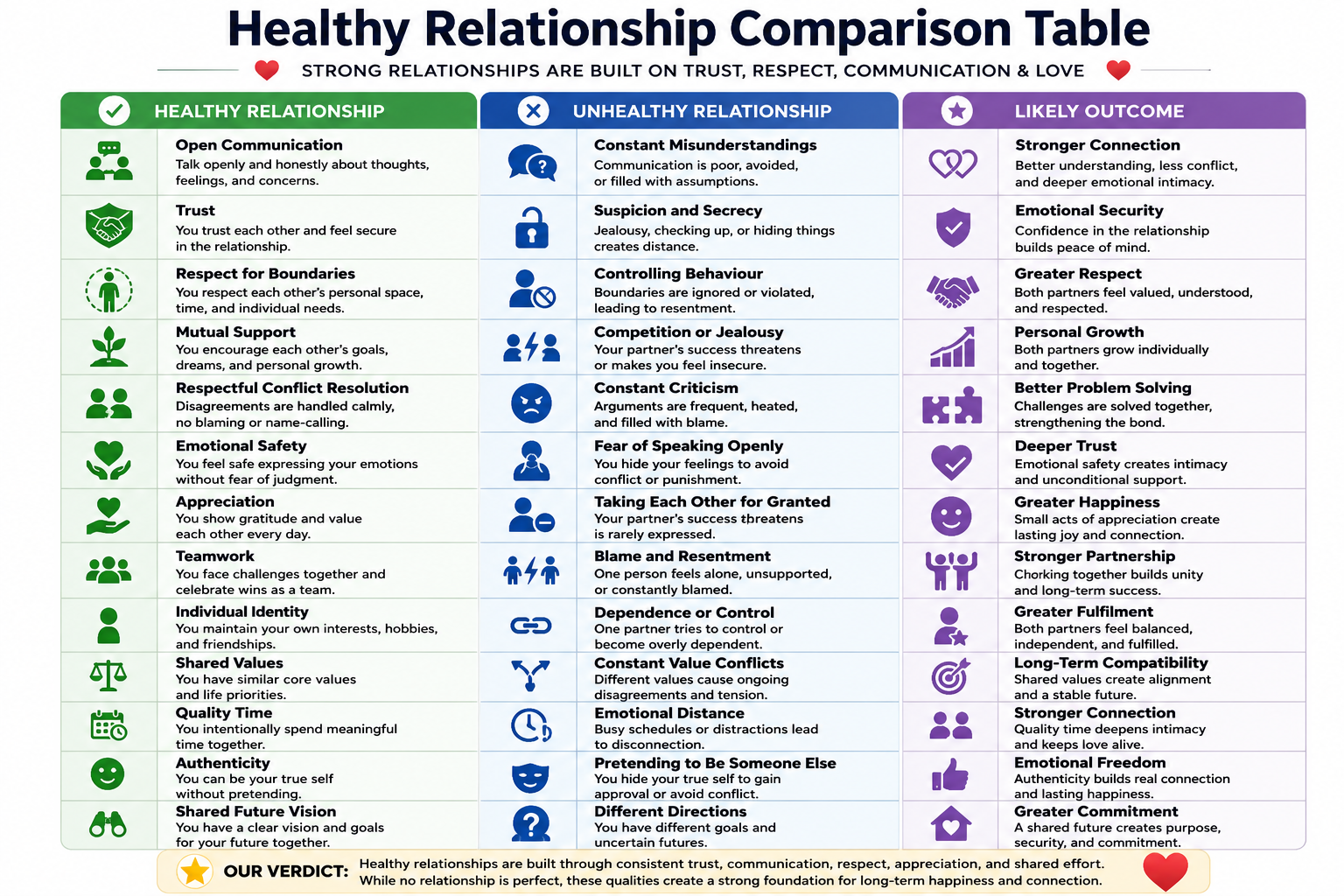
This is a titleHealthy Relationship Comparison Table
Recommended Resources
Healthy relationships are built through trust, communication, self-awareness, emotional maturity, and consistent effort. The resources below will help you strengthen your relationships while continuing your personal growth journey.
• 11 Signs of Emotional Maturity in a Relationship
• 13 Relationship Red Flags You Should Never Ignore
• How to Communicate Your Needs Without Starting Arguments
• 7 Ways Relationship Processes May Improve Communication, Trust and Personal Growth
• 11 Powerful Signs Your Relationship Is Growing Stronger
• Relationship Processes Review: Can Relationship Counter Intentions Affect Love and Connection?
• 11 Relationship Habits That Build Trust and Strengthen Connection
• 15 Powerful Ways to Build Emotional Connection in a Relationship
• 9 Powerful Ways to Rebuild Trust After It Has Been Broken
• 9 Communication Mistakes That Damage Relationships (And How to Fix Them)
Related Personal Growth Articles
• How to Build Self-Confidence Naturally: 10 Proven Strategies for Personal Growth
• What Is Personal Empowerment? 7 Ways to Take Control of Your Life
• 7 Proven Strategies for Overcoming Limiting Beliefs and Personal Growth
• How to Build Personal Power: 9 Practical Ways to Feel More Confident and in Control
Related Kevin Trudeau Programs
• Superpower Processes: 9 Powerful Benefits of Kevin Trudeau’s Live Training
• Money Processes: 9 Powerful Benefits of Kevin Trudeau’s Live Training
• Accelerator Processes: 9 Powerful Benefits of Kevin Trudeau’s Live Training
• Kevin Trudeau Products: 11 Popular Programs Reviewed in 2026
Additional Learning Resources
External Resources
Frequently Asked Questions
Q: What is a healthy relationship?
A: A healthy relationship is one where both people feel respected, valued, supported, trusted, and emotionally safe.
Q: What are the most important signs of a healthy relationship?
A: Communication, trust, respect, emotional safety, appreciation, teamwork, and shared values are among the most important signs.
Q: Can unhealthy relationships become healthy?
A: In many cases, yes. When both people are willing to communicate, take responsibility, and work together, relationships can improve significantly.
Q: How do I know if my relationship is healthy?
A: Consider whether you feel respected, trusted, emotionally safe, appreciated, and supported in your growth and goals.
Q: Is conflict normal in a healthy relationship?
A: Yes. The difference is that healthy couples handle conflict respectfully and focus on solving problems rather than attacking each other.
Build a Stronger Relationship
Need a Flexible Payment Option?
Many participants choose a payment plan so they can begin improving their relationships and personal growth sooner. Explore the available payment options and choose the option that best supports your journey.
Final Thoughts
Many people search for the perfect relationship, but healthy relationships are not built through perfection. They are built through trust, communication, respect, effort, and a willingness to grow together.
Every relationship experiences challenges. What matters most is how those challenges are handled and whether both individuals remain committed to supporting each other through life’s ups and downs.
By focusing on the habits and qualities discussed in this guide, couples can strengthen connection, improve communication, and create a more fulfilling partnership.
Healthy relationships do not happen by accident. They are built one conversation, one act of kindness, and one intentional choice at a time.
Keep learning. Keep growing. Keep connecting.
And may your relationships become a source of strength, joy, and fulfilment for years to come.
Healthy Relationship Self-Assessment
Answer Yes or No.
• Do you communicate openly and honestly with your partner?
• Do you trust one another?
• Do you feel emotionally supported?
• Do you resolve disagreements respectfully?
• Do you encourage each other’s personal growth?
• Do you listen without becoming defensive?
• Do you regularly show appreciation?
• Do you work together toward shared goals?
If you answered “Yes” to four or more questions, your relationship demonstrates many of the characteristics associated with healthy, lasting relationships. Continue strengthening these qualities through communication, trust, and mutual growth.