Goal Setting: 9 Powerful Strategies to Achieve Your Goals Faster

Many people have dreams, ambitions, and ideas about the future they would like to create. However, without a clear plan and consistent action, even the best intentions can remain unrealised.
Goal setting is one of the most effective tools for turning ideas into achievements. By identifying what you want, creating a strategy, and taking purposeful action, you can significantly increase your chances of success.
Highly successful people often use goal setting to maintain focus, measure progress, and stay motivated during challenges. Rather than relying on motivation alone, they create systems that support long-term results.
This guide explores nine powerful goal setting strategies that can help you achieve your goals faster and create meaningful results in both your personal and professional life.
Table of Contents
What Is Goal Setting?
Goal setting is the process of identifying specific outcomes you want to achieve and creating a plan to reach them. It provides direction, clarity, and purpose by helping individuals focus their time, energy, and resources on meaningful objectives.
Effective goal setting involves more than simply deciding what you want. It also requires commitment, planning, action, and regular review.
When used consistently, goal setting can improve productivity, confidence, motivation, and long-term success.
"A goal without consistent action remains a wish. Progress begins the moment you take the first step."
Kevin Trudeau's Teaching Tweet
9 Powerful Goal Setting Strategies to Achieve Your Goals Faster
1. Define Exactly What You Want
One of the most common reasons people struggle to achieve goals is a lack of clarity. Vague goals often lead to vague results.
Instead of saying, “I want to be successful,” define exactly what success means to you. The more specific your goal becomes, the easier it is to create a plan and measure progress.
Clear goals provide direction and reduce uncertainty, making it easier to stay focused on what matters most.
2. Write Your Goals Down
Writing goals down helps transform ideas into commitments. It creates a physical reminder of what you want to achieve and increases accountability.
Many successful individuals use journals, planners, digital tools, or vision boards to keep their goals visible and top of mind.
The simple act of writing goals down can strengthen focus and increase the likelihood of taking action.
3. Break Large Goals Into Smaller Steps
Large goals can sometimes feel overwhelming. Breaking them into smaller, manageable tasks makes progress easier to measure and maintain.
Each completed step creates momentum and reinforces confidence. Rather than focusing solely on the final outcome, individuals can concentrate on the next achievable action.
Small wins often lead to significant long-term achievements.
4. Set Deadlines and Milestones
Without deadlines, goals can easily become postponed indefinitely. Setting realistic deadlines creates urgency and encourages consistent action.
Milestones provide opportunities to evaluate progress and make adjustments when necessary.
A structured timeline helps transform intentions into measurable results.
5. Focus on One Priority at a Time
Many people set too many goals at once and then struggle to make meaningful progress on any of them. While it is possible to pursue multiple objectives, focusing on one primary goal often produces better results.
Concentrating your energy on a single priority reduces distractions and increases the likelihood of consistent action.
Once momentum is established, additional goals often become easier to achieve.
6. Create an Action Plan
A goal without a plan is often just a wish. Creating a detailed action plan helps bridge the gap between intention and achievement.
Consider the specific actions required, the resources you may need, and the obstacles you might encounter along the way.
Having a clear plan reduces uncertainty and makes it easier to stay focused when challenges arise.
7. Stay Flexible and Adapt
Life rarely unfolds exactly as planned. Unexpected challenges, opportunities, and changing circumstances may require adjustments along the way.
Successful goal setting involves remaining committed to the destination while being flexible about the path used to reach it.
Adaptability allows individuals to continue making progress even when circumstances change.
8. Track Your Progress Regularly
One of the most effective goal setting strategies is regularly measuring progress. Tracking your results helps identify what is working well and where improvements may be needed.
Reviewing progress can also increase motivation because it provides visible evidence of growth and achievement.
Whether through journals, apps, spreadsheets, or simple checklists, tracking progress helps maintain momentum and accountability.
9. Celebrate Small Wins Along the Way
Many people focus exclusively on the final outcome and forget to acknowledge progress along the journey. Celebrating small wins helps reinforce positive habits and maintain motivation.
Recognising achievements, even minor ones, creates a sense of accomplishment and encourages continued effort.
Success is often built through many small victories that accumulate over time.
Effective Goal Setting Principles
Successful goal achievement is built on more than motivation. It requires a clear plan, consistent action, and regular progress reviews.
| Goal Setting Principle | Why It Matters |
|---|---|
| Clear Goals | Provides direction and focus. |
| Written Action Plan | Turns ideas into practical steps. |
| Daily Action | Creates steady progress. |
| Progress Reviews | Identifies improvements and keeps motivation high. |
| Consistency | Builds long-term success through repeated action. |
Goals become reality when they are supported by consistent habits, clear planning, and regular action.
Why Goal Setting Works
Goal setting provides clarity, direction, and focus. Rather than reacting to circumstances, individuals can make intentional decisions that support their desired outcomes.
Clear goals help prioritise activities, reduce distractions, and improve time management. They also provide a framework for measuring progress and maintaining motivation.
For this reason, goal setting is commonly used by successful entrepreneurs, athletes, professionals, and leaders to achieve consistent results over time.
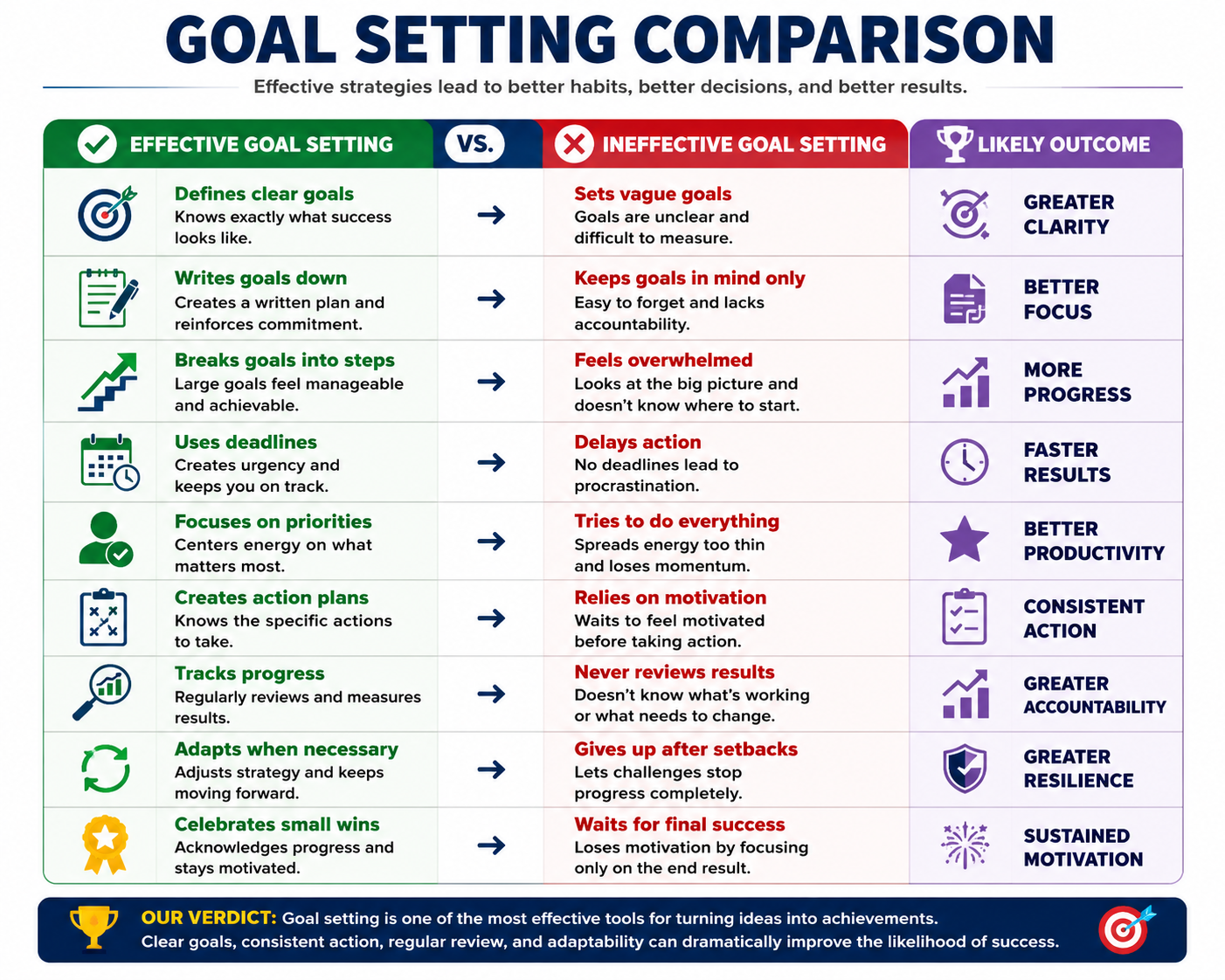
Goal Setting Comparison Table
Recommended Resources
Goal setting is most effective when combined with confidence, self-awareness, personal responsibility, and consistent action. The resources below will help you turn meaningful goals into lasting achievements.
• Why Goal Achievement Matters More Than Goal Setting
• 7 Powerful Success Habits of Highly Successful People
• Why Successful People Think Differently: 7 Success Mindset Habits
• How to Build Personal Power: 9 Practical Ways to Feel More Confident and in Control
• How to Build Self-Confidence Naturally: 10 Proven Strategies for Personal Growth
• 11 Signs You Are Holding Yourself Back (And How to Break Free)
Related Personal Growth Articles
• 7 Proven Strategies for Overcoming Limiting Beliefs and Personal Growth
• What Is Personal Empowerment? 7 Ways to Take Control of Your Life
• 7 Failure Habits That Keep Successful People Stuck (And How to Replace Them)
• Superpower Processes: 9 Powerful Benefits of Kevin Trudeau’s Live Training
Related Kevin Trudeau Programs
• Accelerator Processes: 9 Powerful Benefits of Kevin Trudeau’s Live Training
• Money Processes: 9 Powerful Benefits of Kevin Trudeau’s Live Training
• Kevin Trudeau Products: 11 Popular Programs Reviewed in 2026
Additional Learning Resources
External Resources
Frequently Asked Questions
Q: What is goal setting?
A: Goal setting is the process of identifying specific outcomes you want to achieve and creating a plan to reach them.
Q: Why is goal setting important?
A: Goal setting provides clarity, direction, focus, and motivation. It helps individuals prioritise actions and measure progress.
Q: How can I achieve my goals faster?
A: Defining clear goals, creating action plans, tracking progress, staying adaptable, and taking consistent action can significantly improve results.
Q: What is the biggest goal setting mistake?
A: One of the most common mistakes is setting vague goals without a clear plan or timeline for achieving them.
Q: Should I focus on multiple goals at once?
A: While it is possible to pursue multiple goals, focusing on one primary objective often produces faster and more meaningful progress.
Turn Your Goals Into Reality
Need a Flexible Payment Option?
Many participants choose a payment plan so they can begin building stronger success habits and achieving their goals sooner. Explore the available payment options and choose the plan that best supports your journey.
Final Thoughts
Many people have goals they would like to achieve, but success rarely happens by accident. Goal setting provides the structure needed to turn ideas into action and intentions into results.
By defining clear objectives, creating practical plans, tracking progress, and remaining adaptable, individuals can dramatically improve their chances of success.
The most important step is often the first one. A goal written down and supported by consistent action is far more likely to become reality than a dream left unplanned.
Every achievement begins with a decision to move forward.
Keep learning. Keep growing. Keep taking action.
And may your future shine as brightly as the flame within you.
Goal Setting Self-Assessment
Answer Yes or No.
• Do you write your goals down?
• Do you break large goals into smaller action steps?
• Do you review your progress regularly?
• Do you stay committed when challenges arise?
• Do you take daily action toward your goals?
• Do you celebrate milestones along the way?
• Do you learn from setbacks instead of quitting?
• Do your daily habits support your long-term goals?
If you answered “Yes” to four or more questions, you are developing many of the habits associated with successful goal achievement. Continue strengthening these habits through planning, discipline, and consistent action.