
Abundance Mindset vs Scarcity Mindset: Key Differences Explained
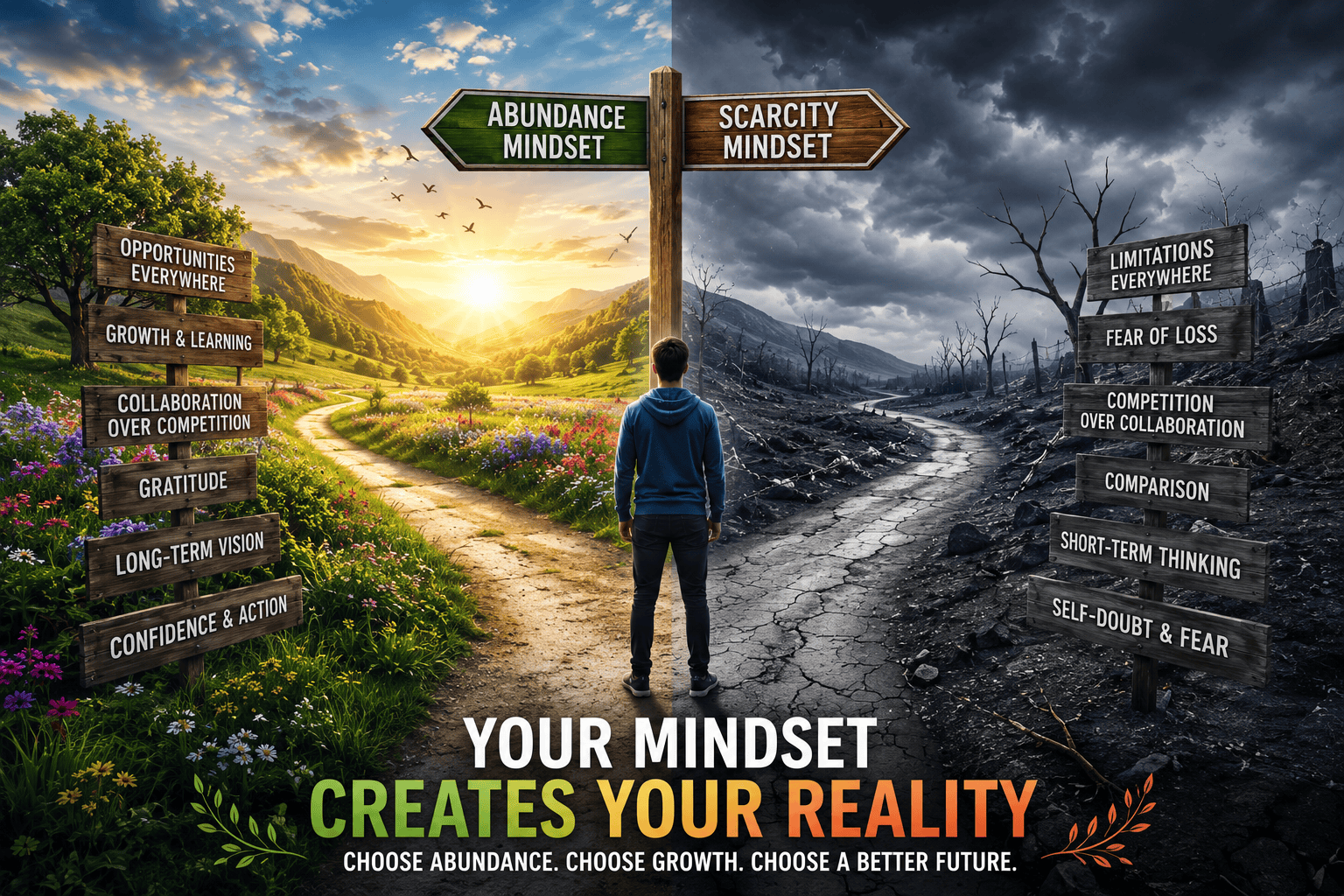
The way people think about opportunities, resources, money, and success can significantly influence the decisions they make throughout life. While external circumstances certainly play a role, mindset often affects how individuals respond to challenges, setbacks, and opportunities.
Two common ways of thinking are known as the abundance mindset and the scarcity mindset. These perspectives influence how people view growth, competition, learning, relationships, and financial success.
Individuals who adopt an abundance mindset tend to focus on possibilities, growth, and opportunity. Those operating from a scarcity mindset often focus on limitations, shortages, and fear of missing out.
Understanding the differences between these perspectives can help individuals make better decisions, develop healthier habits, and create greater opportunities for long-term success.
Table of Contents
What Is an Abundance Mindset?
An abundance mindset is a way of thinking that focuses on possibility, growth, opportunity, and the belief that resources and success are not limited to a small number of people.
Individuals who adopt this perspective often believe that learning, effort, and continuous improvement can create new opportunities. They tend to celebrate the success of others, seek collaboration, and focus on creating value rather than competing over limited resources.
This approach encourages optimism, resilience, and a willingness to explore opportunities that support personal and financial growth.
What Is a Scarcity Mindset?
A scarcity mindset is a pattern of thinking that focuses on limitations, shortages, and the belief that opportunities or resources are limited.
People operating from this perspective may worry that someone else’s success reduces their own chances of succeeding. As a result, they may become overly cautious, resistant to change, or reluctant to pursue new opportunities.
While caution can sometimes be helpful, an excessive focus on scarcity may limit growth, reduce confidence, and prevent individuals from recognising opportunities that could improve their circumstances.
"Your mindset determines what you notice. An abundance mindset sees possibilities where a scarcity mindset sees obstacles."
Kevin Trudeau's Teaching Tweet
Abundance Mindset vs Scarcity Mindset
The way you think about opportunities, money, and success can influence the decisions you make every day.
| Abundance Mindset | Scarcity Mindset |
|---|---|
| Looks for opportunities | Focuses on limitations |
| Believes growth is possible | Believes success is limited |
| Welcomes learning and change | Avoids risk because of fear |
| Celebrates the success of others | Feels threatened by the success of others |
| Focuses on long-term growth | Focuses on short-term survival |
Developing an abundance mindset begins with recognising opportunities instead of limitations and consistently choosing growth over fear
7 Key Differences Between an Abundance Mindset and a Scarcity MindsetThis is a title
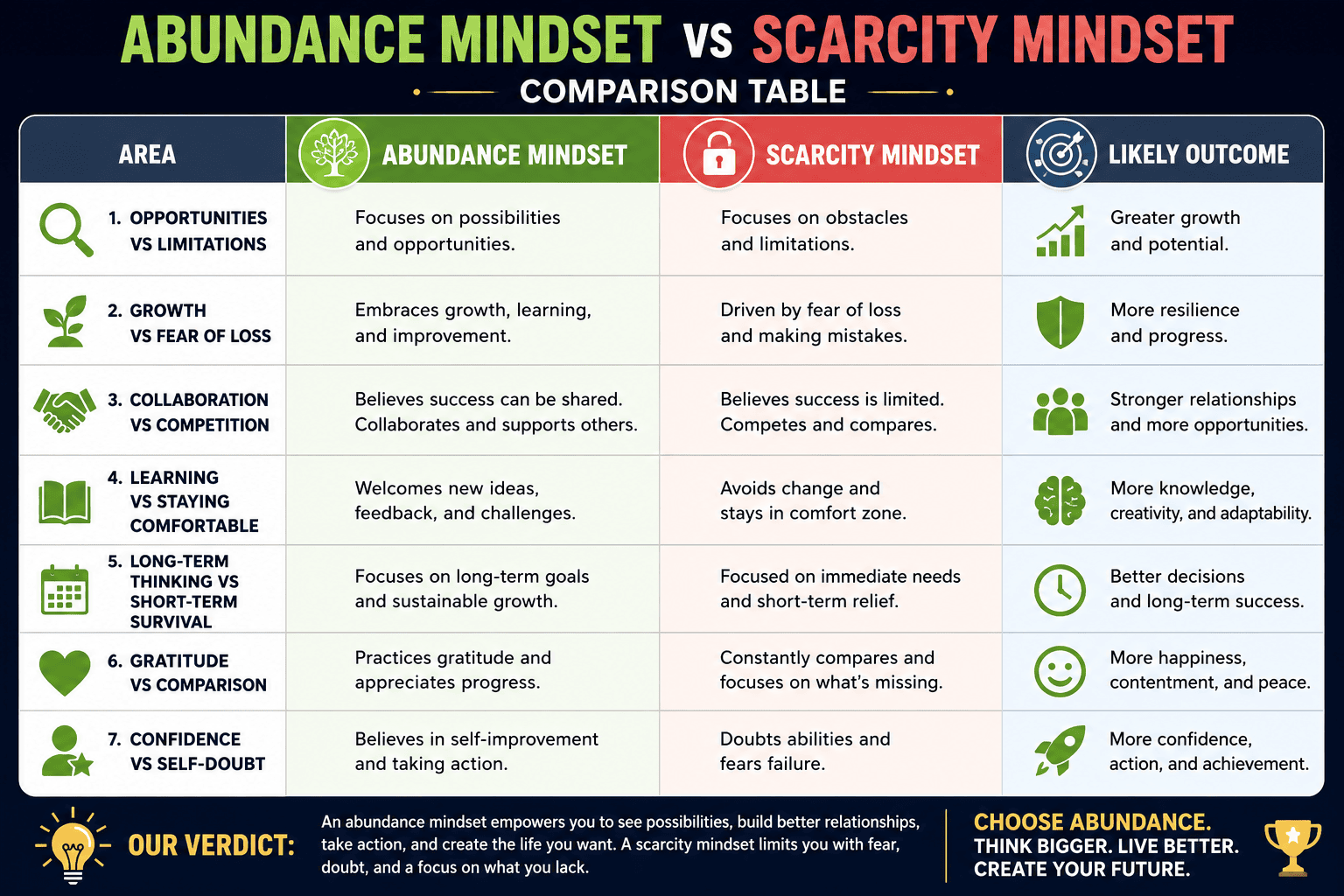
1. Opportunities vs Limitations
People with an abundance mindset tend to focus on possibilities and opportunities. They believe solutions can be found and that new opportunities can be created through learning, effort, and persistence.
Individuals with a scarcity mindset often focus on obstacles and limitations. They may assume that resources, opportunities, or success are difficult to obtain, which can discourage action and reduce motivation.
This difference in perspective often influences the willingness to take initiative and pursue personal growth.
2. Growth vs Fear of Loss
An abundance mindset encourages people to focus on growth and improvement. They are often willing to learn new skills, explore new ideas, and invest in their future.
In contrast, a scarcity mindset frequently focuses on protecting what already exists. Fear of loss can make individuals hesitant to take calculated risks or pursue new opportunities.
Over time, a focus on growth often creates more opportunities than a focus on avoiding loss.
3. Collaboration vs Competition
People who think abundantly often believe that success can be shared. They are more likely to collaborate, build relationships, and support the growth of others.
Those operating from a scarcity perspective may view success as a limited resource. They may believe that another person’s success reduces their own chances of succeeding.
Collaboration frequently creates stronger networks, better opportunities, and greater long-term outcomes than excessive competition.
4. Learning vs Staying Comfortable
An abundance mindset encourages continuous learning and personal development. Individuals are often willing to acquire new skills, explore unfamiliar opportunities, and adapt to changing circumstances.
A scarcity mindset may encourage people to remain within their comfort zone because change can feel risky or uncertain.
The willingness to learn and adapt is often a key factor in personal, professional, and financial growth.
5. Long-Term Thinking vs Short-Term Survival
People with an abundance mindset often focus on long-term goals and sustainable growth. They are willing to delay immediate rewards in pursuit of larger future benefits.
Individuals operating from scarcity frequently focus on immediate concerns and short-term survival. While this can sometimes be necessary, it may also limit long-term planning and opportunity recognition.
A long-term perspective often supports better decision-making and more consistent progress over time.
6. Gratitude vs Comparison
People with an abundance mindset often focus on appreciating what they have while continuing to pursue growth and improvement. Gratitude helps them recognise progress, maintain perspective, and stay motivated.
Individuals operating from a scarcity mindset may spend more time comparing themselves to others. Constant comparison can create feelings of inadequacy, frustration, and the belief that there is not enough success to go around.
Practising gratitude can improve wellbeing and encourage a healthier approach to personal and financial growth.
7. Confidence vs Self-Doubt
An abundance mindset encourages individuals to believe that improvement is possible through effort, learning, and persistence. This perspective often strengthens confidence and encourages proactive behaviour.
A scarcity mindset can contribute to self-doubt and hesitation. Individuals may underestimate their abilities or avoid opportunities because they fear failure or rejection.
Greater confidence often leads to increased action, and action is frequently the foundation of meaningful progress and success.
Abundance Mindset vs Scarcity Mindset Comparison Table
Recommended Resources
Developing an abundance mindset is an ongoing process that combines greater self-awareness, continuous learning, and intentional action. The resources below can help you strengthen your financial mindset, recognise more opportunities, and build long-term wealth habits.
• What Is a Wealth Mindset? How to Think Like Wealthy People
• How to Remove Money Blocks and Create Financial Success
• Wealth Consciousness Explained: Why Some People Attract Money More Easily Than Others
• Money Programming Explained: How Your Childhood Beliefs About Money Shape Your Financial Future
• Financial Self-Sabotage: 9 Powerful Signs Hidden Patterns Are Holding You Back
• Counter Intentions Explained: 7 Dangerous Causes of Self-Sabotage
Related Money Mindset Articles
• How Your Beliefs Affect Financial Success
• Why Some People Stay Financially Stuck: 9 Hidden Patterns That Keep People Broke
• Why Hard Work Alone Doesn’t Create Wealth: The Missing Piece Most People Never Learn
• 7 Signs Your Money Mindset Is Changing (Even If You Haven’t Made More Money Yet)
• 7 Common Money Mistakes: Why Smart People Stay Broke
Related Kevin Trudeau Programs
• Money Processes: 9 Powerful Benefits of Kevin Trudeau’s Live Training
• Superpower Processes: 9 Powerful Benefits of Kevin Trudeau’s Live Training
• Accelerator Processes: 9 Powerful Benefits of Kevin Trudeau’s Live Training
• Kevin Trudeau Products: 11 Popular Programs Reviewed in 2026
Additional Learning Resources
External Resources
Frequently Asked Questions
Q: What is an abundance mindset?
A: An abundance mindset is a way of thinking that focuses on opportunity, growth, learning, and the belief that success and resources can be created through effort and improvement.
Q: What is a scarcity mindset?
A: A scarcity mindset focuses on limitations, shortages, and the belief that opportunities or success are limited.
Q: Can mindset affect financial success?
A: Yes. The way people think about opportunity, risk, learning, and growth often influences the decisions they make and the actions they take.
Q: How can I develop an abundance mindset?
A: Focus on gratitude, continuous learning, personal growth, long-term thinking, and recognising opportunities rather than limitations.
Q: Why is an abundance mindset important?
A: It encourages confidence, resilience, collaboration, and proactive behaviour, all of which can contribute to better personal and financial outcomes.
Choose an Abundance Mindset
Need a Flexible Payment Option?
Many participants choose a payment plan so they can begin developing a stronger money mindset and personal growth journey sooner. Explore the available payment options and choose the plan that best supports your goals.
Final Thoughts
The way people think about opportunity, growth, and success can have a significant impact on the decisions they make throughout life.
An abundance mindset encourages individuals to focus on possibility, learning, collaboration, and long-term growth. In contrast, a scarcity mindset often focuses on limitation, fear, and protecting existing resources.
While no one operates from a single mindset all the time, becoming aware of these patterns can help individuals make better decisions and recognise new opportunities for growth.
By developing a more abundant perspective, people can strengthen confidence, improve relationships, and create a stronger foundation for personal, professional, and financial success.
Keep learning. Keep growing. Keep moving forward.
And may your future shine as brightly as the flame within you.






Abundance Mindset Self-Assessment
Answer Yes or No.
• Do you believe new opportunities are available to you?
• Do you see challenges as opportunities to learn?
• Are you genuinely happy when other people succeed?
• Do you believe your financial future can improve?
• Do you actively look for ways to grow your knowledge?
• Do you focus on possibilities rather than problems?
• Do you believe consistent action creates long-term success?
• Do you regularly invest in your own personal growth?
If you answered “Yes” to four or more questions, you are developing many of the habits associated with an abundance mindset. Continue strengthening these habits through learning, awareness, and consistent action