Counter Intentions Explained: 7 Dangerous Causes of Self-Sabotage
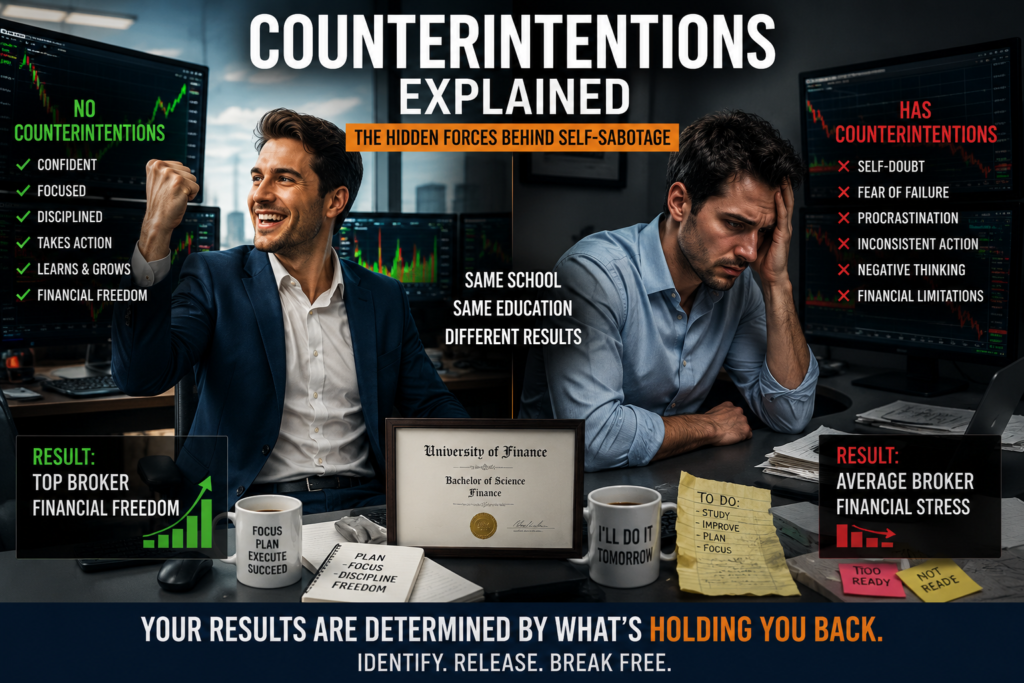
Table of Contents
Counter Intentions are one of the most misunderstood concepts in personal development. Many people consciously want success, happiness, better relationships, improved health, and greater financial freedom. Yet despite their best efforts, they often find themselves repeating the same patterns, making the same mistakes, and achieving similar results year after year.
According to Kevin Trudeau, one reason for this struggle may be the presence of Counter Intentions. These are hidden subconscious forces that can oppose a person’s conscious goals and create internal conflict. While someone may consciously desire success, another part of their mind may be working against that outcome without them even realizing it.
In this article, we will explore what Counter Intentions are, how they may contribute to self-sabotage, and why understanding them could be an important step toward personal growth and financial success.
“A Counter Intention is when one part of you wants success, while another hidden part quietly resists it.”
Kevin Trudeau Teaching Tweet
What Are Counter Intentions?
A Counter Intention can be described as an unconscious desire, belief, fear, or emotional pattern that conflicts with a person’s conscious goal.
For example, someone may consciously want to earn more money while simultaneously carrying hidden beliefs such as “rich people are greedy,” “money causes problems,” or “I don’t deserve financial success.” These conflicting beliefs can create internal resistance that makes progress more difficult.
Kevin Trudeau teaches that many people experience frustration because they focus only on their conscious goals while ignoring the hidden patterns operating beneath the surface. As a result, they may feel as though they are constantly swimming upstream despite working hard and doing everything they believe they should be doing.
Understanding Counter Intentions begins with recognizing that not all decisions are made consciously. Many behaviours are influenced by deeply rooted beliefs, emotional conditioning, and past experiences that continue affecting present-day results.
Counter Intentions vs Conscious Goals
Many people consciously want success while subconsciously repeating behaviours that move them away from their goals. Becoming aware of these patterns is the first step toward changing them.
| Conscious Goal | Possible Counter Intention |
|---|---|
| Build wealth | Fear of financial success or responsibility. |
| Improve relationships | Fear of vulnerability or rejection. |
| Grow a business | Fear of failure or visibility. |
| Become more confident | Negative self-beliefs developed over time. |
| Achieve important goals | Procrastination and self-doubt. |
Recognising these hidden conflicts can help people better understand why they sometimes behave differently from what they consciously want to achieve.
How Counter Intentions Can Lead to Self-Sabotage
Self-sabotage occurs when a person’s actions consistently work against their own goals and best interests.
Common examples include procrastination, fear of success, fear of failure, avoiding opportunities, giving up too early, making poor decisions, or repeatedly finding reasons not to take action.
According to Kevin Trudeau, Counter Intentions may be one of the hidden causes of self-sabotage. A person may consciously want to improve their financial situation, start a business, lose weight, or improve a relationship. However, hidden beliefs and emotional patterns may create resistance whenever progress begins to occur.
This internal conflict can lead to frustration because the individual genuinely wants change while unknowingly maintaining beliefs that support the opposite outcome.
Many people describe this experience as feeling stuck, blocked, or trapped in repeating cycles that seem difficult to break.
Where Do Counter Intentions Come From?
Counter Intentions can develop from many different sources throughout a person’s life. Family influences, childhood experiences, education, cultural conditioning, social environments, and significant emotional events can all contribute to the formation of subconscious beliefs.
For example, a child who repeatedly hears phrases such as “money doesn’t grow on trees,” “rich people are dishonest,” or “people like us never get ahead” may unknowingly adopt these beliefs as part of their internal programming.
Over time, these beliefs can become automatic and operate below conscious awareness. Even when a person later decides they want greater success, financial freedom, or personal achievement, the older programming may continue influencing their decisions and behaviours.
Kevin Trudeau teaches that many people are unaware of these hidden influences and therefore struggle to understand why they continue experiencing the same results despite their efforts to change.
“Many people work hard to achieve their goals, yet hidden beliefs and subconscious patterns may be pulling them in the opposite direction.”
Kevin Trudeau Teaching Tweet
Counter Intentions and Money
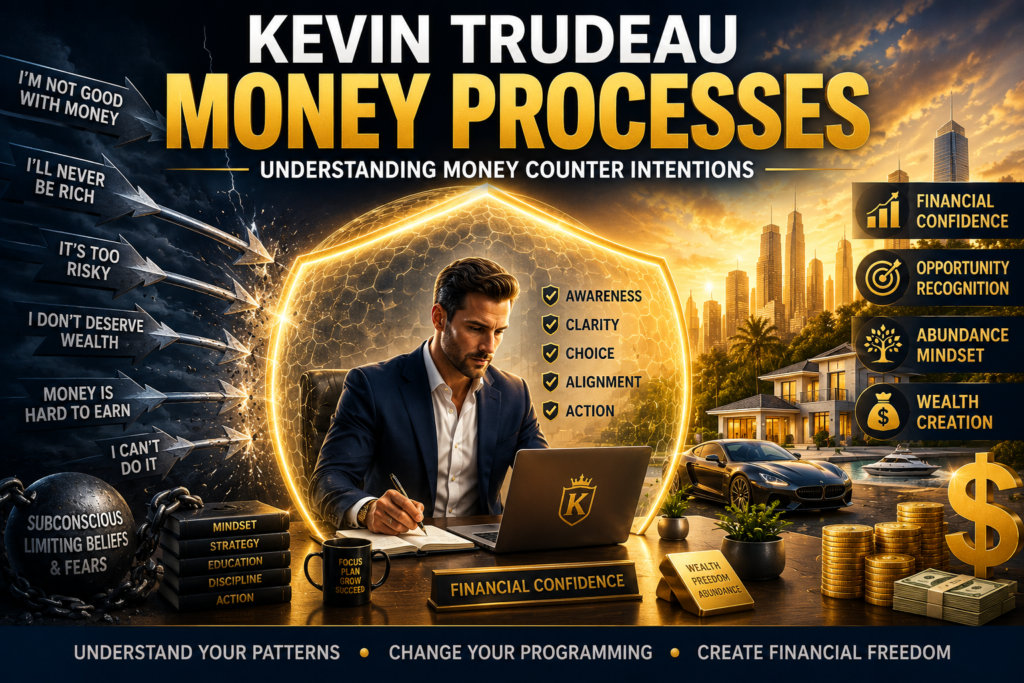
One area where Counter Intentions may have a significant impact is financial success.
Many individuals genuinely want more income, greater financial security, and increased wealth. However, they may also carry subconscious beliefs that conflict with those goals.
Examples may include:
• Money causes stress.
• Wealthy people are greedy.
• I don’t deserve financial success.
• If I become successful, people will judge me.
• It is safer to stay where I am.
According to Kevin Trudeau, these hidden beliefs can create internal resistance that affects a person’s relationship with money. This resistance may appear as procrastination, fear of taking opportunities, poor financial decisions, or repeatedly abandoning projects before they become successful.
This concept is one of the reasons many people become interested in programs such as the Money Processes, which focus on identifying and releasing limiting patterns related to wealth and financial success.
Why Counter Intentions Can Be Difficult to Recognize
One of the reasons Counter Intentions can be so challenging is that they often operate below conscious awareness. Most people do not wake up in the morning and decide to sabotage their own success. Instead, they genuinely want better results and often work very hard to achieve them.
The challenge is that hidden beliefs and emotional patterns may influence behaviour without a person fully recognizing their impact. Someone may repeatedly delay important decisions, avoid opportunities, or lose motivation at critical moments without understanding why.
In many cases, people assume external circumstances are responsible for their struggles. They may blame the economy, their education, their employer, lack of opportunities, or bad luck. While external factors certainly play a role, personal development experts often suggest that internal beliefs can be equally important.
Kevin Trudeau teaches that Counter Intentions create internal conflict. One part of the mind may desire success, while another part is attempting to maintain familiar patterns, avoid perceived risks, or protect the individual from potential disappointment.
This conflict can create frustration because the person feels they are doing everything correctly while continuing to experience limited results. Understanding this possibility can help individuals become more aware of their thought patterns and begin examining beliefs that may no longer serve them.
The first step toward change is awareness. Once a person recognizes the possibility that hidden beliefs may be influencing their decisions, they can begin exploring new ways of thinking and acting that are more aligned with their goals.
Signs You May Have Counter Intentions
Many people are unaware they have Counter Intentions because these patterns often operate below conscious awareness.
Some common signs may include:
• Repeatedly setting goals but failing to follow through.
• Feeling stuck despite working hard.
• Constant procrastination.
• Fear of success or fear of failure.
• Difficulty making decisions.
• Repeating the same financial mistakes.
• Starting projects but rarely finishing them.
• Feeling like life is an uphill battle.
• Experiencing self-sabotage in important areas of life.
While these experiences can have many different causes, they may also indicate the presence of conflicting beliefs or subconscious patterns that deserve closer examination.
Can Counter Intentions Be Changed?
One of the encouraging aspects of personal development is that beliefs and behavioural patterns are not necessarily permanent.
Many experts in psychology, mindset development, and personal growth agree that individuals can develop greater awareness of their thinking patterns and make positive changes over time.
Kevin Trudeau teaches that identifying Counter Intentions is the first step toward reducing their influence. Once a person becomes aware of a hidden belief or conflicting pattern, they are in a better position to examine it, challenge it, and replace it with more supportive ways of thinking.
This process can take time, but many people report meaningful improvements in confidence, motivation, focus, and decision-making when they become more conscious of the beliefs guiding their behaviour.
Learn More About Money Mindset and Personal Development
If you found this article helpful, you may also enjoy exploring some of our other personal development resources.
• Money Processes Review
• Money Blocks
• Limiting Beliefs
• Success Mindset
• Personal Empowerment
These articles explore many of the concepts related to subconscious programming, self-sabotage, confidence, personal growth, and achieving greater success in life.
Frequently Asked Questions About Counter Intentions
What are Counter Intentions?
Counter Intentions are subconscious beliefs, fears, or emotional patterns that may conflict with a person’s conscious goals and create internal resistance.
Can Counter Intentions affect financial success?
According to Kevin Trudeau, Counter Intentions may influence a person’s relationship with money and contribute to behaviours that limit financial growth.
Are Counter Intentions the same as limiting beliefs?
The concepts are closely related. Both involve hidden mental patterns that may affect behaviour, decisions, and results.
Can Counter Intentions cause self-sabotage?
Some personal development teachers believe that Counter Intentions may contribute to self-sabotaging behaviours by creating conflict between conscious goals and subconscious beliefs.
How do I identify Counter Intentions?
Increasing self-awareness, examining recurring patterns, and questioning long-held beliefs can help uncover possible Counter Intentions.
Discover What's Really Holding You Back
Final Thoughts on Counter Intentions
Counter Intentions offer an interesting way of understanding why people sometimes struggle to achieve goals they genuinely want to accomplish.
Whether the challenge involves finances, relationships, health, confidence, or personal growth, hidden beliefs and subconscious patterns may play a larger role than many people realize.
By becoming more aware of these internal influences, individuals may be better positioned to make positive changes and move closer to the results they desire.
Understanding Counter Intentions is not about assigning blame. Instead, it is about recognizing that lasting transformation often begins by examining the hidden beliefs and patterns operating beneath the surface.
Counter Intentions Self-Assessment
Answer Yes or No.
• Do you sometimes avoid opportunities you genuinely want?
• Do you procrastinate even when you know what to do?
• Do you feel uncomfortable receiving success or recognition?
• Do you repeatedly achieve the same disappointing results?
• Do you often doubt yourself before taking action?
• Do you recognise recurring patterns in your finances or relationships?
• Do your actions sometimes conflict with your goals?
• Are you interested in understanding the subconscious beliefs influencing your behaviour?
If you answered “Yes” to four or more questions, developing greater self-awareness may help you better understand the hidden patterns that influence your decisions and long-term results.
RECOMMENDED RESOURCES
Counter Intentions often influence the hidden patterns behind self-sabotage, limiting beliefs, and personal growth. The resources below will help you better understand how subconscious beliefs may influence your decisions, relationships, confidence, and financial success.
• 7 Failure Habits That Keep Successful People Stuck (And How to Replace Them)
• Negative Thinking: 14 Hidden Ways It May Be Affecting Your Success
• Self-Sabotage: 13 Dangerous Behaviors That Secretly Hold People Back
• Money Processes: 9 Powerful Benefits of Kevin Trudeau’s Live Training
• Kevin Trudeau Money Processes Review: Understanding Money Counter Intentions
• How to Remove Money Blocks and Create Financial Success
• Financial Self-Sabotage: 9 Powerful Signs Hidden Patterns Are Holding You Back
• Money Programming Explained: How Your Childhood Beliefs About Money Shape Your Financial Future
• Wealth Consciousness Explained: Why Some People Attract Money More Easily Than Others
Related Personal Growth Articles
• 7 Proven Strategies for Overcoming Limiting Beliefs and Personal Growth
• What Is Personal Empowerment? 7 Ways to Take Control of Your Life
• Why Successful People Think Differently: 7 Success Mindset Habits
• 11 Signs You Are Holding Yourself Back (And How to Break Free)
Related Kevin Trudeau Programs
• Superpower Processes: 9 Powerful Benefits of Kevin Trudeau’s Live Training
• Accelerator Processes: 9 Powerful Benefits of Kevin Trudeau’s Live Training
• Kevin Trudeau Products: 11 Popular Programs Reviewed in 2026
Additional Learning Resources
External Resources
• Psychology Today – Self-Sabotage
• Verywell Mind – Why People Self-Sabotage and How to Stop It