
9 Communication Mistakes That Damage Relationships (And How to Fix Them)

Communication is often described as the foundation of a healthy relationship. Yet many relationship problems are not caused by a lack of love, commitment, or compatibility. They are caused by communication mistakes that create misunderstanding, frustration, and emotional distance.
Even couples who genuinely care about each other can fall into unhealthy communication patterns without realising it. Small misunderstandings can grow into major conflicts when communication breaks down.
The good news is that communication is a skill. Like any skill, it can be improved through awareness, practice, and consistency.
This guide explores nine common communication mistakes that damage relationships and practical strategies for fixing them before they create long-term problems.
Table of Contents
Why Communication Matters in Relationships
Strong communication helps people feel heard, understood, respected, and emotionally connected.
Healthy communication allows couples to discuss problems, share feelings, solve conflicts, and build trust. Poor communication, on the other hand, often leads to resentment, misunderstandings, and emotional withdrawal.
The quality of communication often determines the quality of the relationship itself.
By recognising common communication mistakes, couples can strengthen connection and improve relationship satisfaction.
How Communication Mistakes Affect Relationships Over Time
Many communication mistakes seem small at first. An interruption during a conversation, an assumption about what a partner means, or avoiding a difficult discussion may not appear significant in isolation.
However, relationships are shaped by patterns rather than individual moments.
When communication mistakes occur repeatedly, they can slowly weaken trust, reduce emotional connection, and create feelings of frustration or resentment. Over time, people may begin to feel unheard, misunderstood, or emotionally disconnected from one another.
The good news is that communication habits can be changed. Small improvements made consistently often produce significant positive changes in relationship satisfaction.
By recognising communication mistakes early and replacing them with healthier communication habits, couples can strengthen understanding, trust, and emotional intimacy.
"The quality of your relationships is often determined by the quality of your conversations."
Kevin Trudeau's Teaching Tweet
9 Communication Mistakes That Damage Relationships
1. Not Really Listening
Many people listen with the intention of replying rather than understanding.
Instead of focusing on what their partner is saying, they prepare arguments, solutions, or responses in their mind.
This often leaves the other person feeling unheard and misunderstood.
How to Fix It:
Practice active listening by giving your full attention, maintaining eye contact, and summarising what your partner has said before responding.
2. Interrupting Constantly
Interrupting sends the message that your thoughts are more important than the other person’s perspective.
Over time, frequent interruptions can create frustration and discourage open communication.
People who feel interrupted often stop sharing honestly because they believe they will not be heard.
How to Fix It:
Allow your partner to finish speaking completely before responding.
3. Using "You Always" and "You Never"
Statements such as “You always do this” or “You never do that” often trigger defensiveness and conflict.
These phrases rarely encourage productive conversation because they focus on blame rather than problem-solving.
How to Fix It:
Use “I feel” statements that focus on your experience instead of accusing the other person.
4. Avoiding Difficult Conversations
Some people avoid difficult conversations because they fear conflict or discomfort.
Unfortunately, avoided problems often become larger problems over time.
Healthy communication involves addressing issues respectfully before resentment has an opportunity to grow.
How to Fix It:
Choose an appropriate time to discuss concerns calmly rather than avoiding them completely.
Why These Communication Mistakes Are So Common
Many communication mistakes are not caused by bad intentions.
Most people learn communication habits from parents, family members, friends, previous relationships, and life experiences. Unfortunately, not everyone learns healthy communication skills while growing up.
Stress, fatigue, work pressures, financial concerns, and emotional triggers can also make healthy communication more difficult.
Recognising that communication is a skill rather than a personality trait allows people to approach improvement with patience and self-awareness. The goal is progress, not perfection.
5. Assuming You Know What Your Partner Means
Assumptions are one of the most common communication mistakes in relationships.
Many people believe they understand what their partner is thinking, feeling, or intending without asking for clarification.
Unfortunately, assumptions often lead to misunderstandings, hurt feelings, and unnecessary conflict.
How to Fix It:
Ask clarifying questions rather than guessing. Simple questions such as “Can you tell me more about what you mean?” can prevent many misunderstandings.
6. Bringing Up the Past Repeatedly
Healthy communication focuses on resolving current issues rather than repeatedly revisiting old mistakes.
Constantly bringing up past problems can prevent healing and create frustration for both people.
While unresolved issues may need discussion, repeatedly using past mistakes as ammunition often damages trust.
How to Fix It:
Focus on solving the current problem and avoid turning every disagreement into a discussion about the past.
7. Trying to Win the Argument
Many couples approach disagreements as competitions where one person must win and the other must lose.
Healthy relationships are not about winning arguments. They are about understanding each other and finding solutions that work for both people.
When one person “wins,” the relationship often loses.
How to Fix It:
Shift your mindset from winning the argument to solving the problem together.
8. Communicating Only When Problems Arise
Some couples only have meaningful conversations when something is wrong.
Over time, this can create an unhealthy association between communication and conflict.
Strong relationships maintain regular communication even when life is going well.
How to Fix It:
Create opportunities for positive conversations, not just problem-solving discussions.
9. Letting Emotions Control the Conversation
Strong emotions can make productive communication difficult.
When people become overwhelmed by anger, frustration, or hurt, they may say things they later regret.
Emotional reactions often escalate conflict and make it harder to find solutions.
How to Fix It:
If emotions become overwhelming, take a short break and return to the conversation when both people are calmer and able to communicate respectfully.
Poor Communication vs Healthy Communication
Small improvements in communication can dramatically strengthen trust, emotional connection, and long-term relationship satisfaction.
| Communication Mistake | Healthy Alternative |
|---|---|
| Interrupting | Listen with patience. |
| Blaming | Take shared responsibility. |
| Assuming | Ask questions for clarity. |
| Criticising | Speak respectfully and honestly. |
| Avoiding difficult conversations | Address issues early with empathy. |
Healthy communication is a skill that becomes stronger every time it is practised with honesty, respect, and empathy
How to Improve Communication in Your Relationship
Improving communication does not require perfection. It requires awareness, effort, and consistency.
Small improvements in communication often create significant improvements in relationship satisfaction.
Some simple ways to improve communication include:
• Listening actively
• Asking questions instead of making assumptions
• Using respectful language
• Addressing concerns early
• Managing emotions during disagreements
• Focusing on solutions rather than blame
The goal is not to eliminate disagreements but to communicate in ways that strengthen trust and understanding.
Daily Communication Habits That Strengthen Relationships
Healthy communication is built through daily habits rather than occasional conversations.
Simple actions can have a significant impact on relationship quality over time.
Examples include:
• Asking about your partner’s day and genuinely listening to the answer
• Expressing appreciation regularly
• Checking in emotionally during stressful periods
• Discussing concerns early before they become larger problems
• Practicing active listening during conversations
• Avoiding distractions such as phones during important discussions
These small habits help create emotional safety and encourage open communication.
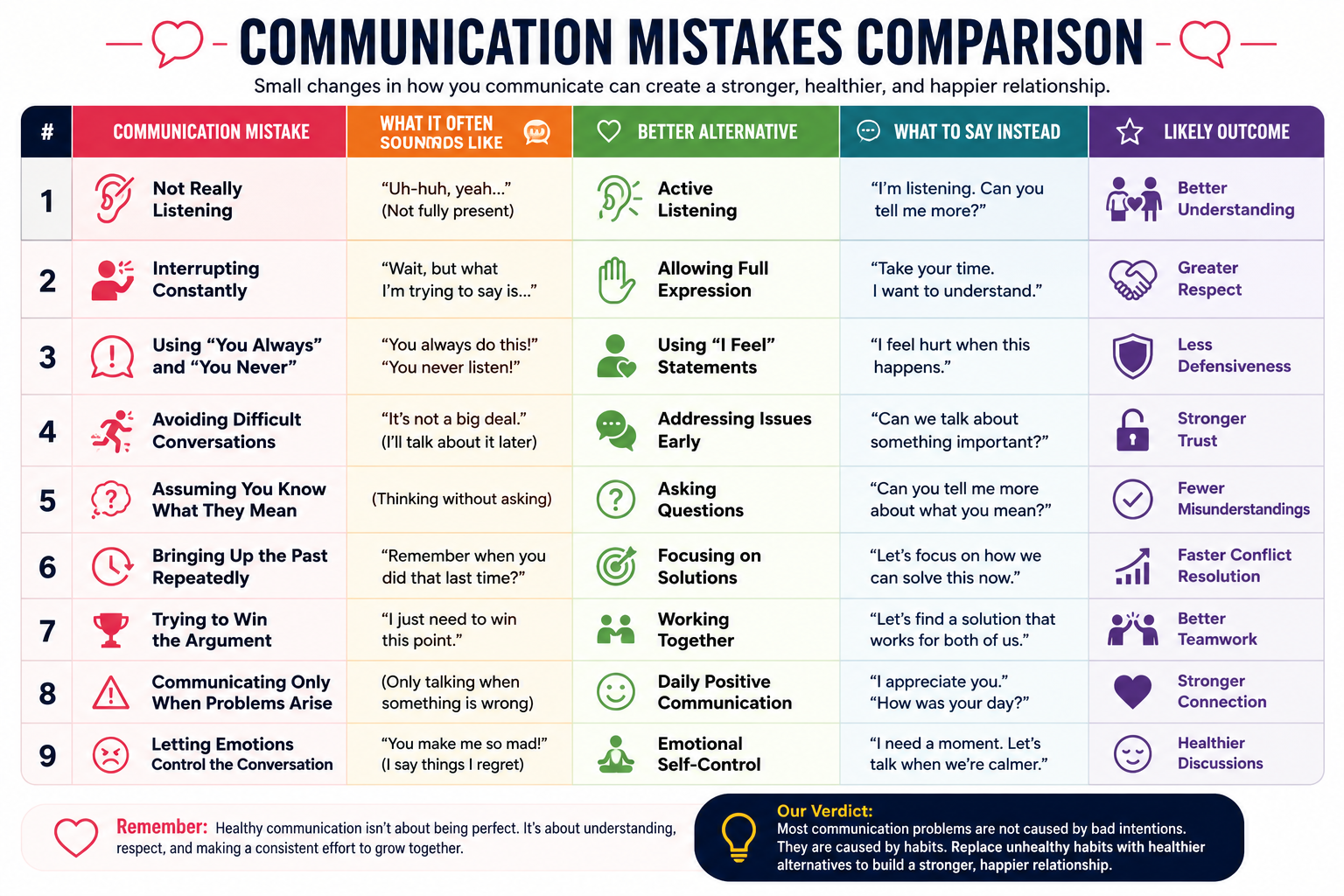
Communication Mistakes Comparison Table
Recommended Resources
Strong communication is the foundation of trust, emotional connection, and healthy relationships. The resources below will help you improve communication skills while strengthening your relationships and personal growth.
• 11 Signs of Emotional Maturity in a Relationship
• 13 Relationship Red Flags You Should Never Ignore
• How to Communicate Your Needs Without Starting Arguments
• 7 Ways Relationship Processes May Improve Communication, Trust and Personal Growth
• 11 Powerful Signs Your Relationship Is Growing Stronger
• Relationship Processes Review: Can Relationship Counter Intentions Affect Love and Connection?
• 13 Signs of a Healthy Relationship (And How to Build One)
• 11 Relationship Habits That Build Trust and Strengthen Connection
• 15 Powerful Ways to Build Emotional Connection in a Relationship
• 13 Trust-Building Habits That Strengthen Relationships
• 9 Powerful Ways to Rebuild Trust After It Has Been Broken
Related Personal Growth Articles
• How to Build Self-Confidence Naturally: 10 Proven Strategies for Personal Growth
• What Is Personal Empowerment? 7 Ways to Take Control of Your Life
• How to Build Personal Power: 9 Practical Ways to Feel More Confident and in Control
• 7 Proven Strategies for Overcoming Limiting Beliefs and Personal Growth
Related Kevin Trudeau Programs
• Superpower Processes: 9 Powerful Benefits of Kevin Trudeau’s Live Training
• Money Processes: 9 Powerful Benefits of Kevin Trudeau’s Live Training
• Kevin Trudeau Products: 11 Popular Programs Reviewed in 2026
Additional Learning Resources
External Resources
Frequently Asked Questions
Q: What are the most common communication mistakes in relationships?
A: Common communication mistakes include not listening, interrupting, making assumptions, avoiding difficult conversations, bringing up the past, and communicating only when problems occur.
Q: Why is communication important in a relationship?
A: Communication helps build trust, understanding, emotional connection, and effective conflict resolution. Strong communication often leads to stronger relationships.
Q: Can communication problems be fixed?
A: Yes. Most communication problems can be improved through awareness, practice, active listening, emotional control, and a willingness to understand each other’s perspective.
Q: What is active listening?
A: Active listening involves giving your full attention, avoiding interruptions, asking clarifying questions, and ensuring the other person feels heard and understood.
Q: How can couples improve communication quickly?
A: Start by listening more, interrupting less, asking questions, avoiding blame, and discussing concerns before they become major problems.
Strengthen Your Communication
Need a Flexible Payment Option?
Many participants choose a payment plan so they can begin improving their communication skills and strengthening their relationships sooner. Explore the available payment options and choose the option that best supports your journey.
Final Thoughts
Most relationship problems are not caused by a lack of love. They are often caused by communication habits that slowly create misunderstanding, frustration, and emotional distance.
The encouraging news is that communication skills can be improved. Small changes in how people listen, respond, express feelings, and handle disagreements can produce significant improvements in relationship quality.
By recognising the communication mistakes discussed in this guide and replacing them with healthier alternatives, couples can strengthen trust, deepen connection, and improve long-term relationship satisfaction.
Communication is not about being perfect. Every couple experiences misunderstandings, disagreements, and moments where communication could be improved.
What matters most is the willingness to listen, learn, and grow together.
By identifying the communication mistakes discussed in this guide and replacing them with healthier habits, couples can create stronger trust, deeper understanding, and greater emotional connection over time.
Healthy communication is one of the most valuable investments you can make in any relationship. The conversations you have today can shape the strength and happiness of your relationship for years to come.
Keep listening. Keep learning. Keep growing.
And may every conversation bring you closer together.
Relationship Communication Self-Assessment
Answer Yes or No.
• Do you listen without interrupting?
• Do you communicate honestly and respectfully?
• Do you ask questions instead of making assumptions?
• Do you stay calm during disagreements?
• Do you express appreciation regularly?
• Do you try to understand your partner’s perspective?
• Do you address problems before they become bigger?
• Do your conversations strengthen trust and emotional connection?
If you answered “Yes” to four or more questions, your communication reflects many of the habits associated with healthy, lasting relationships. Continue strengthening these skills through empathy, honesty, and consistent practice.





Thanks in support of sharing such a nice idea, post is nice, thats why i have
read it completely
Hey would you mind sharing which blog platform you’re
using? I’m going to start my own blog in the near future but I’m having a tough time choosing between BlogEngine/Wordpress/B2evolution and Drupal.
The reason I ask is because your layout seems different then most blogs
and I’m looking for something unique.
P.S My apologies for being off-topic but I
had to ask!
Hello!
Thanks so much for stopping by my site! I’m really glad it caught your attention. I’m using WordPress with a paid Elementor plugin theme. Just so you know, I’m still figuring things out in the blogging world too! I started with the free version for about a year and a half before I decided to upgrade.
I picked WordPress and Elementor because they’ve been around for a while, and there are tons of helpful tutorials on YouTube that make learning easy and enjoyable. I hope you find this helpful, and I wish you all the best on your blogging adventure!
Very energetic post, I liked that a lot. Will there be a part 2?
Hey there!
I haven’t come up with part 2 of this sequence just yet, but I’ve got a bunch of relationship articles on the site that you might enjoy. Feel free to ask my chat assistant to help you find the ones that catch your interest the most!