How Your Beliefs Affect Financial Success

Many people assume that financial success is determined primarily by intelligence, education, income, or opportunity. While these factors can certainly influence outcomes, personal beliefs also play an important role in shaping financial decisions and behaviours.
The beliefs individuals hold about money, success, risk, and personal responsibility often influence the choices they make every day. These choices can affect spending habits, saving strategies, career development, investing decisions, and the willingness to pursue new opportunities.
Positive financial beliefs can encourage growth, confidence, and proactive decision-making. Limiting beliefs, on the other hand, may create unnecessary barriers that prevent individuals from reaching their full potential.
This guide explores how beliefs influence financial outcomes and provides practical insights for developing a healthier and more productive relationship with money, opportunity, and financial success.
Table of Contents
What Are Financial Beliefs?
Financial beliefs are the assumptions, attitudes, and perspectives that individuals hold about money, wealth, earning, saving, and success. These beliefs often develop through childhood experiences, family influences, cultural messages, education, and personal experiences.
Because beliefs influence behaviour, they can affect financial decisions in ways that are not always obvious. Some beliefs encourage growth and opportunity, while others may limit confidence and restrict action.
The beliefs people hold about money and achievement often influence their willingness to pursue opportunities, take calculated risks, and develop skills that contribute to financial success.
Understanding these underlying beliefs is often the first step toward making more intentional financial decisions and creating better long-term outcomes.
"The financial results you experience tomorrow are often shaped by the beliefs you strengthen today."
Kevin Trudeau's Teaching Tweet
Why Beliefs Matter More Than Many People Realise
Every financial decision begins with a thought. Whether someone chooses to save money, invest, start a business, negotiate a salary increase, or pursue a new opportunity, their beliefs often influence their willingness to take action.
People who believe they can learn, grow, and improve their circumstances are often more willing to pursue opportunities and persist through challenges. In contrast, individuals who hold limiting beliefs may avoid risks, underestimate their abilities, or assume that success is out of reach.
For this reason, many successful entrepreneurs, investors, and business leaders place significant importance on mindset and personal development alongside financial education and long-term financial success.
Healthy Financial Beliefs That Support Success
The beliefs you reinforce each day influence the financial decisions you make over time.
| Financial Belief | Positive Impact |
|---|---|
| Abundance | Encourages opportunity recognition and optimism. |
| Personal Responsibility | Promotes proactive financial decisions. |
| Continuous Learning | Builds financial knowledge and confidence. |
| Long-Term Thinking | Supports wealth building through patience and consistency. |
| Self-Belief | Encourages action and resilience during challenges. |
Strong financial beliefs create stronger financial decisions, and stronger decisions often lead to better long-term outcomes.
7 Common Beliefs That Influence Financial Success
1. I Can Learn New Financial Skills
One of the most empowering beliefs a person can develop is the understanding that financial knowledge and skills can be learned. Successful money management, investing, budgeting, and wealth-building are not abilities that people are simply born with.
Individuals who believe they can improve their financial skills are often more willing to seek education, ask questions, and take action to improve their situation. This belief encourages growth and creates opportunities for long-term improvement.
A commitment to continuous learning can help individuals make better decisions and build greater confidence in their financial future. Over time, this commitment to learning can become a powerful driver of financial success.
2. Opportunities Can Be Created
Some people believe that success depends entirely on luck or circumstance. While external factors can influence outcomes, many opportunities are created through initiative, preparation, and persistence.
Individuals who believe opportunities can be created are often more proactive. They tend to develop new skills, build relationships, explore business ideas, and look for ways to solve problems.
This belief encourages action and increases the likelihood of recognising opportunities that others may overlook.
3. Mistakes Are Learning Opportunities
Fear of making mistakes can prevent people from taking action. However, financially successful individuals often view mistakes as opportunities to learn and improve rather than as permanent failures.
Every investor, entrepreneur, and business leader experiences setbacks at some point. The difference is often how they respond to those challenges.
Viewing mistakes as learning experiences encourages resilience, adaptability, and continuous improvement, all of which contribute to better long-term outcomes.
4. My Actions Influence My Results
Believing that your actions matter is closely connected to personal responsibility and growth. Individuals who recognise the impact of their decisions are often more motivated to improve their habits and take constructive action.
This belief encourages people to focus on what they can control rather than becoming overwhelmed by circumstances beyond their influence.
Over time, small positive actions can accumulate and produce meaningful improvements in financial outcomes, wellbeing, and financial success.
5. Long-Term Thinking Creates Better Results
Many financial challenges arise from focusing exclusively on short-term rewards. In contrast, people who prioritise long-term goals are often more willing to save, invest, learn new skills, and delay immediate gratification.
This perspective supports better decision-making because it encourages individuals to consider future consequences rather than only immediate outcomes.
Long-term thinking is a common characteristic among people who achieve sustainable financial growth and stability. This approach often supports sustainable financial success rather than short-term gains.
6. Wealth Is Built Through Consistent Habits
Many people focus on dramatic breakthroughs when thinking about financial success. However, lasting results are often created through small, consistent actions repeated over time.
Regular saving, continuous learning, responsible spending, and thoughtful investing can gradually produce significant results. While these habits may seem simple, their long-term impact can be substantial.
Believing that consistent habits matter encourages patience, discipline, and a greater focus on daily actions that support long-term financial growth. Many examples of financial success are built on consistent habits rather than dramatic breakthroughs.
7. Growth Is Always Possible
People who achieve financial success rarely believe that their abilities are fixed. Instead, they recognise that knowledge, skills, confidence, and opportunities can be developed through learning and experience.
This belief encourages individuals to continue improving regardless of their starting point. Rather than focusing on limitations, they focus on progress and the actions they can take to improve their situation.
A commitment to growth often creates greater resilience, adaptability, and willingness to pursue new opportunities that contribute to financial success throughout life.
Empowering Beliefs vs Limiting Beliefs Comparison Table
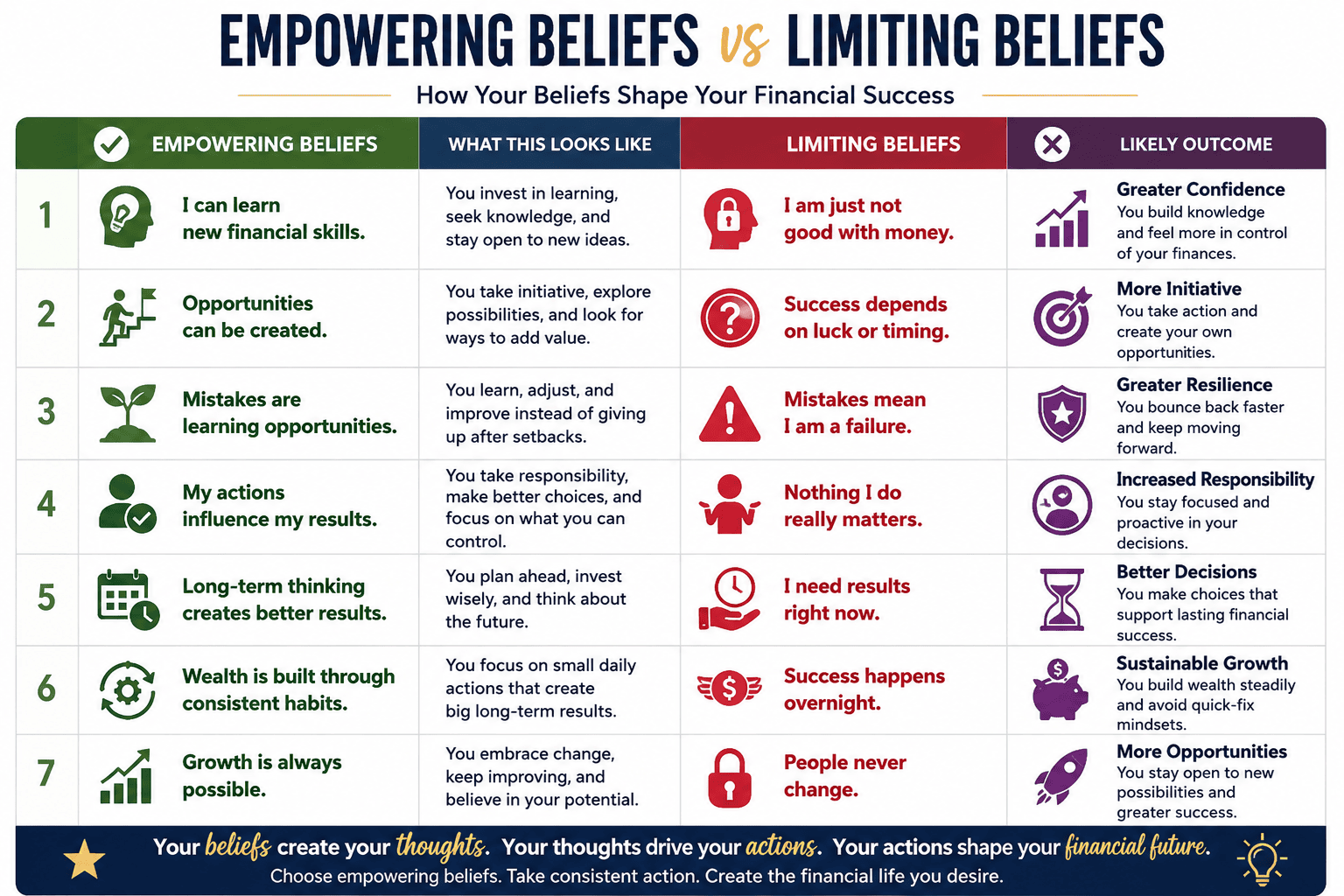
Created by KevGuru – Ignite Your Potential
The beliefs we hold often influence the actions we take, the opportunities we pursue, and the results we achieve. By replacing limiting beliefs with empowering beliefs, individuals can develop greater confidence, make better decisions, and create stronger foundations for long-term financial success.
Recommended Resources
Developing positive financial beliefs is an ongoing process that combines greater self-awareness, continuous learning, and consistent action. The resources below can help you strengthen your financial mindset and build lasting wealth habits.
• How to Remove Money Blocks and Create Financial Success
• Money Programming Explained: How Your Childhood Beliefs About Money Shape Your Financial Future
• Wealth Consciousness Explained: Why Some People Attract Money More Easily Than Others
• Financial Self-Sabotage: 9 Powerful Signs Hidden Patterns Are Holding You Back
• Counter Intentions Explained: 7 Dangerous Causes of Self-Sabotage
• 7 Signs Your Money Mindset Is Changing (Even If You Haven’t Made More Money Yet)
Related Money Mindset Articles
• What Is a Wealth Mindset? How to Think Like Wealthy People
• Abundance Mindset vs Scarcity Mindset: Key Differences Explained
• Why Some People Stay Financially Stuck: 9 Hidden Patterns That Keep People Broke
• Why Hard Work Alone Doesn’t Create Wealth: The Missing Piece Most People Never Learn
• 7 Common Money Mistakes: Why Smart People Stay Broke
Related Kevin Trudeau Programs
• Money Processes: 9 Powerful Benefits of Kevin Trudeau’s Live Training
• Superpower Processes: 9 Powerful Benefits of Kevin Trudeau’s Live Training
• Accelerator Processes: 9 Powerful Benefits of Kevin Trudeau’s Live Training
• Kevin Trudeau Products: 11 Popular Programs Reviewed in 2026
Additional Learning Resources
External Resources
Frequently Asked Questions
Q: What are financial beliefs?
A: Financial beliefs are the assumptions, attitudes, and perspectives people hold about money, wealth, success, and opportunity.
Q: Can beliefs affect financial success?
A: Yes. Beliefs influence decisions, behaviours, confidence levels, and willingness to pursue opportunities, all of which can affect financial outcomes.
Q: How do limiting beliefs develop?
A: Limiting beliefs often develop through childhood experiences, family influences, cultural messages, education, and personal experiences.
Q: Can financial beliefs be changed?
A: Yes. Through self-awareness, learning, and consistent practice, individuals can replace limiting beliefs with more constructive perspectives.
Q: What is the first step to changing financial beliefs?
A: The first step is identifying the beliefs that may be influencing your decisions. Once recognised, those beliefs can be evaluated and replaced with healthier alternatives.
Q: Can beliefs really influence financial success?
Yes. Beliefs often influence confidence, decision-making, risk tolerance, goal setting, and the willingness to pursue opportunities. These behaviours can significantly affect financial success over time.
Strengthen Your Financial Beliefs
Need a Flexible Payment Option?
Many participants choose a payment plan so they can begin improving their financial mindset and personal development sooner. Explore the available payment options and choose the plan that best supports your goals.
Final Thoughts
Financial success is influenced by more than income, education, or opportunity. The beliefs people hold about money, growth, responsibility, and possibility often play a significant role in shaping financial success over time.
Empowering beliefs encourage action, learning, resilience, and personal responsibility. Over time, these qualities can contribute to better decisions and improved financial outcomes.
The good news is that beliefs are not fixed. They can be examined, challenged, and strengthened through education, experience, and consistent effort.
By developing healthier beliefs and focusing on continuous improvement, individuals can create a stronger foundation for long-term financial growth and personal success.
Keep learning. Keep growing. Keep moving forward.
And may your future shine as brightly as the flame within you.
Financial Beliefs Self-Assessment
Answer Yes or No.
• Do you believe financial success is difficult to achieve?
• Do you often worry about money more than you feel confident about it?
• Do you hesitate to invest in yourself?
• Do you believe wealthy people simply had better opportunities?
• Do you avoid financial risks even when they are well planned?
• Do you struggle to recognise new financial opportunities?
• Do you believe your current financial situation cannot change?
• Do you regularly doubt your ability to create wealth?
If you answered “Yes” to four or more questions, your financial beliefs may be influencing your financial decisions more than you realise. Developing greater financial awareness is often the first step toward creating lasting financial success.