11 Signs You Are Holding Yourself Back (And How to Break Free)
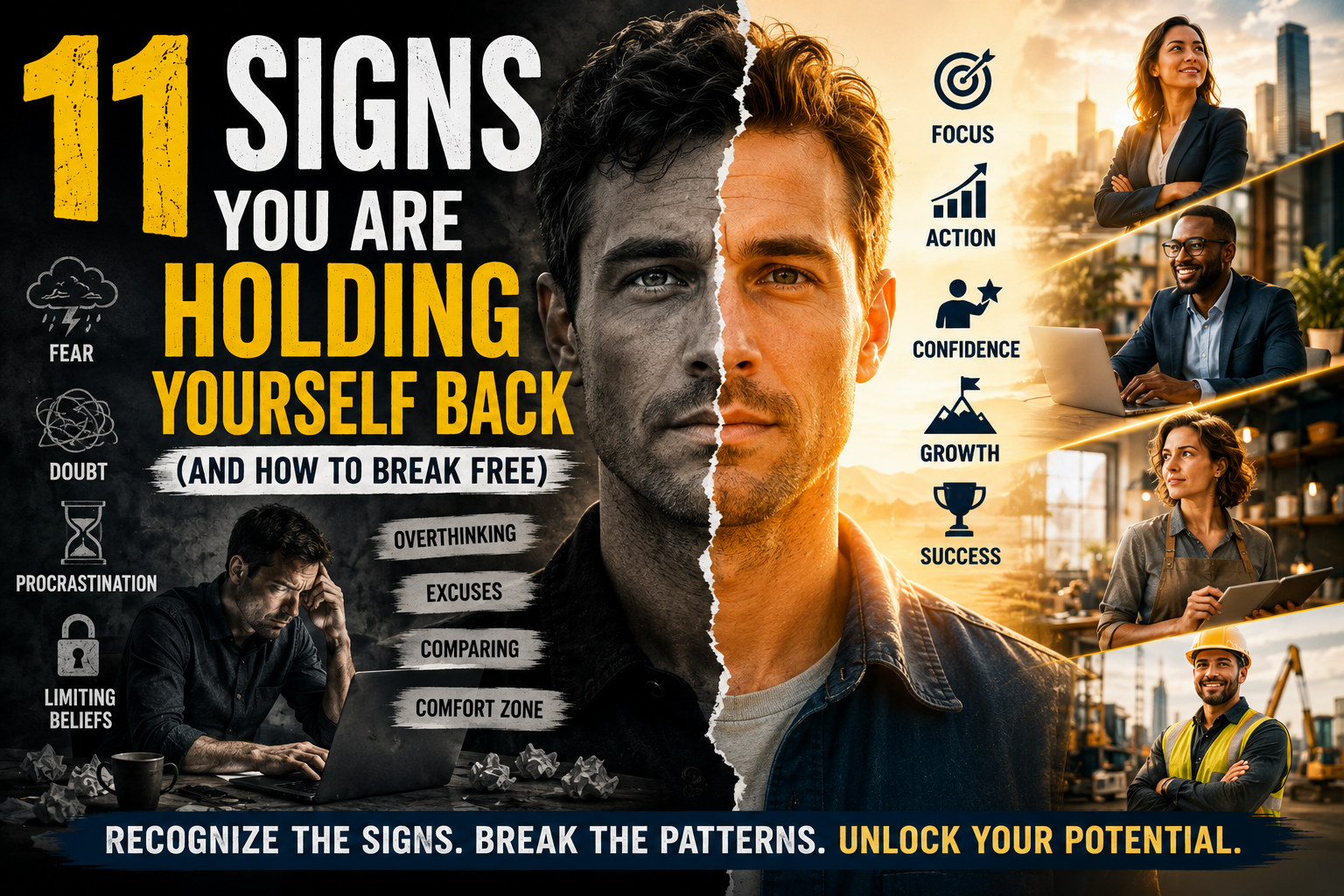
Many people dream of greater success, confidence, happiness, and fulfilment. Yet despite their best intentions, they often feel stuck in the same patterns year after year.
The truth is that external circumstances are not always the biggest obstacle to personal growth. In many cases, the habits, beliefs, and behaviours that limit progress come from within.
Holding yourself back does not mean you lack potential. It simply means there may be thoughts, fears, habits, or limiting beliefs preventing you from fully pursuing the opportunities available to you.
This guide explores 11 common signs that may be holding yourself back and practical strategies for overcoming them so you can move forward with greater confidence and purpose. If you have ever felt stuck, frustrated, or unable to reach your potential, understanding what is holding yourself back may be the first step toward creating meaningful change and long-term success.
Table of Contents
What Does It Mean to Hold Yourself Back?
Holding yourself back refers to behaviours, beliefs, habits, or patterns of thinking that prevent you from reaching your full potential. These limitations can affect confidence, relationships, career development, financial success, personal growth, and overall fulfilment.
Many people are holding yourself back without realising it. Self-doubt, fear of failure, procrastination, limiting beliefs, and avoiding responsibility can quietly influence decisions and opportunities over time.
Often, people are not fully aware that they are creating barriers to their own progress. Identifying what is holding yourself back is one of the most important steps toward creating meaningful change.
Once recognised, many self-imposed limitations can be challenged and replaced with more empowering habits and perspectives. The sooner you identify the behaviours holding yourself back, the sooner you can begin creating positive change.
"The biggest obstacle to your future is often the story you continue telling yourself about what you cannot do."
Kevin Trudeau's Teaching Tweet
11 Signs You May Be Holding Yourself Back
1. You Constantly Doubt Yourself
Self-doubt can prevent individuals from pursuing opportunities, taking risks, and expressing their true potential.
While occasional uncertainty is normal, constant self-doubt often limits growth and reinforces a lack of confidence.
Building self-belief usually begins with recognising strengths, taking action, and focusing on progress rather than perfection.
For many people, self-doubt becomes one of the most common forms of holding yourself back because it creates hesitation and discourages action before progress even begins.
2. You Wait for Perfect Conditions
Many people delay action while waiting for the perfect time, perfect plan, or perfect circumstances.
Unfortunately, perfect conditions rarely exist. Progress often comes from taking action despite uncertainty.
Those who achieve meaningful results typically learn, adapt, and improve along the way rather than waiting indefinitely.
3. You Focus More on Problems Than Solutions
Challenges are a natural part of life, but constantly focusing on problems can make obstacles appear larger than they really are.
People who move forward successfully often acknowledge difficulties while directing their attention toward possible solutions. This shift in perspective encourages action and creates opportunities for progress.
Developing a solution-focused mindset can improve confidence, resilience, and decision-making.
4. You Fear Failure
Fear of failure prevents many people from taking action. They worry about making mistakes, being judged, or experiencing disappointment.
However, failure is often one of life’s greatest teachers. Most successful individuals have experienced setbacks and used those experiences to improve.
Viewing failure as feedback rather than defeat can help reduce fear and encourage growth.
Fear of failure is also one of the most common reasons people remain stuck. In many cases, it becomes one of the invisible forces holding you back from opportunities that could lead to personal growth, confidence, and success.
5. You Compare Yourself to Others
Comparing yourself to others can create unnecessary pressure and discourage progress. Every individual has different experiences, strengths, opportunities, and challenges.
Constant comparison often leads to frustration because it focuses attention on what others have achieved rather than what you can accomplish yourself.
A more productive approach is to compare your current progress with your past performance and focus on continuous improvement.
Comparing yourself to others can become a hidden form of holding yourself back because it distracts you from your own growth and achievements.
6. You Avoid Taking Responsibility
Taking responsibility for your choices can feel uncomfortable, but it is one of the most empowering habits you can develop.
When individuals blame circumstances, other people, or bad luck for every challenge, they often give away their ability to influence outcomes.
Taking ownership of decisions encourages proactive behaviour and creates opportunities for positive change.
Understanding the difference between genuine obstacles and holding yourself back is important. While some challenges are outside your control, many barriers can be reduced or eliminated through awareness, personal growth, and action.
7. You Set Goals but Never Take Action
Having goals is important, but goals alone do not create results. Meaningful progress occurs when goals are supported by consistent action.
Many people enjoy planning and dreaming about future success but struggle to take the necessary steps to move forward.
Small, consistent actions often produce greater results than occasional bursts of motivation.
Many people mistakenly believe that motivation comes first. In reality, action often creates motivation. Waiting for inspiration can become another habit that is quietly holding you back from achieving meaningful results.
8. You Let Fear of Judgment Control Your Decisions
Many people worry excessively about what others might think of them. This fear can prevent them from pursuing opportunities, sharing ideas, or trying new experiences.
While feedback can be valuable, allowing fear of judgment to dictate decisions often limits growth and personal fulfilment.
Confidence grows when individuals make choices based on their values rather than the opinions of others.
9. You Stay Inside Your Comfort Zone
Comfort zones feel safe because they are familiar. However, personal growth often occurs when individuals are willing to explore new experiences, develop new skills, and take calculated risks.
Remaining in a comfort zone for too long can limit opportunities and reduce confidence in handling unfamiliar situations.
Expanding your comfort zone gradually can help build resilience, confidence, and adaptability.
Comfort zones can feel safe, but they often become a hidden form of holding yourself back. Growth usually occurs when people challenge themselves to learn, adapt, and explore new opportunities.
10. You Give Up Too Quickly
Many worthwhile goals require persistence. Challenges, setbacks, and obstacles are often part of the journey toward success.
People who give up at the first sign of difficulty may never discover what they are truly capable of achieving.
Persistence does not mean ignoring reality. It means remaining committed to progress while adapting and learning along the way.
11. You Don't Believe You Can Change
One of the most limiting beliefs a person can hold is the belief that change is impossible.
People with a growth mindset understand that knowledge, skills, confidence, habits, and opportunities can all develop over time.
Believing that change is possible encourages learning, action, and continuous improvement. It opens the door to greater possibilities and long-term success.
Common Self-Limiting Behaviours and Better Alternatives
Recognising self-limiting behaviours is the first step toward creating positive change.
| Self-Limiting Behaviour | Positive Alternative |
|---|---|
| Fear of failure | Take imperfect action. |
| Self-doubt | Build confidence through experience. |
| Procrastination | Take one small step today. |
| Negative self-talk | Develop supportive internal dialogue. |
| Avoiding opportunities | Say yes to personal growth. |
Greater self-awareness allows you to recognise the behaviours that no longer serve you and replace them with habits that support long-term success.
How to Break Free and Move Forward
Recognising the signs that may be holding you back is an important first step, but awareness alone is not enough. Lasting change occurs when awareness is followed by action.
Start by identifying one or two areas where you recognise these patterns in your own life. Focus on making small improvements rather than attempting to change everything at once.
Many people discover that once they stop holding themselves back, new opportunities begin to appear in unexpected ways.
Consistent action, even in small amounts, often creates momentum. Over time, these small changes can lead to significant improvements in confidence, personal growth, relationships, career opportunities, and overall fulfilment.
Why People Hold Themselves Back
Many people assume that external circumstances are the primary reason they struggle to achieve their goals. While challenges certainly exist, the reality is that internal beliefs and habits often play an equally important role.
Self-doubt, fear of failure, perfectionism, procrastination, and limiting beliefs are common examples of behaviours that can keep people stuck for years.
Understanding what may be holding yourself back allows you to identify patterns, challenge assumptions, and take action toward meaningful change.
Once these barriers are recognised, they often become easier to overcome. People who stop holding themselves back frequently discover greater confidence, stronger relationships, better opportunities, improved financial success, and increased personal fulfilment.
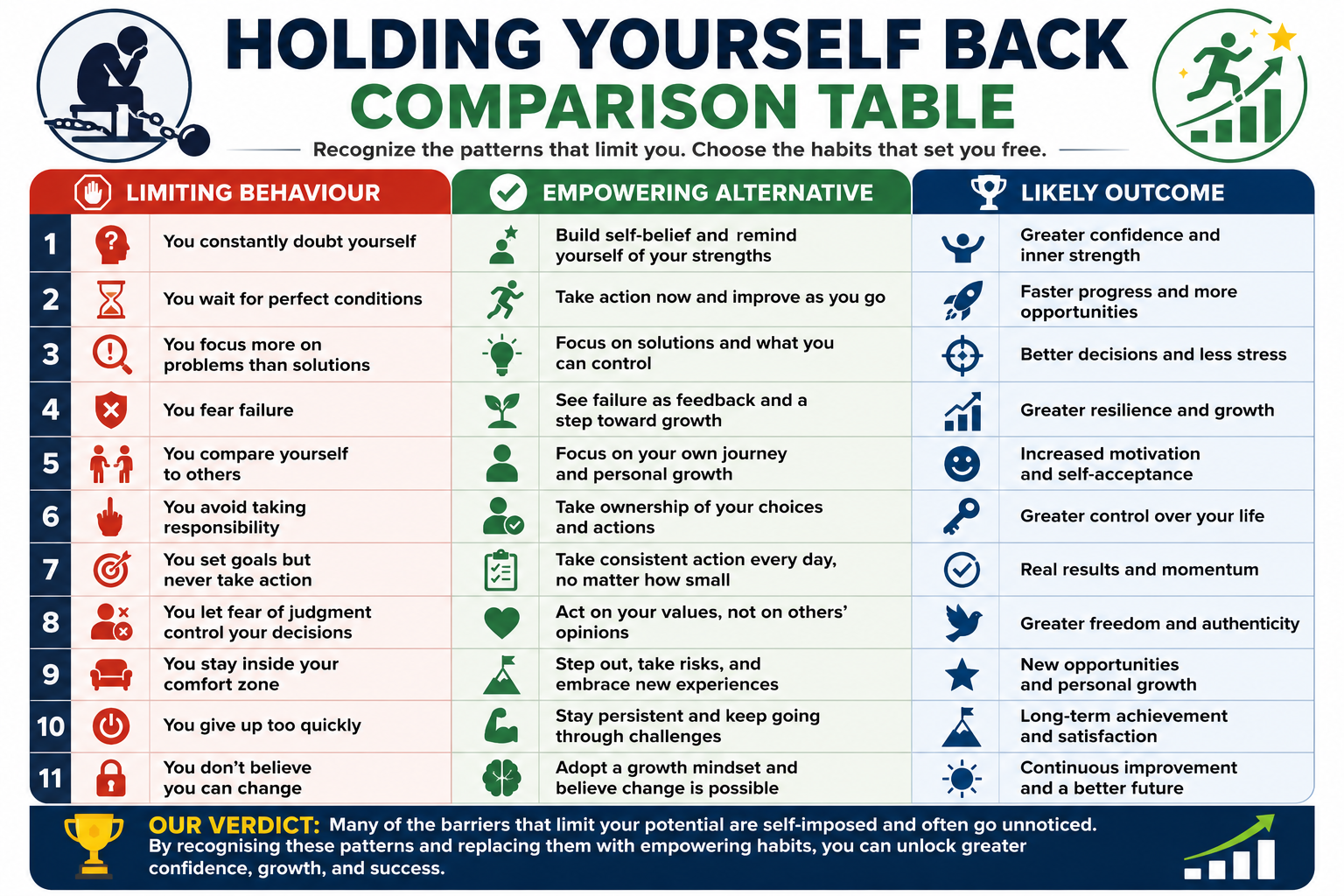
Holding Yourself Back Comparison Table
Recommended Resources
Many of the behaviours that hold people back can be changed through greater self-awareness, confidence, personal responsibility, and consistent action. The resources below will help you overcome self-imposed limitations and move forward with greater confidence.
• 7 Failure Habits That Keep Successful People Stuck (And How to Replace Them)
• Negative Thinking: 14 Hidden Ways It May Be Affecting Your Success
• Self-Sabotage: 13 Dangerous Behaviors That Secretly Hold People Back
• 7 Proven Strategies for Overcoming Limiting Beliefs and Personal Growth
• How to Build Personal Power: 9 Practical Ways to Feel More Confident and in Control
• How to Build Self-Confidence Naturally: 10 Proven Strategies for Personal Growth
• What Is Personal Empowerment? 7 Ways to Take Control of Your Life
• Why Successful People Think Differently: 7 Success Mindset Habits
• Why Goal Achievement Matters More Than Goal Setting
Related Personal Growth Articles
• 7 Powerful Success Habits of Highly Successful People
• Goal Setting: 9 Powerful Strategies to Achieve Your Goals Faster
• 7 Failure Habits That Keep Successful People Stuck (And How to Replace Them)
• Superpower Processes: 9 Powerful Benefits of Kevin Trudeau’s Live Training
Related Kevin Trudeau Programs
• Accelerator Processes: 9 Powerful Benefits of Kevin Trudeau’s Live Training
• Money Processes: 9 Powerful Benefits of Kevin Trudeau’s Live Training
• Kevin Trudeau Products: 11 Popular Programs Reviewed in 2026
Additional Learning Resources
External Resources
Why People Hold Themselves Back
Many people assume that external circumstances are the primary reason they struggle to achieve their goals. While challenges certainly exist, the reality is that internal beliefs and habits often play an equally important role.
Self-doubt, fear of failure, perfectionism, procrastination, and limiting beliefs are common examples of behaviours that can keep people stuck for years.
Understanding what may be holding you back allows you to identify patterns, challenge assumptions, and take action toward meaningful change. Once these barriers are recognised, they often become easier to overcome.
Frequently Asked Questions
Q: What does it mean to hold yourself back?
A: Holding yourself back refers to behaviours, beliefs, or habits that prevent you from reaching your full potential.
Q: Why do people hold themselves back?
A: Common reasons include fear of failure, self-doubt, limiting beliefs, fear of judgment, and a lack of confidence.
Q: Can self-limiting behaviours be changed?
A: Yes. Many self-limiting patterns can be improved through awareness, personal development, and consistent action.
Q: What is the first step to overcoming self-imposed limitations?
A: The first step is recognising the behaviours, beliefs, or habits that may be limiting your progress.
Q: How can I stop holding myself back?
A: Building confidence, challenging limiting beliefs, taking responsibility, setting goals, and taking consistent action can help create positive change.
Break Free from What's Holding You Back
Need a Flexible Payment Option?
Many participants choose a payment plan so they can begin overcoming self-limiting behaviours and strengthening their confidence sooner. Explore the available payment options and choose the plan that best supports your personal growth journey.
Final Thoughts
Many people believe they need better circumstances, more resources, or greater opportunities before they can move forward. In reality, some of the biggest obstacles to success can come from within.
The good news is that the patterns holding yourself back are not permanent. Once recognised, they can be challenged, replaced, and improved through consistent effort and personal growth.
By identifying the habits, fears, and beliefs that may be holding yourself back and taking action to overcome them, you can create greater confidence, stronger relationships, better opportunities, financial success, and a more fulfilling future.
Every meaningful change begins with a decision to move forward.
Keep learning. Keep growing. Keep taking action.
And may your future shine as brightly as the flame within you.
Self-Limiting Behaviours Self-Assessment
Answer Yes or No.
• Do you avoid opportunities because you doubt yourself?
• Do you procrastinate on important goals?
• Do you often fear making mistakes?
• Do you worry too much about what others think?
• Do you struggle to finish what you start?
• Do you regularly criticise yourself?
• Do you hesitate before taking positive action?
• Do you believe you could achieve more if you trusted yourself?
If you answered “Yes” to four or more questions, self-limiting behaviours may be slowing your progress. Developing greater self-awareness, confidence, and consistent action can help you break free and reach your potential.