11 Relationship Habits That Build Trust and Strengthen Connection

Many people believe strong relationships happen naturally. While chemistry and attraction can bring two people together, lasting relationships are usually built through consistent habits and behaviours over time.
Small daily actions often have a greater impact on relationship satisfaction than grand romantic gestures. The way couples communicate, show appreciation, handle conflict, and support each other can either strengthen or weaken their connection.
Healthy relationship habits create trust, emotional safety, respect, and intimacy. When practiced consistently, these habits help relationships remain strong even during challenging periods.
This guide explores 11 powerful relationship habits that can help build trust, strengthen connection, and create a healthier, more fulfilling partnership.
Table of Contents
Why Relationship Habits Matter
Relationships are influenced by what people repeatedly do rather than what they occasionally do.
Positive habits create positive outcomes. Small acts of kindness, appreciation, honesty, and support gradually build trust and emotional connection over time.
Negative habits, on the other hand, can slowly damage even strong relationships if left unchecked.
By developing healthy relationship habits, couples create a strong foundation that supports long-term happiness and stability.
"The strongest relationships are built one positive habit at a time."
Kevin Trudeau's Teaching Tweet
11 Relationship Habits That Build Trust and Strengthen Connection
1. Communicate Every Day
Strong communication is one of the most important relationship habits.
Couples who regularly talk about their experiences, feelings, goals, and concerns tend to maintain stronger emotional connections.
Communication does not always need to involve deep conversations. Even simple daily check-ins help partners stay connected.
Practical Tip:
Ask meaningful questions instead of only discussing schedules and responsibilities.
2. Show Appreciation Frequently
Feeling appreciated is a fundamental human need.
Many relationships weaken because appreciation gradually disappears and positive actions go unnoticed.
Healthy couples regularly acknowledge effort, express gratitude, and recognise each other’s contributions.
Practical Tip:
Look for something to genuinely appreciate about your partner every day.
3. Keep Your Promises
Trust grows when words and actions consistently match.
Keeping promises demonstrates reliability and reinforces confidence in the relationship.
Even small commitments matter because they contribute to the overall perception of trustworthiness.
Practical Tip:
Avoid making promises you are unlikely to keep.
4. Make Quality Time a Priority
Busy schedules can easily create emotional distance.
Healthy relationship habits include intentionally making time for meaningful connection and shared experiences.
Quality time helps couples maintain intimacy, strengthen communication, and create positive memories together.
Practical Tip:
Schedule dedicated time together just as you would any other important commitment.
5. Listen to Understand, Not Just to Respond
Many people listen with the intention of replying rather than understanding.
Healthy relationship habits involve giving your partner your full attention and genuinely trying to understand their perspective.
Active listening reduces misunderstandings, strengthens emotional connection, and helps people feel valued and respected.
Practical Tip:
Before responding, briefly summarize what your partner said to ensure you understand them correctly.
6. Support Each Other During Difficult Times
Life inevitably brings challenges, setbacks, stress, and uncertainty.
One of the strongest relationship habits is showing support during difficult moments rather than withdrawing emotionally.
Knowing that someone will stand beside you during hard times creates trust, emotional safety, and resilience within the relationship.
Practical Tip:
Ask, “How can I support you right now?” instead of assuming what your partner needs.
7. Handle Conflict Respectfully
Conflict itself is not the problem. The way conflict is handled often determines whether a relationship grows stronger or weaker.
Healthy couples focus on solving problems rather than attacking each other personally.
Respectful disagreement helps build trust because both individuals feel heard and valued even when they disagree.
Practical Tip:
Avoid absolute statements such as “you always” or “you never,” which often create defensiveness.
8. Maintain Emotional Intimacy
Emotional intimacy involves sharing thoughts, feelings, experiences, dreams, and concerns openly with each other.
Many relationships struggle not because of a lack of love but because emotional connection slowly fades over time.
Maintaining emotional intimacy helps partners remain connected and strengthens long-term relationship satisfaction.
Practical Tip:
Regularly discuss goals, challenges, hopes, and personal experiences beyond day-to-day responsibilities.
9. Respect Individual Differences
No two people are exactly alike.
Healthy relationship habits include accepting differences in personality, communication style, interests, and perspectives.
Trying to change another person often creates frustration and resentment. Respecting differences encourages understanding and mutual respect.
Practical Tip:
Focus on understanding differences rather than trying to eliminate them.
10. Encourage Each Other's Goals and Dreams
Healthy relationships thrive when both individuals feel supported in pursuing their personal goals, ambitions, and dreams.
Rather than feeling threatened by each other’s success, strong couples celebrate achievements and provide encouragement during challenges.
Supporting your partner’s goals demonstrates trust, respect, and belief in their potential. It also strengthens the partnership because both people feel valued and understood.
Practical Tip:
Ask your partner about their current goals and look for small ways to support their progress.
11. Continue Growing Together
One of the most powerful relationship habits is committing to continuous growth together.
People change over time. Interests evolve, priorities shift, and new challenges emerge throughout life.
Healthy couples remain curious about each other and continue learning, adapting, and growing together rather than assuming the relationship will thrive without effort.
Growth creates fresh experiences, deeper connection, and a stronger sense of partnership over the long term.
Practical Tip:
Set shared goals and regularly discuss ways you can grow individually and as a couple.
Relationship Habits That Damage Trust
Just as positive habits strengthen relationships, negative habits can gradually weaken trust and connection.
Some common habits that damage relationships include:
• Breaking promises
• Poor communication
• Taking each other for granted
• Constant criticism
• Dishonesty
• Avoiding difficult conversations
• Ignoring boundaries
• Emotional withdrawal
Recognising these habits early can help prevent long-term relationship problems.
Relationship Habits That Create Lasting Trust
Strong relationships are rarely built through one grand gesture. They are built through small positive habits that are repeated every day.
| Relationship Habit | Positive Result |
|---|---|
| Honest Communication | Builds trust and understanding. |
| Active Listening | Makes both people feel valued. |
| Showing Appreciation | Strengthens emotional connection. |
| Forgiveness | Allows relationships to heal and grow. |
| Shared Growth | Creates a stronger future together. |
Healthy relationship habits become stronger every time two people intentionally choose trust, respect, communication, and understanding.
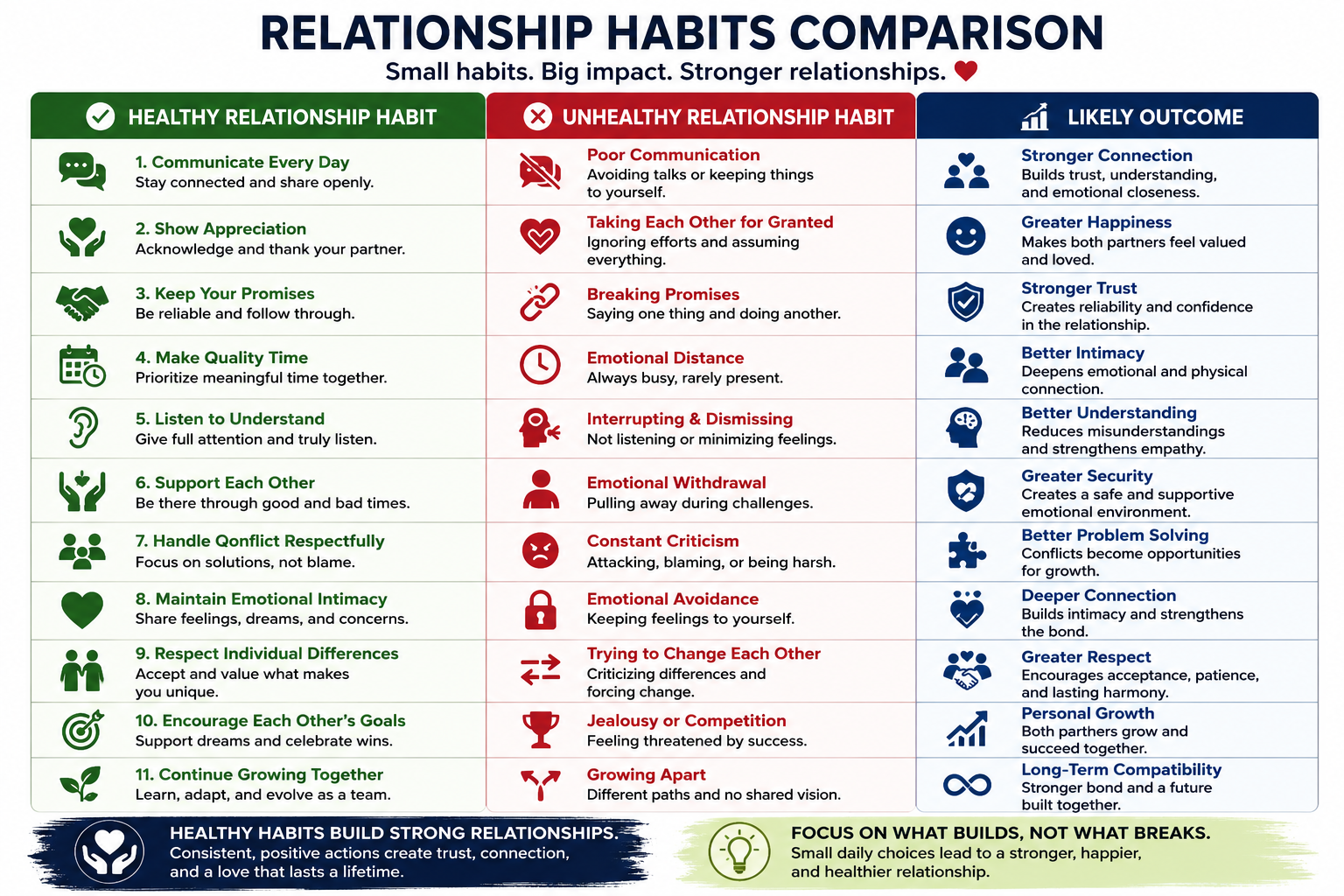
Relationship Habits Comparison Table
Recommended Resources
Strong relationships are built through trust, communication, emotional awareness, and consistent positive habits. The resources below will help you strengthen your relationships while continuing your personal growth journey.
• 11 Signs of Emotional Maturity in a Relationship
• 13 Relationship Red Flags You Should Never Ignore
• How to Communicate Your Needs Without Starting Arguments
• 7 Ways Relationship Processes May Improve Communication, Trust and Personal Growth
• 11 Powerful Signs Your Relationship Is Growing Stronger
• Relationship Processes Review: Can Relationship Counter Intentions Affect Love and Connection?
• 13 Signs of a Healthy Relationship (And How to Build One)
• 15 Powerful Ways to Build Emotional Connection in a Relationship
• 13 Trust-Building Habits That Strengthen Relationships
• 9 Communication Mistakes That Damage Relationships (And How to Fix Them)
Related Personal Growth Articles
• How to Build Self-Confidence Naturally: 10 Proven Strategies for Personal Growth
• What Is Personal Empowerment? 7 Ways to Take Control of Your Life
• How to Build Personal Power: 9 Practical Ways to Feel More Confident and in Control
• 7 Proven Strategies for Overcoming Limiting Beliefs and Personal Growth
Related Kevin Trudeau Programs
• Superpower Processes: 9 Powerful Benefits of Kevin Trudeau’s Live Training
• Money Processes: 9 Powerful Benefits of Kevin Trudeau’s Live Training
• Accelerator Processes: 9 Powerful Benefits of Kevin Trudeau’s Live Training
• Kevin Trudeau Products: 11 Popular Programs Reviewed in 2026
Additional Learning Resources
External Resources
Frequently Asked Questions
Q: What are relationship habits?
A: Relationship habits are the daily behaviours and actions that influence the quality of a relationship over time. Positive habits help build trust, communication, and emotional connection.
Q: Why are relationship habits important?
A: Relationships are shaped by what people consistently do rather than what they occasionally do. Small positive habits can create significant long-term improvements.
Q: What is the most important relationship habit?
A: Communication is often considered one of the most important relationship habits because it supports trust, understanding, conflict resolution, and emotional intimacy.
Q: Can relationship habits be improved?
A: Yes. Most relationship habits can be strengthened through awareness, practice, consistency, and a willingness to grow together.
Q: How long does it take to build better relationship habits?
A: The timeframe varies, but small positive actions practiced consistently can begin improving a relationship almost immediately.
Final Thoughts
Build Trust Every Day
Need a Flexible Payment Option?
Many participants choose a payment plan so they can begin strengthening their relationships and personal growth sooner. Explore the available payment options and choose the plan that best supports your journey.
Many people assume that successful relationships depend primarily on luck, compatibility, or chemistry. While those factors can play a role, strong relationships are usually built through consistent habits practiced over time.
The small actions couples take each day often have a greater impact than occasional grand gestures. Communication, appreciation, trust, support, emotional intimacy, and mutual respect all contribute to long-term relationship success.
By focusing on the relationship habits discussed in this guide, couples can strengthen connection, improve trust, and create a healthier and more fulfilling partnership.
Healthy relationships are not built in a single day. They are built through thousands of small moments of kindness, understanding, support, and commitment.
Keep learning. Keep growing. Keep connecting.
And may your relationships become stronger with every positive habit you practice together.
Relationship Habits Self-Assessment
Answer Yes or No.
• Do you communicate openly and honestly?
• Do you actively listen without interrupting?
• Do you regularly show appreciation?
• Do you trust your partner?
• Do you support each other’s goals?
• Do you resolve disagreements respectfully?
• Do you make time for each other?
• Do you continue growing together as a couple?
If you answered “Yes” to four or more questions, your relationship demonstrates many of the habits associated with healthy, lasting relationships. Continue strengthening these habits through communication, trust, and consistent positive actions.