9 Powerful Ways to Rebuild Trust After It Has Been Broken

Trust is one of the most valuable foundations of a healthy relationship. When trust is strong, people feel safe, supported, respected, and emotionally connected.
Unfortunately, trust can sometimes be damaged through dishonesty, broken promises, secrecy, misunderstandings, or repeated disappointments.
When trust is broken, many people wonder whether they can rebuild trust and restore the relationship. The good news is that many couples successfully rebuild trust when both people are willing to communicate honestly, take responsibility, and commit to positive change.
Rebuilding trust is rarely a quick process. It requires patience, consistency, accountability, and effort from everyone involved.
The ability to rebuild trust often determines whether a relationship grows stronger after a challenge or continues to struggle with uncertainty and emotional distance.
This guide explores 9 powerful ways to rebuild trust after it has been broken and strengthen your relationship moving forward.
Table of Contents
Can Trust Really Be Rebuilt?
One of the most common questions people ask after trust has been damaged is whether rebuilding trust is even possible.
In many situations, the answer is yes.
While some circumstances may be more difficult than others, people can often rebuild trust when there is genuine accountability, consistent effort, and a willingness to learn from mistakes.
Rebuilding trust does not mean pretending the problem never happened. Instead, it involves creating new experiences that gradually restore confidence, safety, and reliability.
Many couples who successfully rebuild trust discover that the process encourages healthier communication, stronger boundaries, and greater emotional awareness.
The process takes time, but many relationships become stronger because of the lessons learned along the way.
"Trust is rebuilt one honest conversation, one consistent action, and one kept promise at a time."
Kevin Trudeau's Teaching Tweet
9 Powerful Ways to Rebuild Trust
1. Take Full Responsibility
Trust cannot begin to heal if responsibility is avoided.
When trust has been damaged, it is important to acknowledge mistakes honestly and without excuses. Blaming circumstances, other people, or external factors often delays the healing process.
Taking responsibility demonstrates maturity, accountability, and respect for the relationship.
People are more likely to rebuild trust when they see genuine ownership of mistakes.
How to Apply This:
Clearly acknowledge what happened, accept responsibility, and focus on solutions rather than excuses.
2. Communicate Honestly and Openly
Honest communication is essential when rebuilding trust.
People who have experienced disappointment often need reassurance that future communication will be truthful and transparent.
Open conversations help reduce uncertainty and create opportunities for understanding and healing.
Avoid hiding information, withholding important details, or giving incomplete answers.
How to Apply This:
Choose honesty even when conversations feel uncomfortable. Transparency often accelerates the trust-building process.
3. Be Consistent
Trust is rebuilt through repeated positive experiences.
Consistency demonstrates reliability and helps restore confidence over time.
Many people focus on what they say, but trust is often rebuilt through what they repeatedly do.
Small actions performed consistently usually have a greater impact than occasional grand gestures.
How to Apply This:
Follow through on commitments, keep promises, and demonstrate dependable behaviour every day.
4. Be Patient With The Process
Trust often takes time to rebuild because emotional wounds do not disappear immediately.
The person who was hurt may need time to process emotions, ask questions, and regain confidence in the relationship.
Impatience can create additional pressure and frustration.
Patience allows healing to occur naturally while trust is gradually restored.
How to Apply This:
Focus on steady progress rather than expecting immediate results.
5. Demonstrate Change Through Actions
One of the biggest mistakes people make when trying to rebuild trust is relying solely on words.
Apologies are important, but trust is usually restored through consistent actions rather than promises.
When behaviour changes over time, people begin to feel safer and more confident that the situation will not be repeated.
Actions provide evidence that growth and change are taking place.
How to Apply This:
Identify the behaviours that damaged trust and actively replace them with healthier habits that demonstrate reliability, honesty, and respect.
6. Allow Questions and Honest Conversations
When trust has been damaged, the affected person often has questions, concerns, and emotions that need to be processed.
Avoiding difficult conversations may create additional uncertainty and slow the healing process.
Open discussion helps both people understand what happened and what needs to change moving forward.
How to Apply This:
Create a safe space for honest conversations. Listen without becoming defensive and focus on understanding rather than winning an argument.
7. Rebuild Emotional Connection
Trust and emotional connection are closely linked.
When trust is damaged, emotional closeness often weakens as well.
Rebuilding trust becomes easier when couples intentionally reconnect through meaningful conversations, shared experiences, quality time, and emotional support.
How to Apply This:
Schedule regular opportunities to connect without distractions. Focus on listening, understanding, and enjoying time together.
8. Set Clear Expectations Moving Forward
Unclear expectations can create confusion and increase the likelihood of future misunderstandings.
Healthy relationships benefit from discussing boundaries, expectations, communication preferences, and relationship goals.
Clear expectations help both people understand what trust-building looks like moving forward.
How to Apply This:
Discuss what each person needs in order to feel safe, respected, and supported as trust is rebuilt.
9. Focus on Long-Term Growth
Rebuilding trust is not simply about repairing past damage.
It is also an opportunity to create a stronger relationship moving forward.
Many couples discover that working through challenges helps them improve communication, increase self-awareness, strengthen emotional connection, and develop healthier relationship habits.
How to Apply This:
View trust rebuilding as a process of growth rather than simply a recovery process.
Common Mistakes That Slow the Process
Many people unintentionally make rebuilding trust more difficult by focusing on short-term relief instead of long-term progress.
Common mistakes include:
• Expecting trust to return immediately
• Avoiding difficult conversations
• Making promises without changing behaviour
• Becoming defensive when questions are asked
• Repeating the behaviours that damaged trust
• Focusing on being right instead of understanding
• Ignoring emotional needs
Recognising these mistakes can help couples stay focused on meaningful progress and healthier relationship habits.
Signs Trust Is Being Rebuilt
Trust is often rebuilt gradually rather than all at once.
Positive signs may include:
• Improved communication
• Greater openness and honesty
• Increased emotional safety
• More consistent behaviour
• Fewer misunderstandings
• Greater confidence in one another
• More willingness to be vulnerable
• Stronger emotional connection
These signs indicate that confidence, security, and trust are beginning to return.
Steps That Help Rebuild Trust
Trust is rebuilt through consistent behaviours rather than promises alone. Every positive action strengthens the relationship over time.
| Trust Rebuilding Step | Why It Matters |
|---|---|
| Honest Communication | Creates openness and transparency. |
| Personal Accountability | Shows responsibility for past actions. |
| Consistency | Builds reliability over time. |
| Patience | Allows emotional healing. |
| Mutual Commitment | Strengthens long-term relationship growth. |
Trust grows stronger when honest conversations are supported by consistent actions and genuine commitment to positive change.
Why Consistency Is Essential to Rebuild Trust
Many people underestimate the importance of consistency when trying to rebuild trust.
After trust has been damaged, people often pay closer attention to actions than words. Promises alone are rarely enough to rebuild trust because confidence is restored through repeated positive experiences.
Every honest conversation, fulfilled commitment, and dependable action contributes to rebuilding trust.
Small actions may seem insignificant in the moment, but over time they create the foundation needed to rebuild trust successfully.
Consistency demonstrates reliability, accountability, and genuine commitment to positive change.
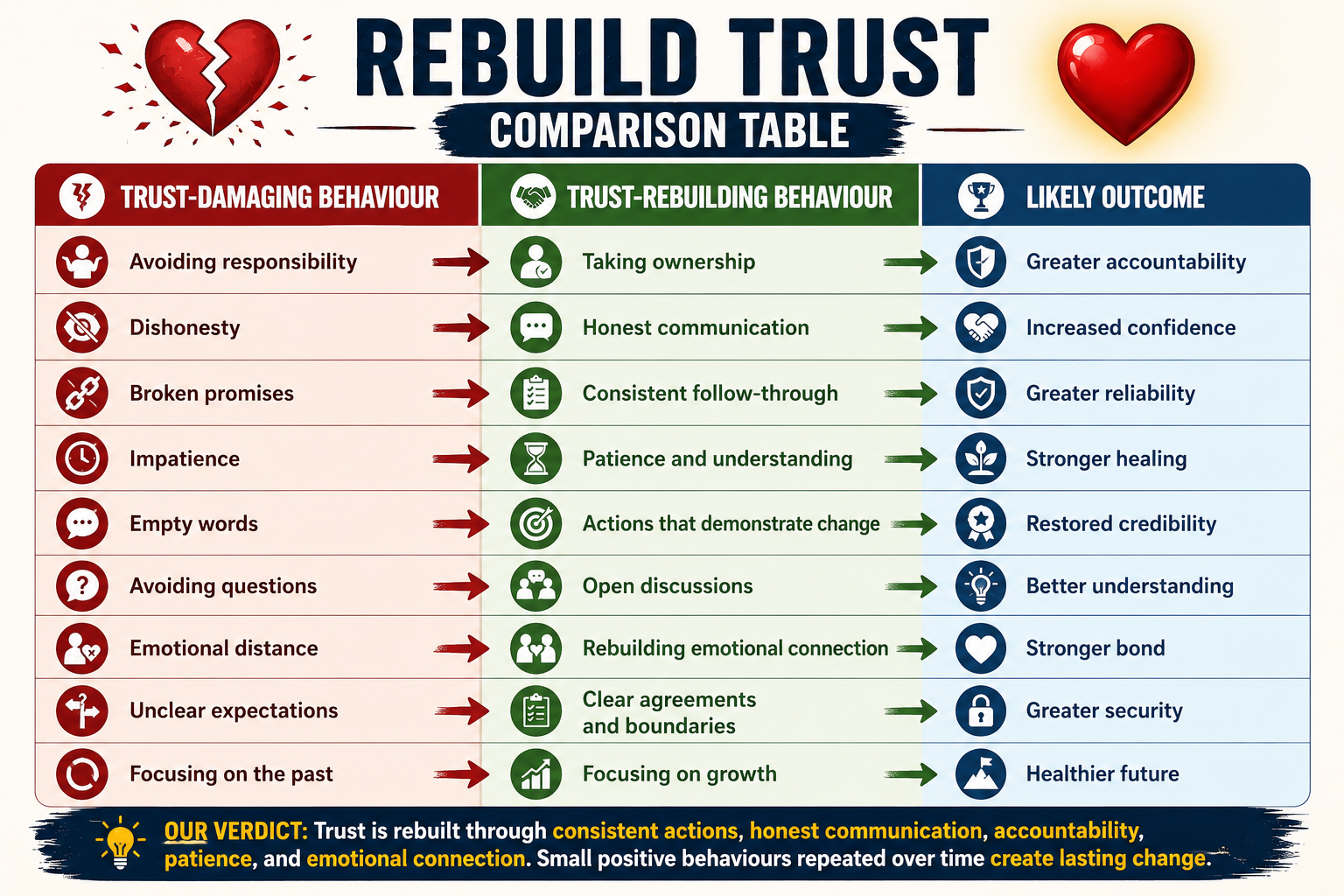
Rebuild Trust Comparison Table
Recommended Resources
Rebuilding trust requires honesty, accountability, patience, and consistent positive actions over time. The resources below will help you strengthen communication, emotional connection, and healthy relationship habits while rebuilding a stronger relationship.
• 11 Powerful Signs Your Relationship Is Growing Stronger
• Relationship Processes Review: Can Relationship Counter Intentions Affect Love and Connection?
• 13 Signs of a Healthy Relationship (And How to Build One)
• 13 Trust-Building Habits That Strengthen Relationships
• 11 Relationship Habits That Build Trust and Strengthen Connection
• 9 Communication Mistakes That Damage Relationships (And How to Fix Them)
• 15 Powerful Ways to Build Emotional Connection in a Relationship
• 11 Powerful Reasons Relationships Fail (And How to Avoid Them)
Related Relationship Articles
Related Personal Growth Articles
• How to Build Self-Confidence Naturally: 10 Proven Strategies for Personal Growth
• What Is Personal Empowerment? 7 Ways to Take Control of Your Life
• How to Build Personal Power: 9 Practical Ways to Feel More Confident and in Control
• 7 Proven Strategies for Overcoming Limiting Beliefs and Personal Growth
Related Kevin Trudeau Programs
• Superpower Processes: 9 Powerful Benefits of Kevin Trudeau’s Live Training
• Money Processes: 9 Powerful Benefits of Kevin Trudeau’s Live Training
• Kevin Trudeau Products: 11 Popular Programs Reviewed in 2026
Additional Learning Resources
External Resources
Daily Habits That Help Rebuild Trust
People often focus on major conversations when trying to rebuild trust, but daily habits can be equally important.
Simple examples include:
• Following through on commitments
• Being honest about mistakes
• Communicating openly and respectfully
• Arriving on time
• Checking in regularly
• Showing appreciation
• Respecting boundaries
• Being emotionally available
These small actions help rebuild trust because they demonstrate consistency and reliability over time.
When repeated consistently, these habits often become the foundation of stronger and healthier relationships.
Frequently Asked Questions
Q: Can trust really be rebuilt after it has been broken?
A: In many situations, yes. Rebuilding trust often requires accountability, honesty, patience, consistency, and a willingness from both people to work toward positive change.
Q: How long does it take to rebuild trust?
A: The timeline varies depending on the situation, the people involved, and the level of commitment to the process. Trust is usually rebuilt gradually through repeated positive experiences.
Q: What is the fastest way to rebuild trust?
A: There is rarely a quick fix. Consistent behaviour, honest communication, taking responsibility, and demonstrating change are often the most effective approaches.
Q: What destroys trust the most?
A: Dishonesty, broken promises, secrecy, repeated disappointments, and a lack of accountability are among the most common trust-damaging behaviours.
Q: Can a relationship become stronger after trust is rebuilt?
A: Many couples report stronger communication, greater self-awareness, healthier boundaries, and deeper emotional connection after successfully rebuilding trust.
Rebuild Trust Together
Need a Flexible Payment Option?
Many participants choose a payment plan so they can begin rebuilding trust and strengthening their relationships sooner. Explore the available payment options and choose the option that best supports your relationship journey.
Final Thoughts
Trust can be damaged quickly, but rebuilding trust usually takes time.
The good news is that many relationships can recover when both people are willing to communicate honestly, take responsibility, demonstrate change, and remain committed to the process.
To rebuild trust successfully, people must focus on consistent actions rather than occasional promises. Accountability, patience, communication, and emotional connection all play important roles in rebuilding confidence and security.
Rebuilding trust is not about pretending the past never happened. It is about creating a better future through healthier habits, stronger communication, and more reliable behaviour.
While the process may not always be easy, many people discover that rebuilding trust helps them strengthen communication, deepen emotional connection, and create a healthier relationship than they had before.
Keep communicating.
Keep showing up.
Keep demonstrating positive change.
And remember that every conversation, commitment, and positive action provides another opportunity to rebuild trust and strengthen your relationship.
Trust Rebuilding Self-Assessment
Answer Yes or No.
• Are both people willing to communicate honestly?
• Do you take responsibility for your actions?
• Are you consistently keeping your promises?
• Are you patient with the rebuilding process?
• Do you actively listen to each other?
• Are you making time to reconnect emotionally?
• Are your daily actions rebuilding confidence and trust?
• Are you both committed to creating a healthier relationship?
If you answered “Yes” to four or more questions, your relationship is demonstrating many of the behaviours that support rebuilding trust. Continue strengthening these habits through honesty, accountability, consistency, and mutual commitment.