11 Powerful Reasons Relationships Fail (And How to Avoid Them)
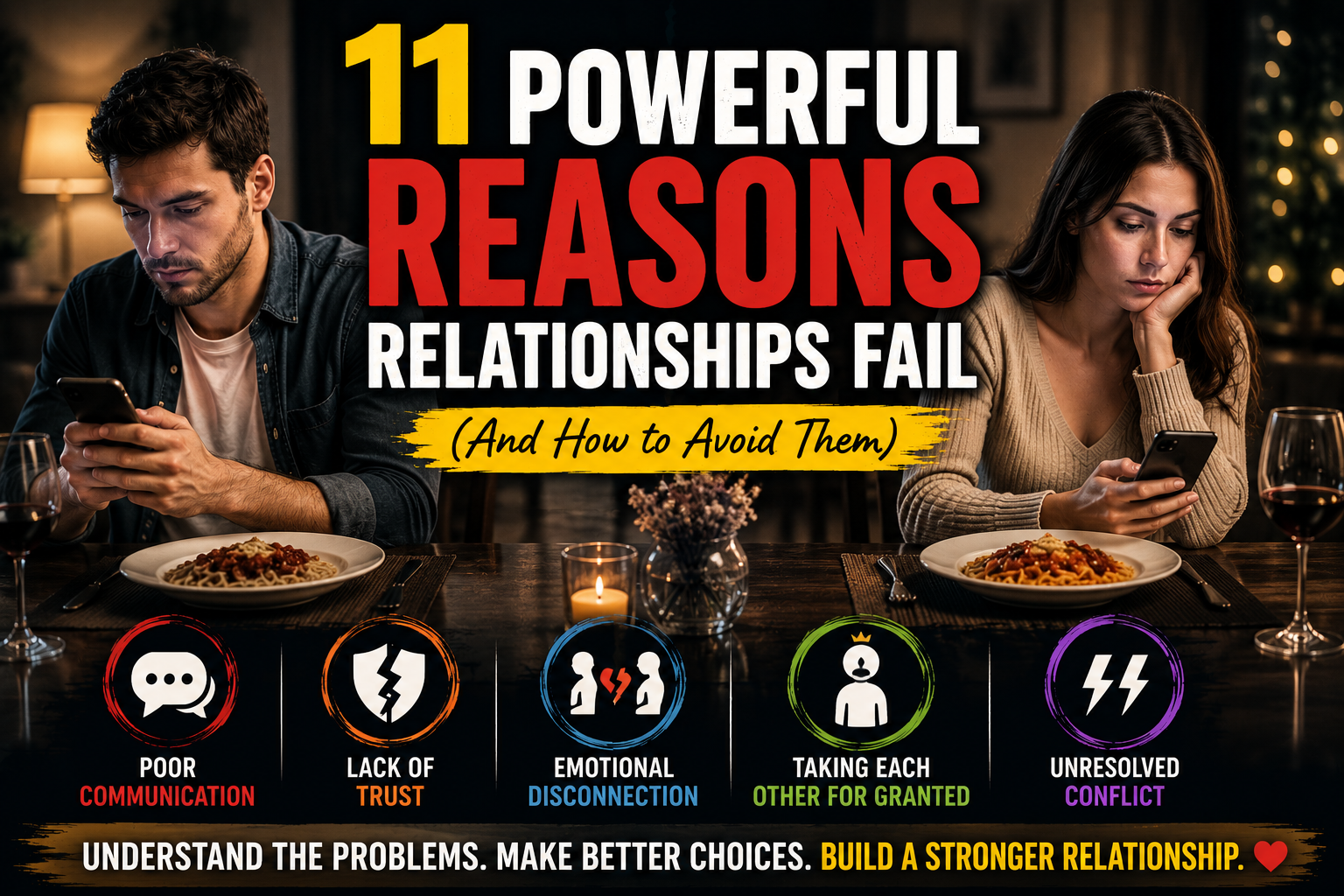
Most relationships do not fail because of one major event. Instead, they often break down gradually through patterns of behaviour, poor communication, unresolved conflicts, and emotional disconnection.
Many couples begin their relationships with excitement, hope, and strong intentions. However, maintaining a healthy relationship requires ongoing effort, communication, trust, and emotional connection.
The good news is that many common relationship problems can be recognised and addressed before they cause serious damage.
By understanding why relationships fail, couples can make better decisions, strengthen their connection, and build healthier relationships that stand the test of time.
This guide explores 11 powerful reasons relationships fail and practical strategies to avoid them.
Table of Contents
Why Understanding Relationship Failure Matters
Understanding the common causes of relationship failure provides an opportunity to prevent problems before they become difficult to resolve.
Many of the issues that damage relationships develop slowly over time. Small misunderstandings, unmet expectations, lack of communication, and emotional distance can gradually weaken a relationship if left unaddressed.
By recognising warning signs early, couples can take proactive steps to strengthen communication, trust, emotional connection, and long-term relationship satisfaction.
Awareness is often the first step toward creating a stronger and healthier relationship.
Common Relationship Problems and Healthier Alternatives
Many relationship problems develop gradually through repeated behaviours. Replacing unhealthy patterns with positive habits helps strengthen long-term relationships.
| Relationship Problem | Healthier Alternative |
|---|---|
| Poor communication | Honest, respectful conversations. |
| Broken trust | Consistency and accountability. |
| Emotional distance | Quality time and emotional connection. |
| Taking each other for granted | Regular appreciation and gratitude. |
| Avoiding conflict | Address issues early with empathy. |
Strong relationships are built by consistently choosing healthy behaviours, even during life’s most difficult moments.
"Relationships rarely fail overnight. They succeed or struggle through the small choices two people make every day."
Kevin Trudeau's Teaching Tweet
11 Powerful Reasons Relationships Fail
1. Poor Communication
Communication is the foundation of every healthy relationship.
When communication breaks down, misunderstandings increase, conflicts become more difficult to resolve, and emotional connection often weakens.
Poor communication may include avoiding important conversations, failing to listen, interrupting, or making assumptions.
How to Avoid It:
Practice active listening, communicate honestly, and discuss concerns before they become larger problems.
2. Lack of Trust
Trust is essential for emotional safety and relationship stability.
When trust is damaged through dishonesty, broken promises, secrecy, or repeated disappointments, relationships often struggle to thrive.
Without trust, people may become defensive, suspicious, or emotionally distant.
How to Avoid It:
Focus on honesty, reliability, transparency, and consistent trust-building habits.
3. Emotional Disconnection
Many relationships fail when emotional connection gradually weakens.
People may continue sharing responsibilities and daily routines while feeling emotionally distant from one another.
Without emotional closeness, relationships can begin to feel lonely and unfulfilling.
How to Avoid It:
Spend quality time together, share feelings openly, and create opportunities for meaningful connection.
4. Taking Each Other for Granted
Over time, some couples stop expressing appreciation and begin assuming their partner will always be there regardless of how they are treated.
Feeling unappreciated can create resentment and emotional distance.
How to Avoid It:
Express gratitude regularly and acknowledge your partner’s efforts and contributions.
5. Unresolved Conflict
Conflict is a normal part of every relationship. However, relationships often struggle when disagreements are ignored, avoided, or handled in unhealthy ways.
Unresolved conflict can create resentment, frustration, and emotional distance over time.
Many couples repeatedly argue about the same issues because the underlying problem is never fully addressed.
How to Avoid It:
Approach conflict as a problem to solve together rather than a battle to win. Focus on understanding, compromise, and respectful communication.
6. Different Life Goals
Relationships can become difficult when partners have significantly different visions for the future.
Differences involving finances, children, career ambitions, lifestyle preferences, or personal values may create ongoing tension if not discussed openly.
While differences are normal, major incompatibilities can become challenging when both people are moving in different directions.
How to Avoid It:
Have honest conversations about long-term goals and expectations early and revisit them regularly as circumstances change.
7. Lack of Effort
Healthy relationships require ongoing attention and effort.
When one or both partners stop investing in the relationship, emotional connection, communication, and trust often begin to weaken.
Many relationships fail not because of dramatic problems but because small acts of care and connection gradually disappear.
How to Avoid It:
Continue prioritising quality time, appreciation, communication, and shared experiences regardless of how long you have been together.
8. Poor Boundaries
Boundaries help create respect, emotional safety, and healthy relationship dynamics.
Without clear boundaries, people may feel overwhelmed, disrespected, controlled, or emotionally exhausted.
Poor boundaries can lead to misunderstandings, resentment, and unhealthy patterns of behaviour.
How to Avoid It:
Discuss personal needs, expectations, and limits openly. Respect each other’s boundaries while maintaining healthy communication.
9. Unrealistic Expectations
Many relationships struggle because people expect perfection from themselves, their partners, or the relationship itself.
Movies, social media, and unrealistic relationship advice can sometimes create expectations that are impossible to maintain in real life.
Healthy relationships involve imperfections, disagreements, challenges, and personal growth.
When expectations become unrealistic, disappointment and frustration often follow.
How to Avoid It:
Focus on progress rather than perfection. Accept that healthy relationships require patience, understanding, and continuous effort from both people.
10. Growing Apart
People naturally change throughout life.
Goals, interests, priorities, values, and life circumstances often evolve over time.
Relationships can become strained when couples stop growing together and begin moving in different directions.
Growing apart does not happen instantly. It usually occurs gradually through reduced communication, less quality time, and decreasing emotional connection.
How to Avoid It:
Continue learning about each other, discuss goals regularly, and create shared experiences that strengthen your connection.
11. Lack of Appreciation
Feeling valued is one of the most important emotional needs in a relationship.
When appreciation disappears, people may begin to feel ignored, unimportant, or taken for granted.
Over time, this can weaken emotional connection, reduce relationship satisfaction, and increase resentment.
How to Avoid It:
Express appreciation regularly. Small acknowledgements often have a greater impact than people realise.
Warning Signs a Relationship May Be Struggling
Relationship problems rarely appear overnight.
In many cases, warning signs emerge gradually and become more noticeable over time.
Common warning signs include:
• Frequent misunderstandings
• Reduced communication
• Emotional distance
• Constant criticism
• Lack of appreciation
• Avoiding difficult conversations
• Spending less quality time together
• Feeling unheard or misunderstood
Recognising these signs early can help couples address problems before they become more serious.
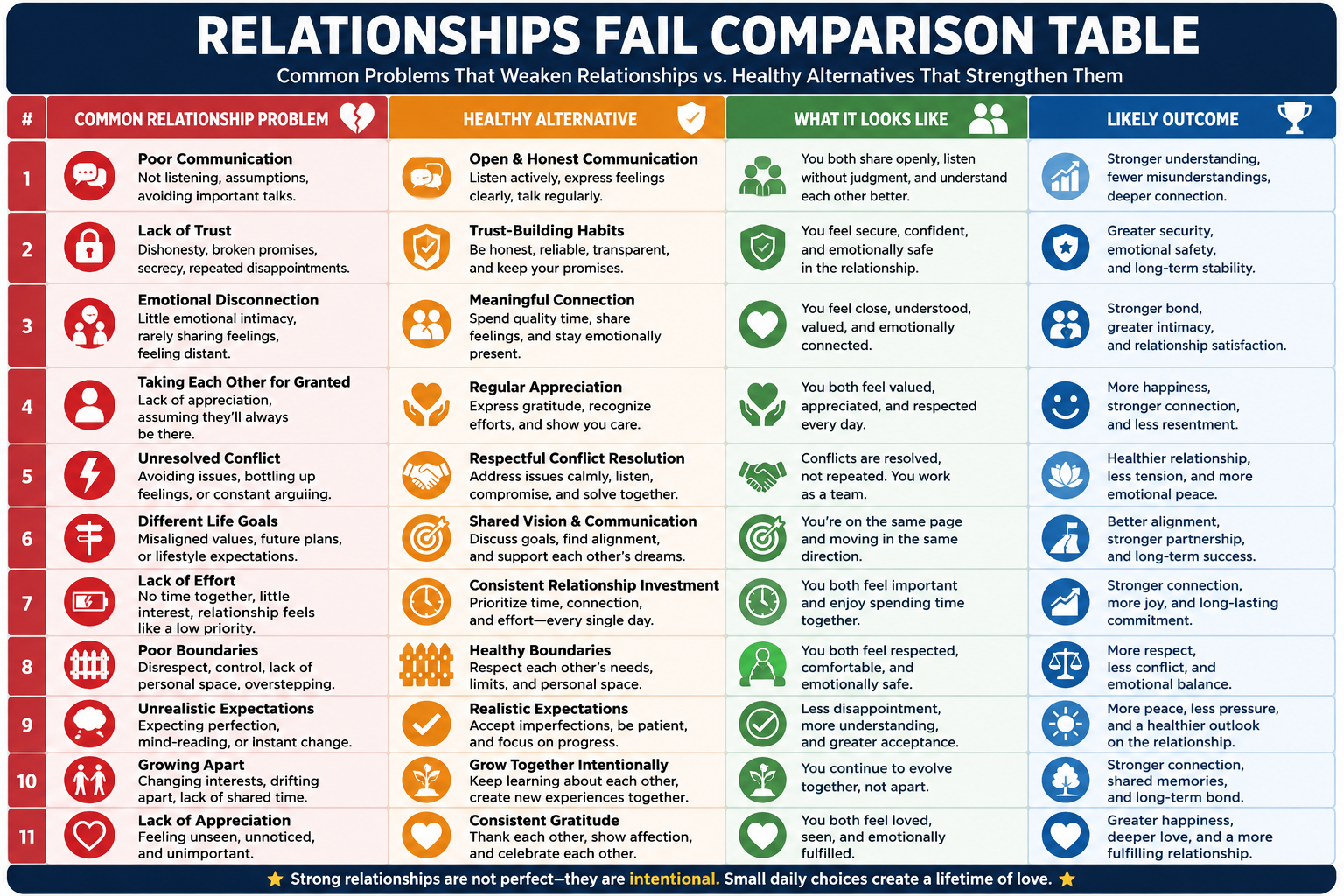
Relationships Fail Comparison Table
Can Most Relationship Problems Be Fixed?
Many relationship challenges can be improved when both people are willing to communicate, take responsibility, and work together.
Problems such as poor communication, emotional disconnection, trust issues, lack of appreciation, and unresolved conflict can often be addressed through consistent effort and healthier relationship habits.
However, success usually requires both partners to participate actively in the process.
Relationships are rarely strengthened through wishful thinking alone. Positive change typically occurs when awareness is followed by action.
The earlier problems are recognised, the easier they are often to address.
Recommended Resources
Healthy relationships rarely fail because of one single event. They are strengthened through trust, communication, emotional awareness, and consistent positive habits. The resources below will help you build stronger, healthier, and more fulfilling relationships.
• 13 Relationship Red Flags You Should Never Ignore
• How to Communicate Your Needs Without Starting Arguments
• 11 Powerful Signs Your Relationship Is Growing Stronger
• Relationship Processes Review: Can Relationship Counter Intentions Affect Love and Connection?
• 13 Signs of a Healthy Relationship (And How to Build One)
• 11 Relationship Habits That Build Trust and Strengthen Connection
• 9 Communication Mistakes That Damage Relationships (And How to Fix Them)
• 15 Powerful Ways to Build Emotional Connection in a Relationship
• 13 Trust-Building Habits That Strengthen Relationships
• 9 Powerful Ways to Rebuild Trust After It Has Been Broken
Related Relationship Articles
Related Personal Growth Articles
• How to Build Self-Confidence Naturally: 10 Proven Strategies for Personal Growth
• What Is Personal Empowerment? 7 Ways to Take Control of Your Life
• How to Build Personal Power: 9 Practical Ways to Feel More Confident and in Control
• 7 Proven Strategies for Overcoming Limiting Beliefs and Personal Growth
Related Kevin Trudeau Programs
• Superpower Processes: 9 Powerful Benefits of Kevin Trudeau’s Live Training
• Money Processes: 9 Powerful Benefits of Kevin Trudeau’s Live Training
• Accelerator Processes: 9 Powerful Benefits of Kevin Trudeau’s Live Training
• Kevin Trudeau Products: 11 Popular Programs Reviewed in 2026
Additional Learning Resources
External Resources
Frequently Asked Questions
Q: Why do relationships fail?
A: Most relationships fail because of ongoing patterns rather than one major event. Common causes include poor communication, lack of trust, emotional disconnection, unresolved conflict, lack of appreciation, and different life goals.
Q: Can a failing relationship be saved?
A: Many relationship problems can be improved when both people are willing to communicate openly, take responsibility, and work together to strengthen trust, connection, and understanding.
Q: What is the most common reason relationships fail?
A: Poor communication is often considered one of the most common causes of relationship problems because it affects trust, emotional connection, conflict resolution, and overall relationship satisfaction.
Q: How can couples prevent relationship problems?
A: Couples can strengthen their relationships by communicating openly, expressing appreciation, building trust, maintaining emotional connection, respecting boundaries, and investing consistent effort over time.
Q: Is it normal for relationships to face challenges?
A: Yes. Every relationship experiences challenges. The key difference is how couples respond to those challenges and whether they work together to address them constructively.
Strengthen Your Relationship Before Problems Grow
Need a Flexible Payment Option?
Many participants choose a payment plan so they can begin strengthening their relationships sooner. Explore the available payment options and choose the option that best supports your personal growth and relationship journey.
Final Thoughts
Most relationships fail gradually rather than suddenly.
Small habits, repeated consistently over time, often determine whether a relationship grows stronger or begins to weaken.
Poor communication, lack of trust, emotional disconnection, unresolved conflict, and lack of appreciation can slowly damage even strong relationships if left unaddressed.
The good news is that many of these challenges can be prevented or improved through awareness, communication, trust-building habits, emotional connection, and consistent effort.
Healthy relationships are not built through perfection. They are built through understanding, patience, accountability, respect, and a willingness to grow together.
By recognising the common reasons relationships fail and taking action early, couples can create stronger, healthier, and more fulfilling relationships.
Keep communicating.
Keep connecting.
Keep appreciating each other.
And may your relationship continue to grow stronger with every positive choice you make.
Relationship Health Self-Assessment
Answer Yes or No.
• Do you communicate honestly with your partner?
• Do you trust one another?
• Do you resolve disagreements respectfully?
• Do you regularly express appreciation?
• Do you make time to connect emotionally?
• Do you support each other’s goals?
• Do you work together to solve problems?
• Do your daily habits strengthen your relationship?
If you answered “Yes” to four or more questions, your relationship demonstrates many of the habits associated with healthy, lasting relationships. Continue strengthening these habits through communication, trust, consistency, and mutual respect.