13 Relationship Red Flags You Should Never Ignore
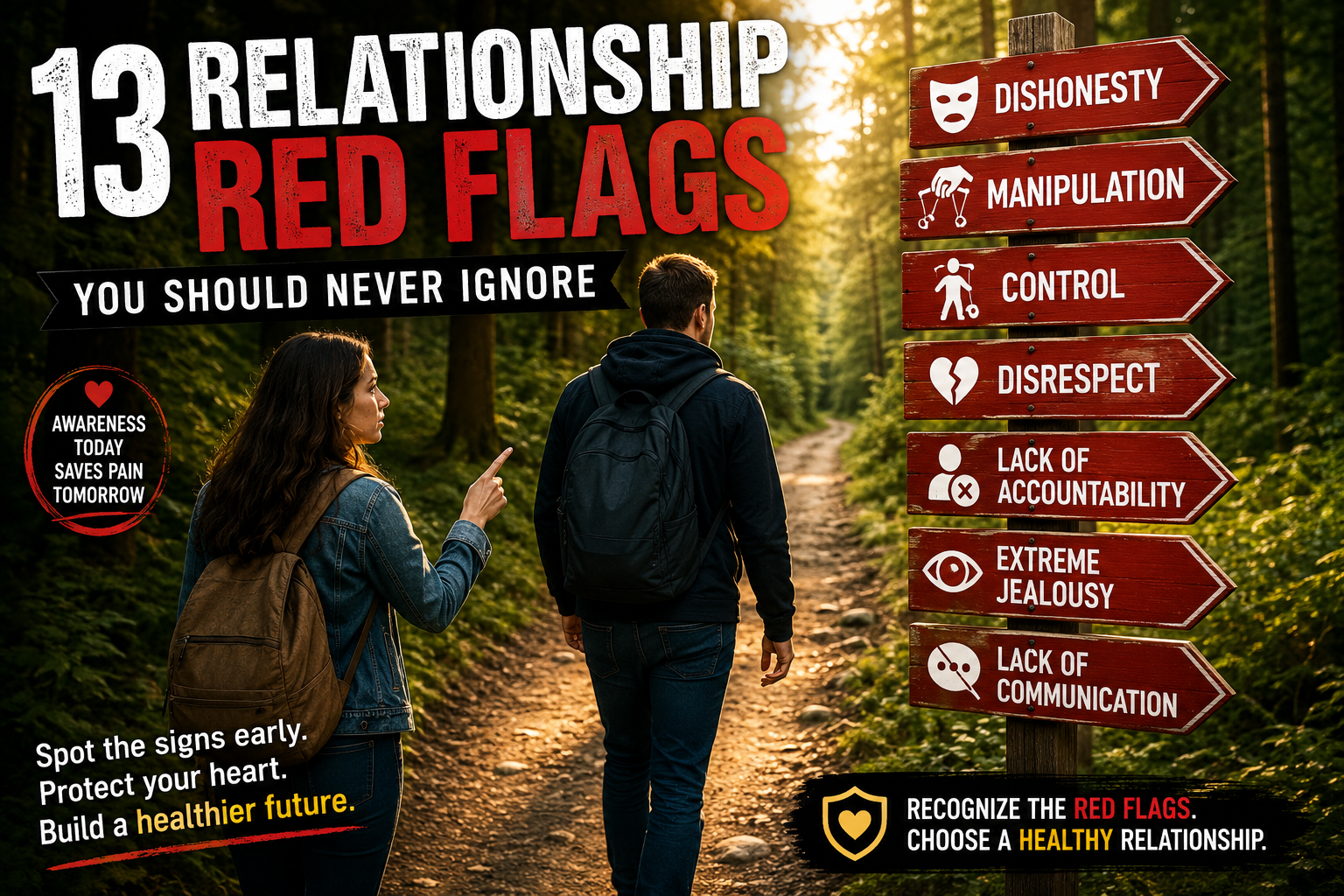
Recognising relationship red flags early can help people establish healthy boundaries, protect emotional wellbeing, improve communication, and make better relationship decisions.
Every relationship experiences challenges, disagreements, and difficult moments. However, some behaviours can signal deeper issues that may damage trust, communication, emotional wellbeing, and long-term relationship health.
These warning signs are often called relationship red flags.
A red flag does not automatically mean a relationship is doomed. However, repeated patterns of unhealthy behaviour should never be ignored because they often become more serious over time.
Recognising relationship red flags early can help people make informed decisions, establish healthy boundaries, improve communication, and protect their emotional wellbeing.
This guide explores 13 relationship red flags you should never ignore and explains why they matter in healthy relationships.
Table of Contents
What Are Relationship Red Flags?
Relationship red flags are behaviours, attitudes, or patterns that may indicate unhealthy relationship dynamics.
These warning signs often affect trust, communication, respect, emotional safety, and overall relationship satisfaction.
While everyone makes mistakes occasionally, consistent patterns of unhealthy behaviour deserve attention.
Recognising red flags does not mean judging people harshly. Instead, it helps individuals identify behaviours that may require honest conversations, professional support, stronger boundaries, or difficult decisions.
Understanding these warning signs can help people build healthier and more fulfilling relationships.
"The sooner you recognise relationship red flags, the sooner you can protect your wellbeing and build the healthy relationship you deserve."
Kevin Trudeau's Teaching Tweet
13 Relationship Red Flags You Should Never Ignore
1. Constant Dishonesty
Trust is one of the foundations of a healthy relationship.
When dishonesty becomes frequent, trust begins to weaken. Small lies, hidden information, broken promises, and deceptive behaviour can gradually damage emotional safety and confidence within the relationship.
Healthy relationships depend on honesty, transparency, and consistency.
Why It Matters:
Without trust, even strong emotional connections can become difficult to maintain.
2. Lack of Accountability
Emotionally mature people take responsibility for their actions.
A significant red flag occurs when someone constantly blames other people, circumstances, or external factors for every problem.
Refusing to acknowledge mistakes often prevents personal growth and makes conflict resolution extremely difficult.
Why It Matters:
Accountability creates trust, growth, and healthier communication.
3. Controlling Behaviour
Healthy relationships involve respect and trust.
Controlling behaviour may appear as attempts to dictate friendships, monitor activities, control decisions, manage finances unfairly, or limit independence.
Control is often mistaken for concern, but healthy concern respects personal freedom and autonomy.
Why It Matters:
Excessive control can damage trust, confidence, independence, and emotional wellbeing.
4. Disrespectful Communication
Communication problems are common, but repeated disrespect should never be ignored.
Examples may include insults, ridicule, contempt, sarcasm designed to hurt, constant criticism, or dismissing a partner’s feelings.
Healthy communication allows disagreements while still maintaining respect.
Why It Matters:
Respect is essential for emotional safety and long-term relationship success.
5. Emotional Manipulation
Emotional manipulation occurs when someone uses guilt, fear, shame, or emotional pressure to influence another person’s behaviour.
Examples may include guilt-tripping, playing the victim constantly, withholding affection as punishment, or using emotional reactions to gain control.
Healthy relationships encourage honest communication rather than manipulation.
Why It Matters:
Emotional manipulation can create confusion, anxiety, and unhealthy power imbalances within a relationship.
6. Extreme Jealousy
Feeling occasional jealousy is a normal human emotion. However, extreme jealousy can become harmful when it leads to suspicion, accusations, monitoring behaviour, or attempts to control a partner’s actions.
Trust and healthy boundaries are essential components of strong relationships.
Why It Matters:
Persistent jealousy often damages trust and creates unnecessary conflict and stress.
7. Lack of Empathy
Empathy is the ability to understand and care about another person’s feelings and experiences.
A lack of empathy may appear as dismissing concerns, showing little compassion, ignoring emotional needs, or refusing to consider another person’s perspective.
Healthy relationships require mutual understanding and emotional support.
Why It Matters:
Empathy helps create emotional safety, connection, and trust.
8. Repeated Boundary Violations
Healthy boundaries help create respect, trust, and emotional safety.
A significant red flag occurs when someone repeatedly ignores clearly communicated boundaries.
This may involve invading privacy, disregarding personal limits, ignoring requests, or consistently pushing beyond agreed expectations.
Why It Matters:
Repeated boundary violations often signal a lack of respect for personal needs and autonomy.
9. Refusal to Communicate
Healthy relationships require communication, even when conversations are difficult.
Some individuals avoid discussions entirely, refuse to address concerns, withdraw for extended periods, or shut down whenever challenges arise.
While everyone occasionally needs space, consistently refusing communication prevents problems from being resolved.
Why It Matters:
Unresolved issues often grow larger over time when communication is avoided.
10. Constant Criticism
Constructive feedback can help relationships grow, but constant criticism often damages confidence, trust, and emotional connection.
This red flag appears when a partner regularly focuses on faults, mistakes, or perceived weaknesses while rarely offering encouragement or appreciation.
Healthy relationships balance honesty with kindness and support.
Why It Matters:
Persistent criticism can create resentment, lower self-esteem, and weaken emotional intimacy over time.
11. Inconsistent Behaviour
Consistency helps build trust and emotional security.
A red flag may appear when someone frequently changes their behaviour without explanation, makes promises they rarely keep, or sends mixed messages about commitment and intentions.
While everyone has occasional ups and downs, repeated inconsistency often creates confusion and uncertainty.
Why It Matters:
Trust grows through consistency, reliability, and follow-through.
12. Lack of Support for Personal Growth
Healthy partners encourage each other’s goals, ambitions, learning, and personal development.
A red flag may occur when someone consistently discourages growth, minimizes achievements, or becomes threatened by positive changes.
Strong relationships often involve mutual support and shared encouragement.
Why It Matters:
Relationships thrive when both individuals feel supported in becoming their best selves.
13. Repeated Patterns Without Improvement
Everyone makes mistakes.
The concern arises when the same harmful behaviours occur repeatedly despite discussions, promises, apologies, and opportunities for improvement.
Growth requires awareness, accountability, and action.
Healthy relationships show progress over time rather than endless repetition of the same problems.
Why It Matters:
Repeated unhealthy patterns often indicate deeper issues that require serious attention.
Healthy Behaviours vs Relationship Red Flags
Recognising the difference between healthy behaviours and relationship red flags helps you build stronger, safer, and more respectful relationships.
| Healthy Relationship | Relationship Red Flag |
|---|---|
| Honest communication. | Dishonesty and secrecy. |
| Mutual respect. | Controlling behaviour. |
| Healthy boundaries. | Ignoring personal boundaries. |
| Support during challenges. | Constant criticism or manipulation. |
| Trust and accountability. | Repeated broken promises. |
Healthy relationships are built on trust, respect, emotional safety, and honest communication. Recognising unhealthy patterns early gives you the opportunity to protect yourself and make healthier relationship choices.
Why People Ignore Relationship Red Flags
Many people notice red flags but choose to overlook them for various reasons.
Common reasons include:
• Fear of being alone
• Hope that behaviour will change
• Strong emotional attachment
• Low self-confidence
• Desire to avoid conflict
• Focusing only on positive qualities
• Believing problems are temporary
While optimism is valuable, ignoring repeated unhealthy behaviours often allows problems to become more serious over time.
Recognising relationship red flags early helps people make healthier and more informed decisions.
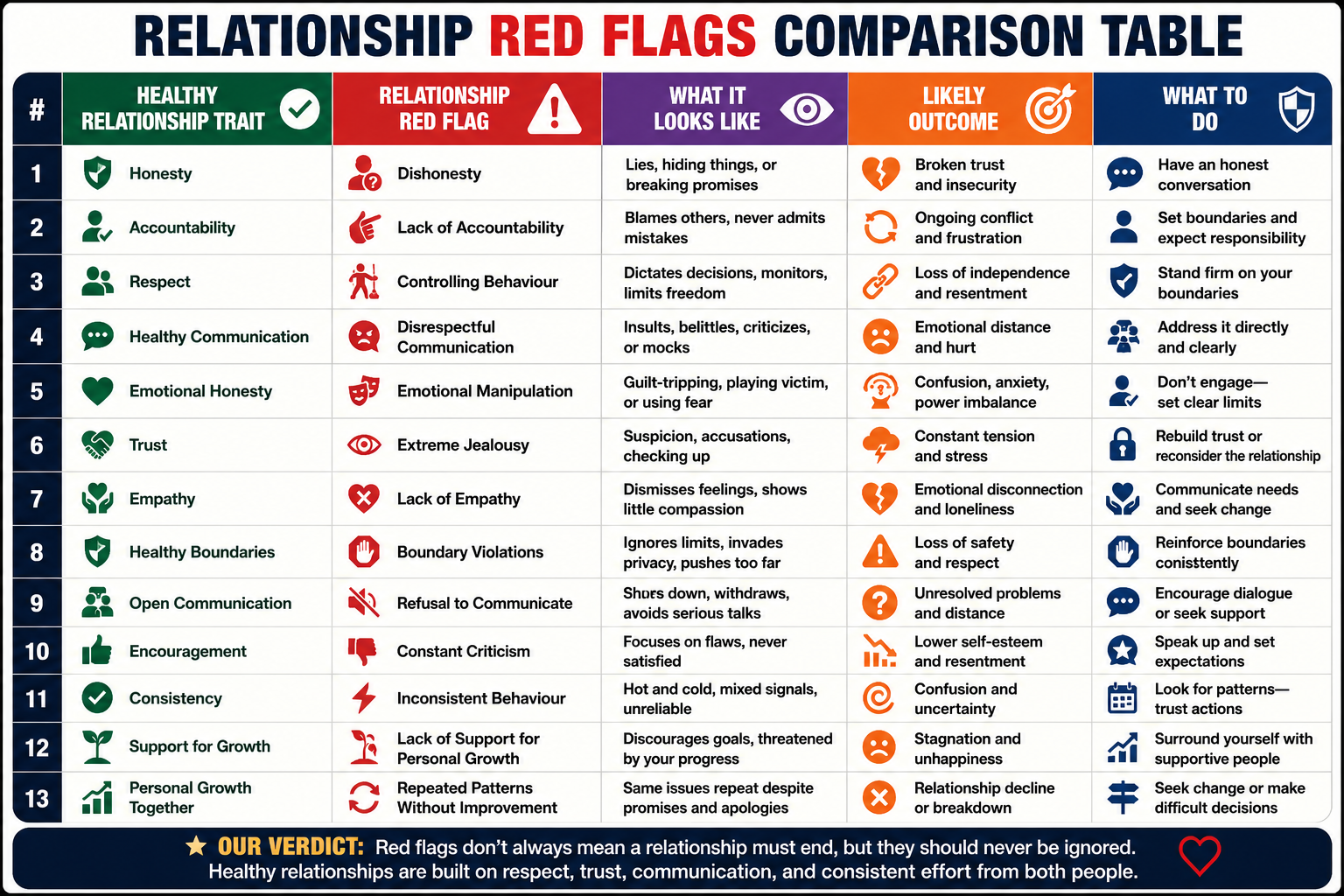
Relationship Red Flags Comparison Table
Recommended Resources
Recognising relationship red flags early can help protect your emotional wellbeing and create healthier, more fulfilling relationships. The resources below will help you strengthen communication, trust, emotional intelligence, and healthy relationship habits.
• 11 Powerful Signs Your Relationship Is Growing Stronger
• Relationship Processes Review: Can Relationship Counter Intentions Affect Love and Connection?
• 13 Signs of a Healthy Relationship (And How to Build One)
• 11 Relationship Habits That Build Trust and Strengthen Connection
• 13 Trust-Building Habits That Strengthen Relationships
• 9 Communication Mistakes That Damage Relationships (And How to Fix Them)
• 15 Powerful Ways to Build Emotional Connection in a Relationship
• 9 Powerful Ways to Rebuild Trust After It Has Been Broken
Related Relationship Articles
• 11 Powerful Ways to Forgive and Move Forward in a Relationship
• 9 Powerful Relationship Boundaries That Create Respect and Trust
• 11 Signs of Emotional Maturity in a Relationship
• 11 Powerful Reasons Relationships Fail (And How to Avoid Them)
Related Personal Growth Articles
• How to Build Self-Confidence Naturally: 10 Proven Strategies for Personal Growth
• What Is Personal Empowerment? 7 Ways to Take Control of Your Life
• How Successful People Think Differently: 7 Success Mindset Habits
• 7 Proven Strategies for Overcoming Limiting Beliefs and Personal Growth
Related Kevin Trudeau Programs
• Superpower Processes: 9 Powerful Benefits of Kevin Trudeau’s Live Training
• Money Processes: 9 Powerful Benefits of Kevin Trudeau’s Live Training
• Kevin Trudeau Products: 11 Popular Programs Reviewed in 2026
Additional Learning Resources
External Resources
Frequently Asked Questions
Q: What are relationship red flags?
A: Relationship red flags are warning signs that may indicate unhealthy patterns, behaviours, or relationship dynamics that can damage trust, communication, respect, or emotional wellbeing.
Q: Do red flags mean a relationship should end?
A: Not necessarily. Some red flags can be addressed through honest communication, accountability, healthy boundaries, and professional support. However, repeated harmful behaviour should never be ignored.
Q: What is the biggest relationship red flag?
A: While every situation is unique, persistent dishonesty, manipulation, controlling behaviour, and lack of accountability are often considered serious warning signs.
Q: Why do people ignore relationship red flags?
A: People may ignore red flags because of emotional attachment, hope for change, fear of being alone, low self-confidence, or focusing primarily on positive qualities.
Q: Can relationship red flags improve?
A: Yes, improvement is possible when both individuals are willing to communicate honestly, take responsibility, respect boundaries, and commit to personal growth.
Choose Healthy Relationships
Need a Flexible Payment Option?
Many participants choose a payment plan so they can begin strengthening their relationships sooner. Explore the available payment options and choose the option that best supports your journey toward healthier communication, stronger boundaries, and lasting relationship success.
Final Thoughts
Recognising relationship red flags is not about looking for flaws or expecting perfection.
It is about understanding the behaviours that support healthy relationships and identifying patterns that may create harm over time.
Healthy relationships are built on trust, respect, communication, accountability, empathy, and emotional safety.
When warning signs appear, addressing them early often provides the best opportunity for growth, improvement, and healthier decision-making.
The strongest relationships are not those without challenges.
They are relationships where both people are willing to learn, communicate, take responsibility, and grow together.
Pay attention to warning signs.
Trust your observations.
Respect your boundaries.
And always choose relationships that support your wellbeing, growth, and future.
Relationship Red Flags Self-Assessment
Answer Yes or No.
• Does your partner respect your boundaries?
• Can you communicate honestly without fear?
• Do you feel emotionally safe in the relationship?
• Does your partner support your personal growth?
• Are disagreements handled respectfully?
• Is there mutual trust and accountability?
• Do you feel valued and respected most of the time?
• Does the relationship help you become a better person?
If you answered “No” to several of these questions, it may be worth reflecting on whether unhealthy relationship patterns or red flags are affecting your wellbeing. Healthy relationships are built on trust, respect, honesty, emotional safety, and consistent positive behaviour.