How to Communicate Your Needs Without Starting Arguments
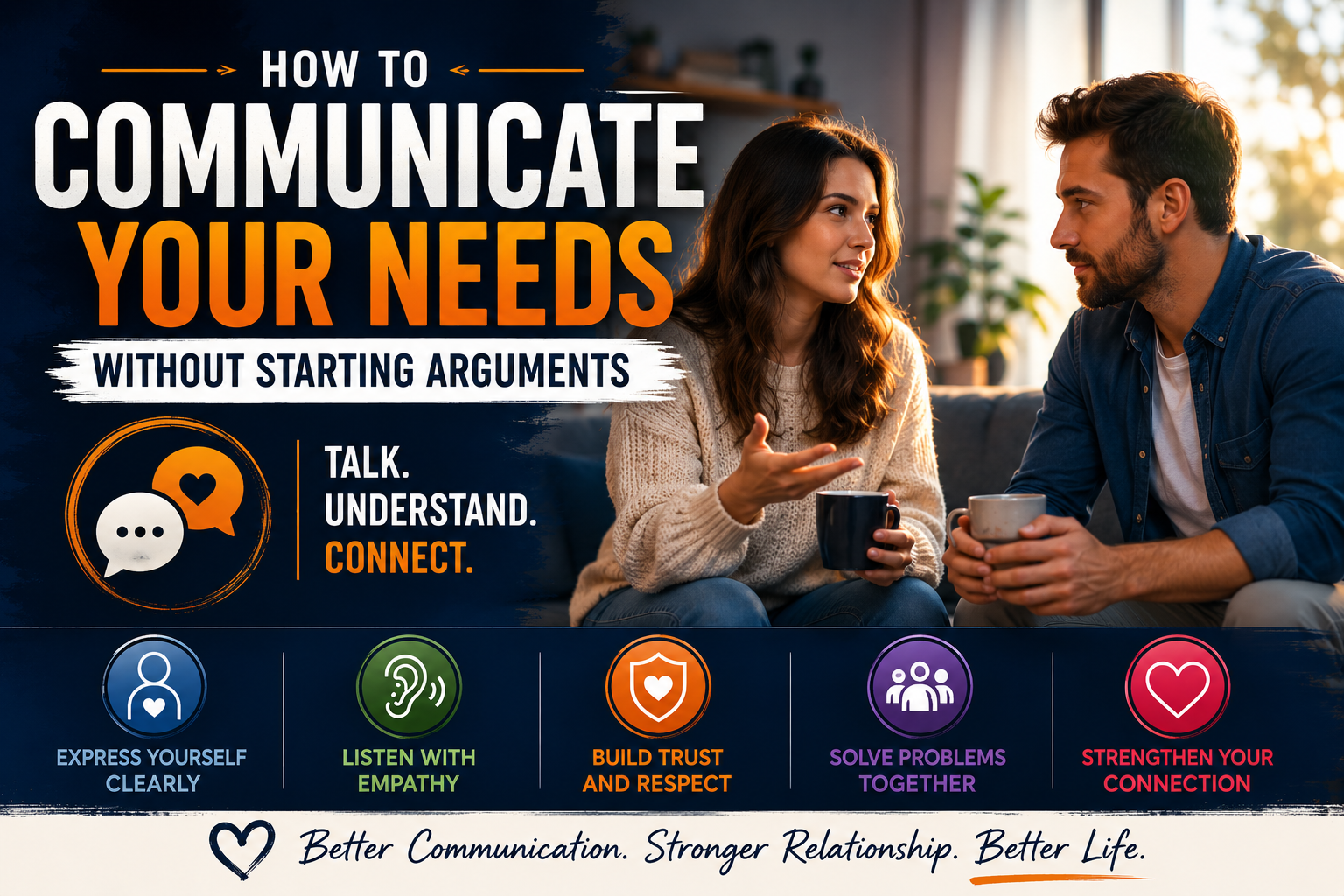
Every healthy relationship requires communication.
Yet many people struggle to express their needs without conversations turning into frustration, defensiveness, or conflict.
Often, the problem is not what is being said. The problem is how it is being communicated.
When people feel criticised, blamed, judged, or misunderstood, they naturally become defensive. This makes productive communication much more difficult and can prevent important issues from being resolved.
Learning how to communicate your needs effectively can strengthen trust, improve understanding, reduce unnecessary conflict, and create healthier relationships.
This guide explores practical strategies that help people communicate their needs clearly and respectfully without turning conversations into arguments.
Learning how to communicate your needs effectively is one of the most valuable relationship skills you can develop. When you communicate your needs clearly and respectfully, you create more opportunities for understanding, trust, cooperation, and emotional connection.
Table of Contents
Why Learning to Communicate Your Needs Matters
Many relationship problems occur because important needs remain unspoken.
People may assume their partner should automatically understand what they need, feel uncomfortable discussing sensitive topics, or avoid difficult conversations altogether.
Unfortunately, unspoken needs often lead to frustration, resentment, disappointment, and emotional distance.
Healthy communication allows both people to better understand each other’s expectations, concerns, feelings, and goals.
Why It Matters:
People cannot respond to needs they do not know exist.
Clear communication creates understanding, trust, and stronger relationships.
When people communicate their needs openly, misunderstandings become less common and relationships become stronger. The ability to communicate your needs clearly helps both partners feel heard, respected, and valued.
"The strongest relationships are built by people who communicate with honesty, empathy, and respect—even during difficult conversations."
Kevin Trudeau's Teaching Tweet
7 Powerful Strategies to Communicate Your Needs Without Starting Arguments
1. Choose the Right Time to Communicate Your Needs
Timing matters.
Attempting serious conversations when someone is stressed, distracted, exhausted, or upset often increases the likelihood of misunderstandings.
Choose a calm moment when both people are available to listen and engage respectfully.
A simple question such as:
“Is now a good time to talk about something important?”
can make a significant difference.
Why It Matters:
People communicate more effectively when they feel calm, focused, and emotionally available.
2. Use "I" Statements to Communicate Your Needs
One of the fastest ways to trigger defensiveness is through blame.
Instead of saying:
“You never listen to me.”
Try saying:
“I feel unheard when I don’t get a chance to share my thoughts.”
This approach focuses on your experience rather than attacking the other person.
Why It Matters:
“I” statements encourage understanding instead of defensiveness.
People are more likely to listen when they do not feel attacked.
3. Be Clear When You Communicate Your Needs
People cannot read minds.
Avoid vague statements and clearly explain what you need.
Instead of saying:
“I wish things were different.”
Try saying:
“I would appreciate spending one evening together each week without distractions.”
Specific requests are easier to understand and respond to.
Why It Matters:
Clarity reduces confusion and increases the likelihood of positive change.
4. Focus on Understanding When You Communicate Your Needs
Many arguments become worse because both people are trying to prove they are right.
Healthy communication is not about winning.
It is about understanding.
When discussing important needs, focus on learning how the other person feels rather than preparing your next response.
Ask questions and remain curious about their perspective.
Why It Matters:
Understanding creates connection.
Winning often creates distance.
5. Listen Carefully Before You Communicate Your Needs
Active listening is one of the most powerful communication skills in any relationship.
Allow the other person to finish speaking before responding.
Avoid interrupting, correcting, or planning your reply while they are still talking.
Instead, focus on understanding their message completely.
Simple responses such as:
“I understand why you feel that way.”
or
“Tell me more about that.”
can help people feel heard and respected.
Why It Matters:
People are more willing to listen when they feel genuinely heard.
6. Make Respectful Requests When You Communicate Your Needs
There is a significant difference between a request and a demand.
Requests invite cooperation.
Demands often create resistance.
For example:
Instead of saying:
“You need to stop doing that.”
Try:
“Would you be willing to try a different approach?”
This small shift in language can dramatically reduce defensiveness.
Why It Matters:
People naturally resist feeling controlled.
Respectful requests encourage teamwork and collaboration.
7. Stay Calm While You Communicate Your Needs
Strong emotions can make communication more difficult.
When conversations become heated, consider taking a short break and returning when both people feel calmer.
Remaining calm does not mean suppressing emotions.
It means expressing emotions respectfully without allowing them to control the conversation.
Why It Matters:
Calm communication helps people solve problems more effectively and prevents unnecessary escalation.
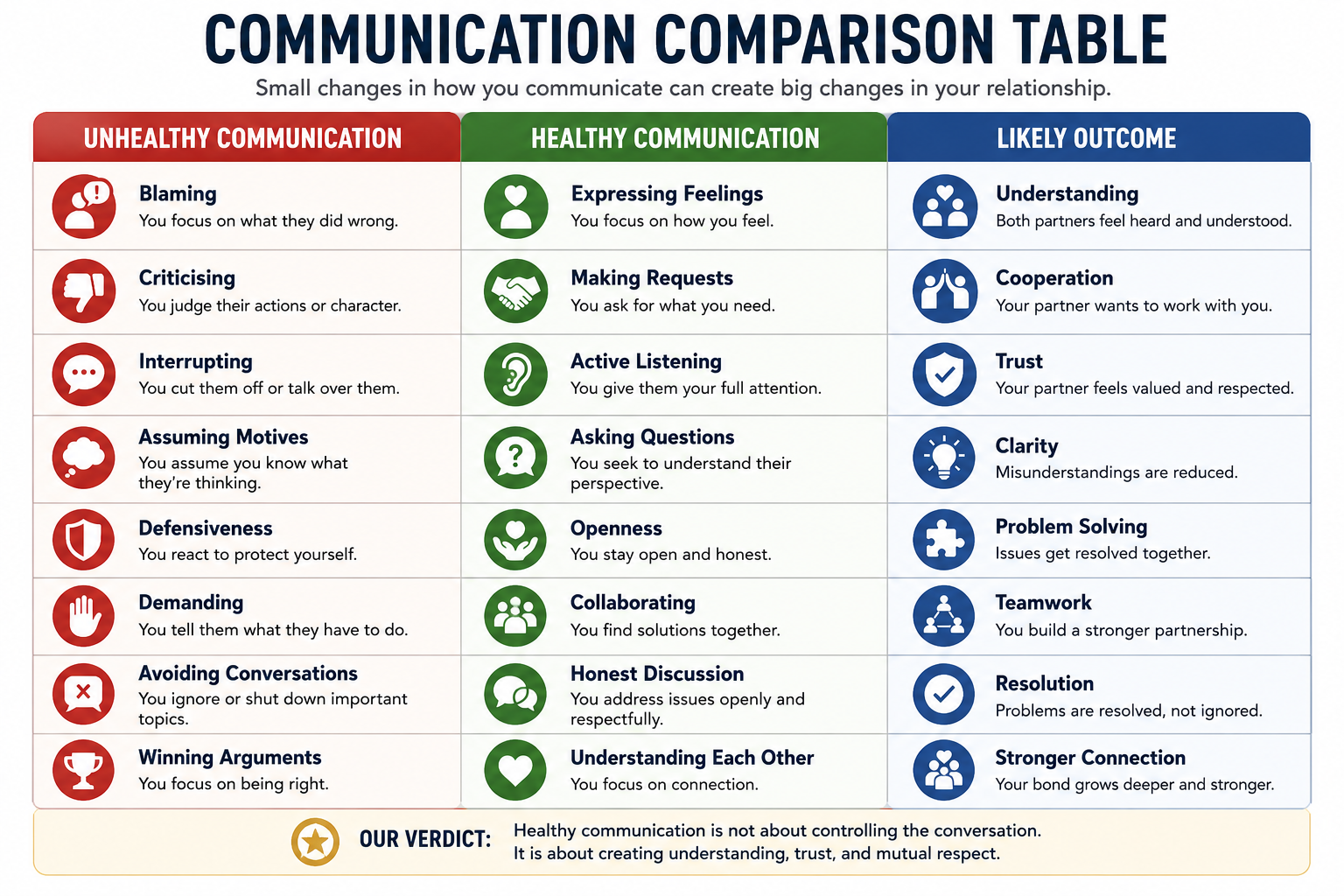
Unhealthy vs Healthy Communication
Small changes in the way you communicate can dramatically improve trust, reduce conflict, and strengthen emotional connection.
| Unhealthy Communication | Healthy Communication |
|---|---|
| Blaming your partner. | Use “I” statements to express your feelings. |
| Interrupting. | Listen without interrupting. |
| Reacting emotionally. | Pause before responding thoughtfully. |
| Trying to win the argument. | Work together to solve the problem. |
| Ignoring your partner’s feelings. | Show empathy and validate their perspective. |
Healthy communication is about understanding each other rather than proving who is right. When both partners feel heard and respected, disagreements become opportunities for growth instead of conflict.
Common Communication Mistakes That Create Arguments
Many arguments begin because of communication habits that unintentionally create defensiveness.
Common examples include:
Blaming
Criticising
Interrupting
Assuming motives
Bringing up old arguments
Using absolute statements such as “always” and “never”
Avoiding difficult conversations
Key Takeaway:
The goal of communication is not to prove who is right.
The goal is to understand each other and solve problems together.
Communication Comparison Table
Recommended Resources
Healthy communication is one of the most important foundations of a successful relationship. Learning to express your needs respectfully can strengthen trust, reduce conflict, and deepen emotional connection. The resources below will help you continue developing stronger communication and relationship skills.
• 11 Powerful Signs Your Relationship Is Growing Stronger
• Relationship Processes Review: Can Relationship Counter Intentions Affect Love and Connection?
• 13 Signs of a Healthy Relationship (And How to Build One)
• 9 Communication Mistakes That Damage Relationships (And How to Fix Them)
• 15 Powerful Ways to Build Emotional Connection in a Relationship
• 11 Relationship Habits That Build Trust and Strengthen Connection
• 13 Trust-Building Habits That Strengthen Relationships
• 9 Powerful Ways to Rebuild Trust After It Has Been Broken
Related Relationship Articles
• 11 Powerful Ways to Forgive and Move Forward in a Relationship
• 9 Powerful Relationship Boundaries That Create Respect and Trust
• 11 Signs of Emotional Maturity in a Relationship
• 13 Relationship Red Flags You Should Never Ignore
• 11 Powerful Reasons Relationships Fail (And How to Avoid Them)
Related Personal Growth Articles
• How to Build Self-Confidence Naturally: 10 Proven Strategies for Personal Growth
• What Is Personal Empowerment? 7 Ways to Take Control of Your Life
• How Successful People Think Differently: 7 Success Mindset Habits
Related Kevin Trudeau Programs
• Superpower Processes: 9 Powerful Benefits of Kevin Trudeau’s Live Training
• Money Processes: 9 Powerful Benefits of Kevin Trudeau’s Live Training
• Kevin Trudeau Products: 11 Popular Programs Reviewed in 2026
Additional Learning Resources
External Resources
Frequently Asked Questions
Q: Why do conversations turn into arguments?
A: Conversations often become arguments when people feel criticised, blamed, unheard, or misunderstood.
Q: What is the best way to communicate needs in a relationship?
A: Use clear, respectful language, focus on your feelings, avoid blame, and choose an appropriate time for important conversations.
Q: What are “I” statements?
A: “I” statements focus on your experience rather than attacking the other person. For example, “I feel unheard” instead of “You never listen.”
Q: How can I avoid making my partner defensive?
A: Focus on understanding, avoid blame, make requests instead of demands, and listen actively.
Q: What should I do if emotions become too intense?
A: Take a short break, calm down, and return to the conversation when both people feel ready to communicate respectfully.
Communicate with Confidence and Understanding
Need a Flexible Payment Option?
Many participants choose a payment plan so they can begin strengthening their communication and relationship skills sooner. Explore the available payment options and choose the option that best supports your relationship journey.
Final Thoughts
Healthy communication is one of the most important skills in any successful relationship.
The ability to communicate your needs clearly and respectfully helps create trust, understanding, emotional safety, and stronger connection.
Many arguments are not caused by bad intentions.
They are caused by misunderstandings, assumptions, and communication habits that can be improved.
Remember that learning to communicate your needs is not a one-time skill. It is an ongoing practice that improves with patience, self-awareness, and consistent effort. The more effectively you communicate your needs, the easier it becomes to create healthy and productive conversations.
Pay attention to how you communicate.
Listen to understand.
Express your needs clearly.
Stay calm during difficult conversations.
And remember:
The goal is not to win the argument.
The goal is to strengthen the relationship.
Healthy Communication Self-Assessment
Answer Yes or No.
• Do you express your needs calmly and respectfully?
• Do you listen without interrupting?
• Can you discuss difficult topics without becoming defensive?
• Do you avoid blaming your partner?
• Do you focus on solving problems together?
• Do you feel emotionally safe expressing your feelings?
• Do your conversations usually strengthen your relationship?
• Are you committed to becoming a better communicator?
If you answered “Yes” to four or more questions, you are demonstrating many of the communication habits that support healthy, lasting relationships. Continue strengthening these skills through empathy, active listening, and respectful communication.