13 Trust-Building Habits That Strengthen Relationships

Trust building is one of the most important aspects of creating a healthy and lasting relationship. Without trust, communication becomes difficult, emotional connection weakens, and relationships often struggle to thrive.
Many people assume trust is built through major events or grand gestures. In reality, trust building usually happens through small actions repeated consistently over time.
Every promise kept, honest conversation, act of support, and demonstration of reliability contributes to stronger trust between two people.
The good news is that trust building can be strengthened through intentional habits. Small daily actions often have a greater impact than occasional big efforts.
This guide explores 13 powerful trust building habits that can help create stronger, healthier, and more fulfilling relationships.
Table of Contents
Why Trust Matters in Relationships
Trust creates emotional safety.
When trust is strong, people feel comfortable being honest, vulnerable, and authentic with each other. They are more likely to communicate openly, resolve conflicts effectively, and support each other through challenges.
Trust also strengthens emotional connection because people feel secure knowing they can rely on one another.
Without trust, even small misunderstandings can create significant relationship difficulties.
Trust building plays an important role in helping relationships remain healthy and stable over time. Through consistent actions, honesty, reliability, and accountability, trust building creates the confidence people need to feel emotionally safe and supported.
For this reason, trust is often considered one of the most valuable assets in a relationship.
What Is Trust Building?
Trust building is the process of creating confidence, reliability, honesty, and emotional safety within a relationship.
Strong trust building habits help people feel secure, respected, and supported. Over time, trust building strengthens communication, emotional connection, conflict resolution, and relationship satisfaction.
Because trust is developed gradually, consistent behaviour is often more important than occasional grand gestures.
"Trust is not built through words alone. It is built through consistent actions repeated over time."
Heaven Trudeau Teaching Tweet
13 Trust-Building Habits That Strengthen Relationships
1. Keep Your Promises
Trust grows when words and actions consistently align.
Every promise kept reinforces reliability and demonstrates that your partner can depend on you.
Even small commitments matter because they contribute to the overall perception of trustworthiness.
Practical Tip:
Avoid making promises you are unlikely to keep. Consistency is more important than perfection.
2. Communicate Honestly
Honest communication is one of the most effective ways to strengthen trust.
Being truthful, even when conversations are uncomfortable, demonstrates respect and integrity.
People are more likely to trust someone who communicates openly and honestly than someone who avoids difficult truths.
Practical Tip:
Focus on honesty delivered with kindness and respect.
3. Follow Through on Commitments
Trust is strengthened when people consistently follow through on what they say they will do.
Reliability helps create confidence and emotional security within a relationship.
When commitments are repeatedly ignored, trust can gradually weaken.
Practical Tip:
Treat commitments as opportunities to demonstrate reliability and respect.
4. Be Consistent
Consistency creates predictability, and predictability often strengthens trust.
People tend to trust individuals whose behaviour is dependable and stable over time.
Consistency does not mean perfection. It means showing up regularly in ways that align with your values and commitments.
Practical Tip:
Focus on being dependable in both small and significant situations.
5. Admit Mistakes Quickly
Nobody is perfect.
One of the most effective trust-building habits is acknowledging mistakes when they occur rather than becoming defensive or shifting blame.
Admitting mistakes demonstrates accountability, maturity, and respect for the relationship.
People are often more willing to trust someone who admits an error honestly than someone who refuses to take responsibility.
Practical Tip:
Focus on ownership rather than excuses when mistakes happen.
6. Respect Boundaries
Healthy boundaries help create emotional safety and mutual respect.
Trust grows when people consistently honour each other’s personal limits, preferences, and needs.
Ignoring boundaries can weaken trust because it signals a lack of respect for the other person’s comfort and wellbeing.
Practical Tip:
Discuss boundaries openly and make a genuine effort to respect them.
7. Be Reliable During Difficult Times
Trust is often tested during challenging situations.
People tend to remember who supported them when life became difficult.
Showing up during stressful periods demonstrates commitment, dependability, and care.
Practical Tip:
Look for opportunities to provide support during challenges rather than waiting to be asked.
8. Protect Confidential Information
Trust requires confidence that personal information will be treated with respect and discretion.
When private conversations are shared without permission, trust can be damaged significantly.
Protecting confidential information demonstrates integrity and respect.
Practical Tip:
Before sharing personal information with others, consider whether your partner would be comfortable with it being discussed.
9. Practice Transparency
Transparency helps reduce uncertainty and strengthens confidence in a relationship.
Being open about intentions, plans, decisions, and concerns often creates greater trust and understanding.
Transparency does not mean sharing every thought. It means avoiding unnecessary secrecy that may create doubt or suspicion.
Practical Tip:
When in doubt, choose openness rather than secrecy.
10. Show Respect Consistently
Respect and trust are closely connected.
People are more likely to trust someone who treats them with kindness, consideration, and respect.
Respect involves listening, valuing opinions, acknowledging feelings, and treating each other with dignity even during disagreements.
Practical Tip:
Practice respectful communication, especially when discussing sensitive topics or resolving conflict.
11. Support Personal Growth
Trust often grows when people encourage and support each other’s goals, ambitions, and personal development.
Support demonstrates belief in another person’s abilities and strengthens feelings of partnership.
Healthy relationships allow both individuals to grow while maintaining a strong connection.
Practical Tip:
Look for opportunities to encourage your partner’s goals and celebrate their progress.
12. Be Emotionally Available
Trust is strengthened when people know they can rely on emotional support during both good times and difficult moments.
Being emotionally available means listening, showing empathy, and creating space for honest conversations.
Emotional availability helps people feel understood, valued, and safe within the relationship.
Practical Tip:
Give your partner your full attention when discussing important thoughts or feelings.
13. Demonstrate Appreciation
Feeling appreciated contributes significantly to trust and relationship satisfaction.
When people regularly express gratitude and acknowledge each other’s efforts, they reinforce positive feelings and mutual respect.
Appreciation reminds people that their contributions are recognised and valued.
Practical Tip:
Look for opportunities to express sincere appreciation every day.
Daily Habits That Build Lasting Trust
Trust is earned through consistent actions over time. Small positive behaviours repeated daily strengthen emotional safety and long-term relationship satisfaction.
| Trust-Building Habit | Relationship Benefit |
|---|---|
| Keeping Promises | Builds reliability and confidence. |
| Honest Communication | Strengthens openness and understanding. |
| Showing Respect | Creates emotional safety. |
| Being Consistent | Builds long-term trust. |
| Supporting Each Other | Deepens emotional connection. |
Trust grows when two people repeatedly choose honesty, consistency, respect, and support in their everyday interactions.
Why Trust Is Sometimes Difficult to Build
Trust can be challenging to build because it is influenced by past experiences, previous relationships, personal insecurities, and emotional wounds.
People who have experienced betrayal, dishonesty, disappointment, or broken promises may require additional time and consistency before trust develops fully.
Trust building often requires patience because trust is not created through words alone. Most people evaluate trust based on repeated actions and experiences.
Understanding this reality can help couples approach trust building with empathy, patience, and realistic expectations.
Trust is rarely built overnight. It is usually earned through repeated demonstrations of honesty, reliability, accountability, and respect over time.
How to Rebuild Trust After It Has Been Damaged
Common Mistakes That Slow Trust Building
Even when people genuinely want stronger relationships, certain behaviours can slow trust building and make progress more difficult.
Common examples include:
• Making promises that are not kept
• Avoiding accountability for mistakes
• Being inconsistent with words and actions
• Withholding important information
• Ignoring personal boundaries
• Taking trust for granted
• Failing to communicate openly
• Refusing to admit mistakes
Recognising these behaviours can help couples focus on trust building habits that strengthen confidence, reliability, emotional safety, and long-term relationship satisfaction.
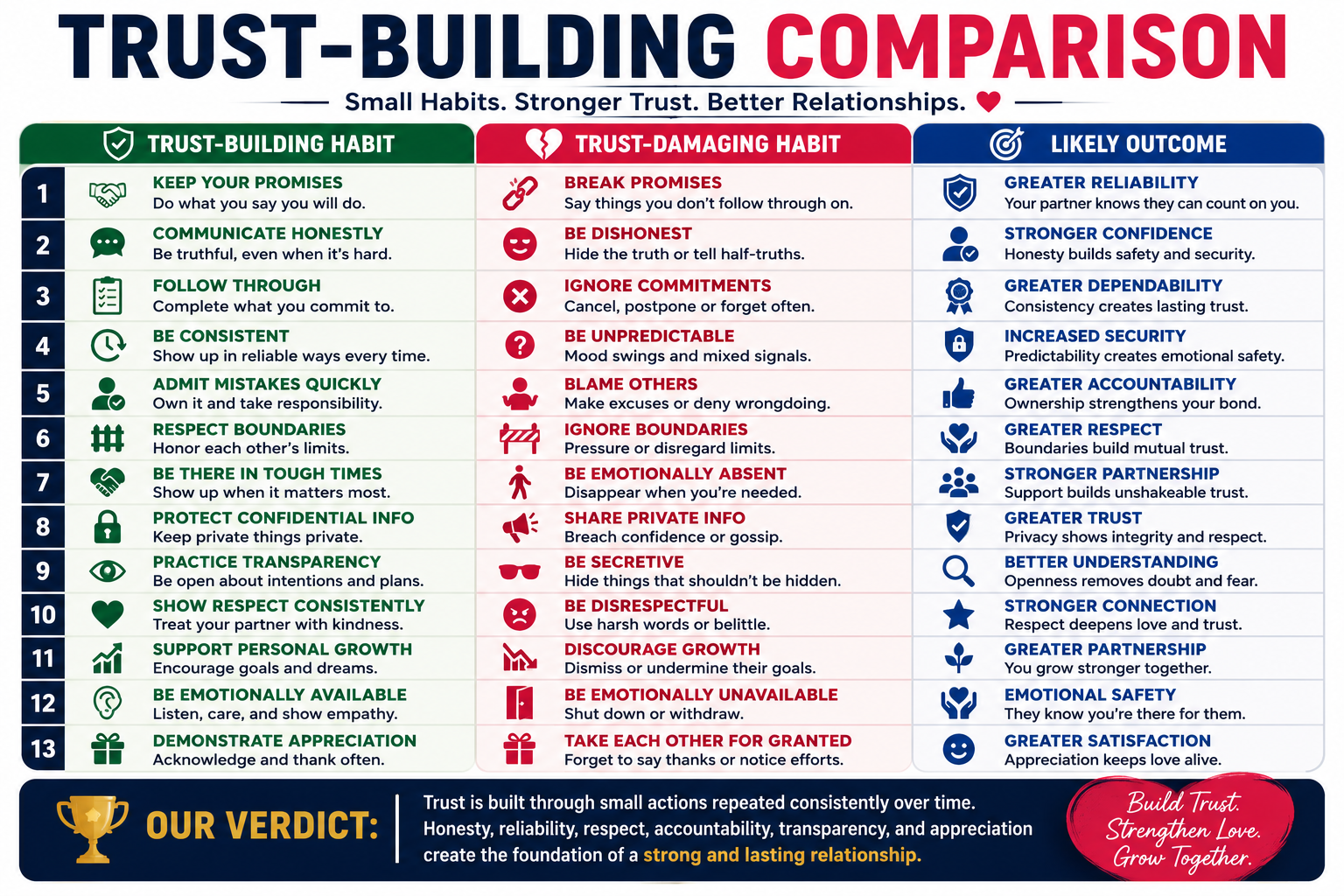
Trust-Building Comparison Table
Recommended Resources
Trust is built through consistent actions, honest communication, emotional safety, and mutual respect. The resources below will help you strengthen trust, deepen emotional connection, and build healthier, longer-lasting relationships.
• 13 Relationship Red Flags You Should Never Ignore
• How to Communicate Your Needs Without Starting Arguments
• 7 Ways Relationship Processes May Improve Communication, Trust and Personal Growth
• 11 Powerful Signs Your Relationship Is Growing Stronger
• Relationship Processes Review: Can Relationship Counter Intentions Affect Love and Connection?
• 13 Signs of a Healthy Relationship (And How to Build One)
• 11 Relationship Habits That Build Trust and Strengthen Connection
• 9 Communication Mistakes That Damage Relationships (And How to Fix Them)
• 15 Powerful Ways to Build Emotional Connection in a Relationship
• 9 Powerful Ways to Rebuild Trust After It Has Been Broken
Related Personal Growth Articles
• How to Build Self-Confidence Naturally: 10 Proven Strategies for Personal Growth
• What Is Personal Empowerment? 7 Ways to Take Control of Your Life
• How to Build Personal Power: 9 Practical Ways to Feel More Confident and in Control
• 7 Proven Strategies for Overcoming Limiting Beliefs and Personal Growth
Related Kevin Trudeau Programs
• Superpower Processes: 9 Powerful Benefits of Kevin Trudeau’s Live Training
• Money Processes: 9 Powerful Benefits of Kevin Trudeau’s Live Training
• Kevin Trudeau Products: 11 Popular Programs Reviewed in 2026
Additional Learning Resources
External Resources
Frequently Asked Questions
Q: What are trust-building habits?
A: Trust-building habits are consistent actions and behaviours that strengthen reliability, honesty, respect, and emotional safety within a relationship.
Q: Why is trust important in relationships?
A: Trust helps people feel secure, supported, and emotionally safe. It strengthens communication, emotional connection, intimacy, and long-term relationship satisfaction.
Q: Can trust be rebuilt after it has been broken?
A: In many cases, yes. Rebuilding trust often requires accountability, honest communication, patience, consistency, and a willingness to demonstrate trustworthy behaviour over time.
Q: What damages trust most often?
A: Common trust-damaging behaviours include dishonesty, broken promises, secrecy, disrespect, inconsistency, and repeatedly failing to follow through on commitments.
Q: How long does it take to build trust?
A: Trust develops gradually through repeated positive experiences and consistent behaviour. The timeline varies depending on the relationship and individual circumstances.
Build Trust That Lasts
Need a Flexible Payment Option?
Many participants choose a payment plan so they can begin strengthening trust, communication, and emotional connection sooner. Explore the available payment options and choose the option that best supports your relationship journey.
Final Thoughts
Trust building is not built through one conversation, one promise, or one grand gesture.
It develops through hundreds of small decisions made every day. Effective trust building requires honesty, consistency, accountability, respect, and a willingness to support each other through both challenges and successes.
Every honest conversation, fulfilled commitment, respectful interaction, act of support, and demonstration of reliability contributes to stronger trust over time.
The strongest relationships are not necessarily those without challenges. They are relationships where trust continues to grow because both people consistently demonstrate honesty, accountability, respect, and care.
By practicing the trust-building habits discussed in this guide, couples can strengthen communication, deepen emotional connection, and create healthier, more fulfilling relationships.
Trust grows when actions consistently match words and trust building becomes part of everyday life.
Keep showing up.
Keep being honest.
Keep being dependable.
And may your relationships become stronger with every trust-building habit you practice.
Trust Self-Assessment
Answer Yes or No.
• Do you consistently keep your promises?
• Do you communicate honestly with your partner?
• Do you feel emotionally safe together?
• Do you support one another during difficult times?
• Do you trust your partner’s intentions?
• Do you show appreciation regularly?
• Do you resolve disagreements respectfully?
• Do your daily actions strengthen trust?
If you answered “Yes” to four or more questions, your relationship demonstrates many of the habits associated with strong, lasting trust. Continue strengthening these habits through honesty, consistency, communication, and mutual respect.