11 Powerful Ways to Forgive and Move Forward in a Relationship

Forgiveness is not about pretending the past never happened. It is about choosing healing, growth, emotional freedom, and creating a healthier future together.
Every relationship experiences disappointment, misunderstandings, mistakes, and emotional pain at some point.
When trust has been damaged or someone has been hurt, moving forward can feel difficult. Many people find themselves replaying past events, holding onto resentment, or struggling to let go of emotional wounds.
Forgiveness does not mean pretending the hurt never happened. It does not mean excusing poor behaviour or ignoring healthy boundaries.
Instead, forgiveness is often a decision to stop allowing past pain to control the future.
Learning how to forgive and move forward can improve emotional wellbeing, strengthen relationships, reduce stress, and create opportunities for healing and growth.
This guide explores 11 powerful ways to forgive and move forward in a relationship while protecting your emotional health and creating a stronger future.
Table of Contents
What Does It Mean to Forgive and Move Forward?
Many people misunderstand forgiveness.
Forgiveness does not require forgetting what happened. It does not mean accepting repeated harmful behaviour or removing healthy boundaries.
Instead, forgiveness involves releasing the desire for revenge, reducing resentment, and choosing to focus on healing rather than remaining trapped by the past.
Moving forward means learning from the experience while continuing to build a healthier future.
For many people, forgiveness becomes an important step toward emotional freedom and personal growth.
"Forgiveness is not changing the past—it is choosing not to let the past control your future."
Kevin Trudeau's Teaching Tweet
11 Powerful Ways to Forgive and Move Forward
1. Accept What Happened
Healing often begins when people stop fighting reality.
Accepting what happened does not mean approving of it. It simply means acknowledging the situation honestly rather than denying, minimising, or avoiding it.
Acceptance creates a foundation for healing because people can begin working with reality instead of wishing the past had been different.
How to Apply This:
Focus on understanding what happened without becoming trapped in endless “what if” scenarios.
2. Allow Yourself to Feel Your Emotions
Forgiveness is often delayed when emotions are ignored or suppressed.
Feelings such as anger, sadness, disappointment, frustration, and grief are normal responses to emotional pain.
Allowing yourself to acknowledge these emotions can help them move through the healing process more effectively.
How to Apply This:
Give yourself permission to experience your emotions without judging yourself for having them.
3. Focus on Healing Rather Than Blame
Blame often keeps people emotionally connected to the pain they want to escape.
While accountability remains important, constantly focusing on blame may make it more difficult to heal and move forward.
Healing becomes easier when attention shifts from punishment toward recovery, growth, and future wellbeing.
How to Apply This:
Ask yourself what actions will help you heal rather than what actions will help you stay angry.
4. Understand That Forgiveness Is a Process
Many people expect forgiveness to happen immediately.
In reality, forgiveness often develops gradually over time.
Some days may feel easier than others, and emotional setbacks are normal.
Being patient with yourself allows the healing process to unfold naturally.
How to Apply This:
View forgiveness as a journey rather than a single decision.
5. Practice Empathy
Empathy involves trying to understand another person’s thoughts, feelings, and experiences.
While empathy does not excuse harmful behaviour, it can help people view situations with greater understanding and compassion.
Many conflicts become easier to heal when people are willing to consider perspectives beyond their own.
Empathy often reduces resentment and creates opportunities for healthier communication.
How to Apply This:
Ask yourself what challenges, emotions, or circumstances may have influenced the other person’s actions while still maintaining appropriate boundaries.
6. Let Go of the Desire for Revenge
One of the biggest obstacles to forgiveness is the desire to make someone else feel the same pain that you experienced.
While these feelings are understandable, holding onto them often prolongs emotional suffering.
Forgiveness becomes easier when people focus on healing rather than retaliation.
Letting go of revenge does not mean forgetting what happened. It means choosing not to allow anger to control future decisions.
How to Apply This:
Focus your energy on personal growth, healing, and creating a better future rather than trying to punish someone for the past.
7. Rebuild Trust Gradually
Forgiveness and trust are related, but they are not identical.
A person may choose to forgive while still requiring time for trust to be rebuilt.
Trust is often restored through consistent actions, honest communication, accountability, and reliability.
Healthy relationships allow trust to develop gradually rather than demanding immediate confidence.
How to Apply This:
Allow trust to grow through repeated positive experiences instead of expecting immediate certainty.
8. Focus on the Future You Want
Many people remain emotionally stuck because they spend most of their energy focused on what happened rather than what they want moving forward.
While understanding the past is important, healing often accelerates when people begin creating a positive vision for the future.
Focusing on future goals helps shift attention from pain toward growth and possibility.
How to Apply This:
Ask yourself what kind of relationship, mindset, and future you want to build moving forward.
9. Learn From the Experience
Painful experiences often contain valuable lessons.
While nobody enjoys being hurt, challenges can sometimes reveal important information about communication, boundaries, expectations, trust, and personal growth.
Learning from the experience helps transform pain into wisdom.
This mindset allows people to move forward stronger, wiser, and better prepared for future relationships.
How to Apply This:
Ask yourself what lessons the experience has taught you about relationships, communication, trust, and personal growth.
10. Strengthen Healthy Boundaries
Forgiveness should never require sacrificing self-respect or personal wellbeing.
Healthy boundaries help create emotional safety and reduce the likelihood of future problems.
Boundaries clarify expectations, protect emotional health, and encourage mutual respect.
Many people discover that stronger boundaries actually make forgiveness easier because they feel safer moving forward.
How to Apply This:
Identify the boundaries that will help you feel respected, supported, and emotionally secure.
11. Give Yourself Permission to Move Forward
Sometimes the final step in forgiveness is giving yourself permission to stop carrying the weight of the past.
Many people hold onto pain because they believe letting go somehow diminishes the significance of what happened.
In reality, moving forward is often an act of courage and self-care.
You can acknowledge the past, learn from it, and still choose a healthier future.
How to Apply This:
Remind yourself that healing does not erase the past. It simply allows you to move forward without being controlled by it.
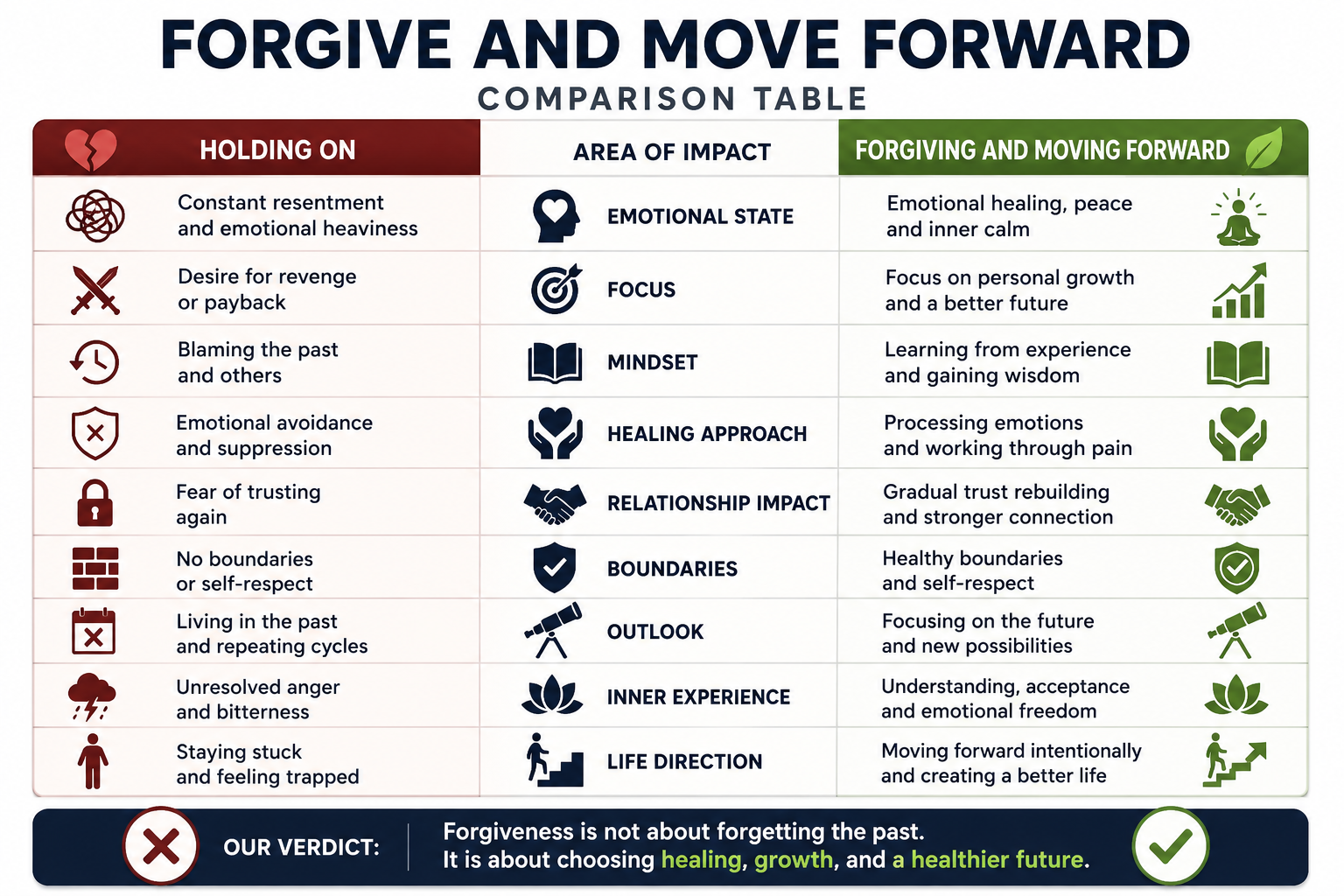
Forgiveness vs Holding On
Forgiveness is a process that allows emotional healing and relationship growth. Holding onto resentment often prevents trust and connection from developing.
| Holding On | Forgiveness |
|---|---|
| Resentment grows. | Emotional healing begins. |
| Trust remains broken. | Trust can gradually be rebuilt. |
| Conflict repeats. | Healthy communication improves. |
| Focus stays on the past. | Focus shifts toward the future. |
| Emotional distance increases. | Emotional connection becomes stronger. |
Forgiveness is not about pretending nothing happened. It is about choosing healing, growth, and creating a healthier relationship moving forward.
Common Obstacles to Forgiveness
Forgiveness is not always easy.
Some common obstacles include:
• Fear of being hurt again
• Unresolved anger
• Lack of accountability
• Repeated harmful behaviour
• Unrealistic expectations
• Difficulty trusting others
• Fear that forgiveness means weakness
Recognising these obstacles can help people approach forgiveness with greater awareness and realistic expectations.
Forgiveness is often strongest when combined with healthy boundaries, self-respect, and emotional wisdom.
Forgive and Move Forward Comparison Table
Recommended Resources
Forgiveness is one of the most powerful foundations of a healthy relationship. Combined with trust, communication, emotional awareness, and personal growth, it can help couples move forward and build a stronger future together.
• 11 Powerful Signs Your Relationship Is Growing Stronger
• Relationship Processes Review: Can Relationship Counter Intentions Affect Love and Connection?
• 13 Signs of a Healthy Relationship (And How to Build One)
• 9 Powerful Ways to Rebuild Trust After It Has Been Broken
• 13 Trust-Building Habits That Strengthen Relationships
• 11 Relationship Habits That Build Trust and Strengthen Connection
• 9 Communication Mistakes That Damage Relationships (And How to Fix Them)
• 15 Powerful Ways to Build Emotional Connection in a Relationship
Related Relationship Articles
• 11 Powerful Reasons Relationships Fail (And How to Avoid Them)
Related Personal Growth Articles
• How to Build Self-Confidence Naturally: 10 Proven Strategies for Personal Growth
• What Is Personal Empowerment? 7 Ways to Take Control of Your Life
• How to Build Personal Power: 9 Practical Ways to Feel More Confident and in Control
• 7 Proven Strategies for Overcoming Limiting Beliefs and Personal Growth
Related Kevin Trudeau Programs
• Superpower Processes: 9 Powerful Benefits of Kevin Trudeau’s Live Training
• Money Processes: 9 Powerful Benefits of Kevin Trudeau’s Live Training
• Kevin Trudeau Products: 11 Popular Programs Reviewed in 2026
Additional Learning Resources
External Resources
Frequently Asked Questions
Q: Does forgiveness mean forgetting what happened?
A: No. Forgiveness means releasing resentment and focusing on healing. It does not require forgetting the experience or removing healthy boundaries.
Q: Can I forgive someone and still be hurt?
A: Yes. Forgiveness is often a process. Emotional healing may continue long after the decision to forgive has been made.
Q: Is forgiveness a sign of weakness?
A: No. Forgiveness often requires significant emotional strength, self-awareness, and courage.
Q: Can a relationship recover after serious mistakes?
A: Many relationships recover when both people are willing to communicate honestly, take responsibility, rebuild trust, and work toward positive change.
Q: What if I am not ready to forgive yet?
A: That is normal. Forgiveness should not be rushed. Healing often happens gradually as emotions are processed and understanding develops.
Choose Forgiveness. Build a Stronger Future Together.
Need a Flexible Payment Option?
Many participants choose a payment plan so they can begin strengthening their relationships sooner. Explore the available payment options and choose the option that best supports your journey toward rebuilding trust, forgiveness, and emotional connection.
Final Thoughts
Learning to forgive and move forward is one of the most powerful gifts you can give yourself.
Forgiveness does not mean forgetting the past or accepting harmful behaviour. Instead, it means choosing healing, growth, and emotional freedom.
Every relationship experiences challenges, disappointments, and moments of pain. What often matters most is how people respond to those experiences moving forward.
By practicing empathy, processing emotions, strengthening boundaries, rebuilding trust, and focusing on future growth, it becomes possible to create healthier relationships and a more fulfilling life.
The past may shape your story, but it does not have to control your future.
Keep healing.
Keep growing.
Keep moving forward.
And remember that every step toward forgiveness is a step toward greater peace, strength, and emotional freedom.
Forgiveness Self-Assessment
Answer Yes or No.
• Are you willing to let go of resentment?
• Can you communicate openly about difficult experiences?
• Are both people committed to rebuilding trust?
• Are you able to acknowledge mistakes honestly?
• Do you want to strengthen your emotional connection?
• Can you focus on future growth rather than past hurt?
• Are your daily actions helping rebuild the relationship?
• Are you both committed to creating a healthier future together?
If you answered “Yes” to four or more questions, your relationship demonstrates many of the qualities that support forgiveness, healing, and long-term relationship growth.