
15 Powerful Ways to Build Emotional Connection in a Relationship

Many people assume that emotional connection happens naturally in a relationship. While attraction and compatibility may bring two people together, emotional connection is usually built through consistent actions, communication, and shared experiences over time.
A strong emotional connection helps people feel understood, valued, supported, and loved. It creates a sense of closeness that strengthens trust, communication, intimacy, and long-term relationship satisfaction.
Unfortunately, emotional connection can weaken when life becomes busy, communication decreases, or couples stop intentionally investing in their relationship.
The good news is that emotional connection can be strengthened. Small daily habits often create meaningful improvements in how connected couples feel to one another.
This guide explores 15 powerful ways to build emotional connection and strengthen your relationship.
What Is Emotional Connection?
Emotional connection is the feeling of being understood, accepted, valued, and emotionally close to another person.
It involves sharing thoughts, feelings, experiences, hopes, fears, and life experiences in ways that create trust and understanding.
When emotional connection is strong, people often feel safe expressing themselves honestly and openly.
Emotional connection is one of the most important foundations of a healthy and lasting relationship.
Why Emotional Connection Matters More Than Most People Realise
Many people focus on attraction, compatibility, or shared interests when evaluating a relationship. While those factors are important, emotional connection often plays an even greater role in long-term relationship satisfaction.
When people feel emotionally connected, they tend to experience greater trust, stronger communication, deeper intimacy, and increased relationship security.
Without emotional closeness, couples may begin to feel lonely even while spending significant time together.
A strong emotional bond helps people feel understood, valued, supported, and accepted. It creates the foundation for healthy communication, conflict resolution, and long-term commitment.
This is why many relationship experts consider emotional connection one of the most important predictors of relationship success.
15 Powerful Ways to Build Emotional Connection
1. Practice Active Listening
One of the fastest ways to strengthen emotional connection is to help your partner feel heard and understood.
Active listening involves giving your full attention, avoiding interruptions, asking questions, and showing genuine interest in what your partner is saying.
People often feel emotionally connected when they believe their thoughts and feelings matter.
Practical Tip:
Put away distractions and focus fully on the conversation.
2. Spend Quality Time Together
Emotional connection grows when couples spend meaningful time together.
Quality time allows people to create memories, strengthen communication, and maintain closeness despite life’s responsibilities.
The goal is not necessarily more time but more intentional time.
Practical Tip:
Schedule regular activities that encourage conversation and connection.
3. Share Your Thoughts and Feelings
Emotional connection requires openness and vulnerability.
People often feel closer when they share their experiences, concerns, dreams, and emotions honestly.
Authentic communication creates deeper understanding and trust.
Practical Tip:
Talk about how you feel rather than only discussing schedules, tasks, or responsibilities.
4. Show Appreciation Regularly
Feeling appreciated strengthens emotional bonds.
Simple expressions of gratitude help people feel valued and recognised.
Over time, consistent appreciation contributes significantly to relationship satisfaction.
Practical Tip:
Make it a habit to express genuine appreciation every day.
5. Ask Meaningful Questions
Many conversations focus only on schedules, responsibilities, and daily tasks.
While these discussions are necessary, emotional connection often grows through deeper conversations.
Meaningful questions encourage partners to share thoughts, experiences, goals, and feelings that might otherwise remain hidden.
Practical Tip:
Ask questions such as:
• What has been on your mind lately?
• What are you most excited about right now?
• What challenge are you currently facing?
These conversations help create deeper understanding and emotional intimacy.
6. Be Present During Conversations
One of the biggest challenges to emotional connection today is distraction.
Phones, television, work responsibilities, and social media can easily pull attention away from meaningful interactions.
Being fully present communicates that your partner is important and worthy of your attention.
Practical Tip:
Create technology-free moments each day where you can focus entirely on each other.
7. Support Each Other Through Challenges
Difficult times often reveal the strength of emotional connection.
People tend to feel closer when they know someone will support them during stressful or challenging situations.
Support creates trust, security, and emotional safety within a relationship.
Practical Tip:
Ask, “How can I support you?” instead of assuming what your partner needs.
8. Create Shared Experiences
Shared experiences create memories that strengthen emotional bonds.
Whether traveling, learning a new skill, exercising together, or simply trying something new, shared experiences help relationships remain fresh and engaging.
Novel experiences often increase feelings of closeness and connection.
Practical Tip:
Plan regular activities that both partners enjoy.
9. Express Affection Consistently
Affection helps reinforce emotional connection.
For some people, affection may involve physical touch. For others, it may include kind words, thoughtful gestures, encouragement, or acts of service.
Consistent expressions of affection remind people they are valued and loved.
Practical Tip:
Look for small opportunities each day to express care and appreciation.
10. Be Vulnerable
Vulnerability is one of the most powerful ways to strengthen emotional connection.
Sharing fears, concerns, hopes, insecurities, and personal experiences allows partners to understand each other on a deeper level.
While vulnerability can feel uncomfortable, it often creates stronger trust and intimacy.
Practical Tip:
Start by sharing something meaningful that you normally keep to yourself.
Common Signs Emotional Connection Is Weakening
Relationships rarely become disconnected overnight.
In many cases, emotional distance develops gradually through small habits and changes in behaviour.
Some common warning signs include:
• Conversations becoming shorter and less meaningful
• Spending less quality time together
• Feeling misunderstood or unheard
• Avoiding difficult conversations
• Increased distractions during interactions
• Reduced affection and appreciation
• Feeling emotionally lonely despite being together
Recognising these signs early provides an opportunity to strengthen the relationship before emotional distance becomes more difficult to reverse.
11. Celebrate Small Wins Together
Many people wait for major milestones before celebrating success. However, emotional connection often grows through acknowledging small victories along the way.
Celebrating progress together creates positive emotions, reinforces support, and strengthens feelings of partnership.
Whether it is a work achievement, fitness goal, personal breakthrough, or everyday accomplishment, recognition helps people feel valued and understood.
Practical Tip:
Make it a habit to celebrate progress, not just major achievements.
12. Learn Each Other's Love Language
People often express and receive love in different ways.
Some people value words of affirmation, while others feel loved through quality time, acts of service, thoughtful gifts, or physical affection.
Understanding how your partner experiences love can strengthen emotional connection and reduce misunderstandings.
Practical Tip:
Ask your partner what actions make them feel most appreciated and loved.
13. Handle Conflict With Respect
Conflict is a normal part of every relationship.
What strengthens emotional connection is not avoiding conflict but handling it respectfully.
Couples who focus on understanding, problem-solving, and mutual respect often emerge from disagreements feeling more connected rather than more distant.
Practical Tip:
Focus on solving the problem together instead of trying to win the argument.
14. Continue Learning About Each Other
People change over time. Goals, interests, priorities, and perspectives evolve throughout life.
Emotionally connected couples remain curious about each other rather than assuming they already know everything.
Continuing to learn about your partner helps maintain closeness and keeps relationships growing.
Practical Tip:
Regularly ask questions about your partner’s goals, interests, and current experiences.
15. Create a Shared Vision for the Future
Emotional connection often becomes stronger when couples feel they are moving in the same direction.
Shared goals, dreams, and future plans create a sense of purpose and partnership.
When people work toward a common future, they often feel more connected and committed to each other.
Practical Tip:
Discuss future goals regularly and explore ways to support each other’s aspirations.
How to Strengthen Connection When Life Gets Busy
One of the biggest challenges couples face is maintaining closeness while balancing work, family responsibilities, finances, and personal commitments.
Busy schedules can easily reduce the time and energy available for meaningful conversations and shared experiences.
Fortunately, strengthening a relationship does not always require dramatic changes.
Simple actions such as checking in emotionally, sharing meals together, expressing appreciation, and scheduling uninterrupted time can help maintain connection even during stressful periods.
Consistency is often more important than intensity. Small efforts made regularly usually have a greater impact than occasional grand gestures.
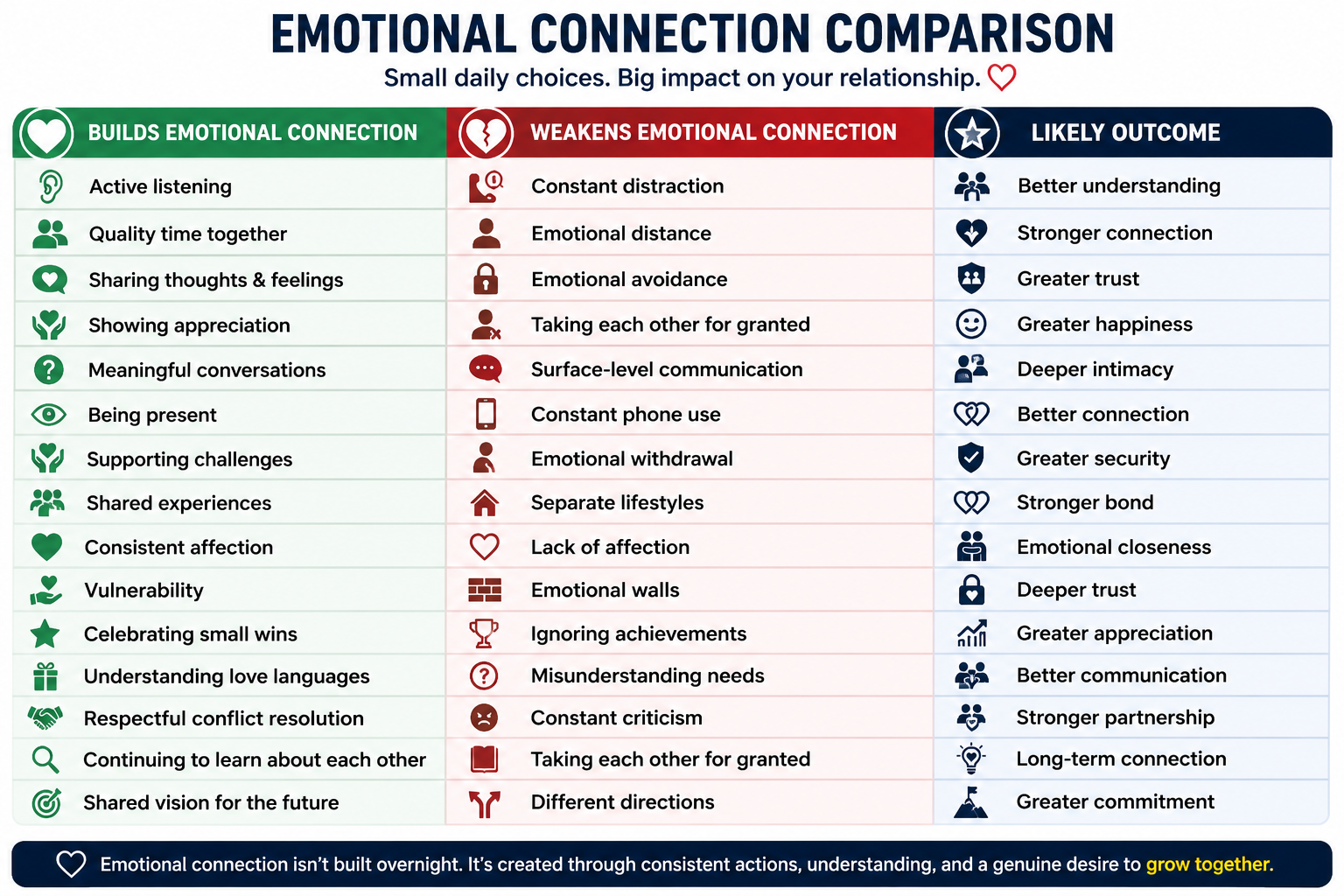
Emotional Connection Comparison Table
Recommended Resources
Strong emotional connection is built on trust, communication, appreciation, vulnerability, and healthy relationship habits.
• 11 Signs of Emotional Maturity in a Relationship
• 13 Relationship Red Flags You Should Never Ignore
• How to Communicate Your Needs Without Starting Arguments
• 7 Ways Relationship Processes May Improve Communication, Trust and Personal Growth
• 11 Powerful Signs Your Relationship Is Growing Stronger
• Relationship Processes Review: Can Relationship Counter Intentions Affect Love and Connection?
• Read 13 Signs of a Healthy Relationship (And How to Build One)
• Explore 11 Powerful Relationship Habits That Build Trust and Strengthen Connection
• Learn 9 Communication Mistakes That Damage Relationships (And How to Fix Them)
• Learn How to Build Self-Confidence Naturally
• Explore Overcoming Limiting Beliefs
• Discover What Is Personal Empowerment?
• Learn How Successful People Think Differently: Success Mindset Habits
• Explore Goal Setting: 9 Powerful Strategies to Achieve Your Goals Faster
• Read 11 Signs You Are Holding Yourself Back (And How to Break Free)
• Learn how beliefs influence outcomes in How Your Beliefs Affect Financial Success
• Explore Positive Psychology for relationship and wellbeing research
Frequently Asked Questions
Q: What is emotional connection in a relationship?
A: Emotional connection is the feeling of being understood, accepted, valued, and emotionally close to another person. It helps create trust, intimacy, and long-term relationship satisfaction.
Q: Why is emotional connection important?
A: Emotional connection strengthens trust, communication, intimacy, and overall relationship satisfaction. It helps people feel emotionally safe and supported.
Q: Can emotional connection be rebuilt?
A: Yes. Many couples can rebuild emotional connection through better communication, quality time, vulnerability, shared experiences, and consistent effort.
Q: What weakens emotional connection?
A: Common causes include poor communication, emotional withdrawal, constant distractions, lack of quality time, unresolved conflict, and taking each other for granted.
Q: How long does it take to build emotional connection?
A: Emotional connection develops over time through consistent actions and meaningful interactions. Small daily habits often create significant improvements.
Final Thoughts
Many people believe emotional connection should happen naturally. In reality, strong relationships are often built through intentional actions repeated consistently over time.
The strongest couples are not necessarily those who never experience challenges. They are couples who continue investing in communication, trust, appreciation, vulnerability, and shared experiences even when life becomes busy.
The strategies discussed in this guide are not complicated, but they are powerful when practiced consistently.
Small moments of listening, understanding, appreciation, and support can gradually strengthen trust and deepen the bond between two people.
Remember that connection is not created through perfection. It is created through presence, effort, and a genuine desire to understand and support one another.
Keep listening.
Keep learning.
Keep growing together.
And may your relationship become stronger through every meaningful conversation, shared experience, and act of connection.