11 Signs of Emotional Maturity in a Relationship
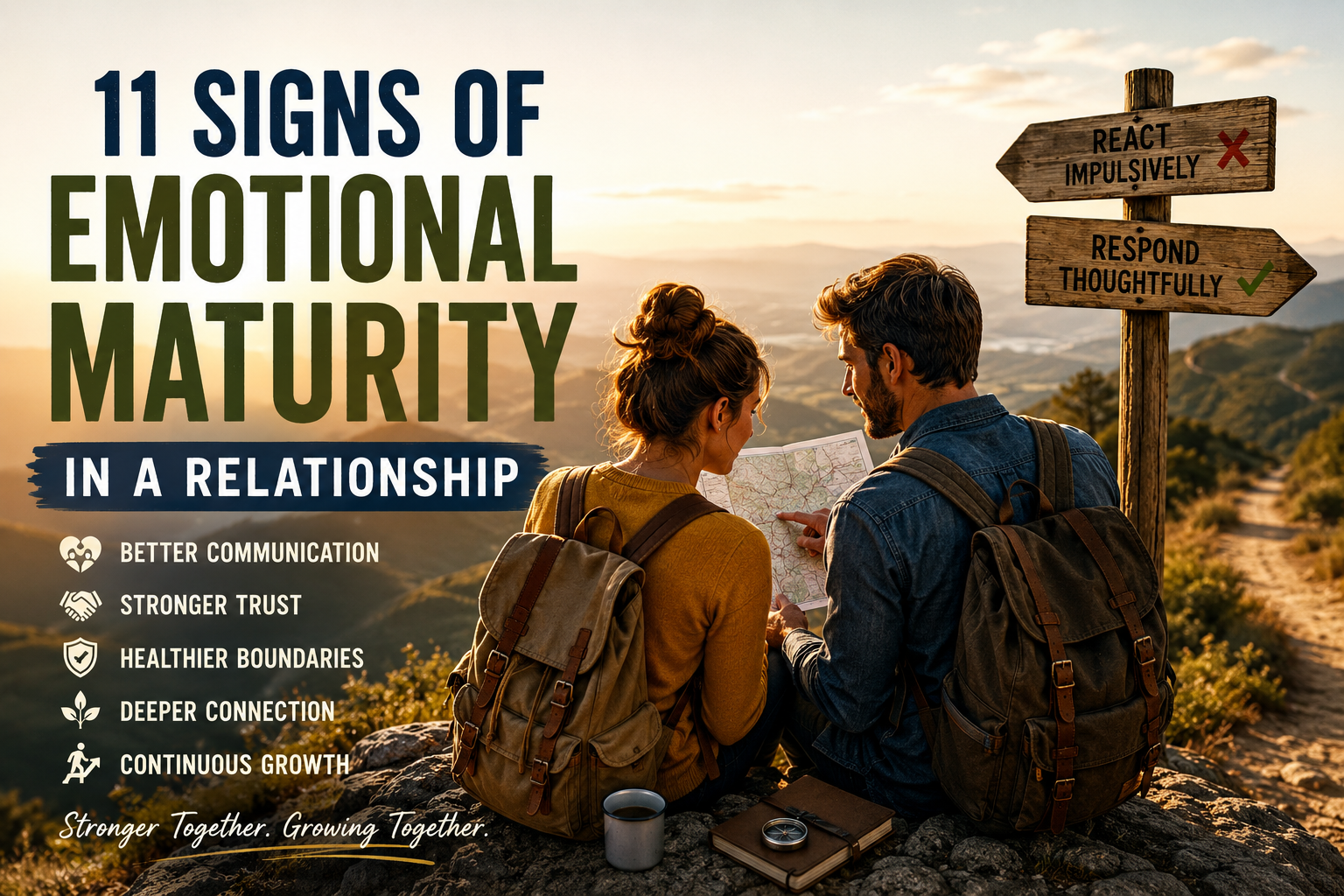
Emotional maturity is not about avoiding challenges. It is about communicating effectively, managing emotions responsibly, and choosing thoughtful responses that strengthen relationships over time.
Healthy relationships require more than love and attraction. They also require emotional maturity.
Emotional maturity influences how people communicate, handle conflict, manage emotions, take responsibility, and support one another through challenges.
Unfortunately, many relationship problems develop when people react impulsively, avoid accountability, struggle to communicate, or allow emotions to control their decisions.
Emotionally mature people are not perfect. They still make mistakes, experience frustration, and face difficulties. However, they approach these situations with greater self-awareness, responsibility, and emotional control.
Learning to recognize emotional maturity can help people build stronger relationships, improve communication, strengthen trust, and create healthier long-term partnerships.
This guide explores 11 signs of emotional maturity in a relationship and explains why these qualities are essential for lasting relationship success.
Table of Contents
What Is Emotional Maturity?
Emotional maturity is the ability to understand, manage, and express emotions in a healthy and responsible way.
Emotionally mature people recognize that emotions provide valuable information, but they do not allow emotions to control every decision they make.
They are generally more self-aware, accountable, adaptable, and respectful in their interactions with others.
In relationships, emotional maturity helps create trust, communication, emotional safety, and mutual respect.
While emotional maturity develops over time, it can be strengthened through self-awareness, personal growth, and intentional practice.
"Emotional maturity is not about never feeling strong emotions. It is about choosing how you respond to them."
Kevin Trudeau's Teaching Tweet
11 Signs of Emotional Maturity in a Relationship
1. They Take Responsibility for Their Actions
One of the clearest signs of emotional maturity is the willingness to accept responsibility for mistakes.
Emotionally mature people do not constantly blame circumstances, other people, or external factors when problems arise.
Instead, they acknowledge their role, learn from the experience, and focus on improving future behaviour.
Taking responsibility helps build trust because it demonstrates accountability and integrity.
How to Apply This:
When mistakes occur, focus on what you can learn and improve rather than searching for someone else to blame.
2. They Communicate Honestly and Respectfully
Healthy communication is a cornerstone of emotional maturity.
Emotionally mature people express their thoughts, needs, and concerns clearly while still respecting the feelings of others.
They avoid passive-aggressive behaviour, unnecessary hostility, and emotional manipulation.
Honest communication creates trust, reduces misunderstandings, and strengthens relationships.
How to Apply This:
Practice expressing concerns directly and respectfully rather than expecting others to guess what you are thinking.
3. They Manage Their Emotions Effectively
Emotionally mature people experience strong emotions just like everyone else.
The difference is that they develop healthy ways to manage those emotions without allowing them to control their behaviour.
Instead of reacting impulsively, they pause, reflect, and respond thoughtfully.
This emotional control often leads to better decision-making and healthier relationships.
How to Apply This:
When emotions feel overwhelming, take time to pause and reflect before responding.
4. They Listen to Understand
Many people listen with the goal of responding.
Emotionally mature people listen with the goal of understanding.
They make an effort to understand another person’s perspective rather than immediately defending themselves or preparing a counterargument.
This creates stronger communication, empathy, and connection.
How to Apply This:
During conversations, focus on understanding before focusing on being understood.
5. They Accept Feedback Without Becoming Defensive
Nobody enjoys criticism, but emotionally mature people understand that feedback can be an opportunity for growth.
Instead of immediately becoming defensive, they listen carefully, consider the information, and evaluate whether improvements can be made.
This does not mean accepting every criticism as accurate. It means being willing to reflect honestly before reacting.
Relationships often become stronger when both people can discuss concerns without fear of immediate defensiveness.
How to Apply This:
When receiving feedback, focus first on understanding the message before deciding whether you agree with it.
6. They Respect Differences
Emotionally mature people recognize that healthy relationships do not require complete agreement on every topic.
Differences in opinions, interests, backgrounds, and perspectives are normal.
Rather than trying to control or change others, emotionally mature individuals show respect even when disagreements occur.
Respecting differences helps create trust, emotional safety, and stronger long-term relationships.
How to Apply This:
Practice accepting that people can have different views while still deserving respect and understanding.
7. They Focus on Solutions Rather Than Blame
When challenges arise, emotionally mature people concentrate on solving the problem instead of assigning blame.
Blame often keeps people stuck in conflict, while solution-focused thinking encourages progress.
This approach helps couples work as a team rather than viewing each other as opponents.
Emotionally mature relationships prioritize cooperation, learning, and growth.
How to Apply This:
Ask yourself, “What can we do to improve this situation?” rather than “Whose fault is this?”
8. They Maintain Healthy Boundaries
Emotional maturity includes understanding the importance of healthy boundaries.
Boundaries help protect emotional wellbeing, create respect, and encourage personal responsibility.
Emotionally mature people communicate their needs clearly while also respecting the boundaries of others.
Healthy boundaries strengthen relationships because they create trust, safety, and clarity.
How to Apply This:
Communicate personal limits respectfully and consistently while honoring the boundaries established by others.
9. They Are Willing to Apologize and Make Amends
Emotionally mature people understand that mistakes are a normal part of life and relationships.
Instead of avoiding accountability, they are willing to apologize sincerely when they have caused harm.
More importantly, they focus on changing behaviour and making amends rather than simply saying the right words.
A genuine apology demonstrates humility, responsibility, and a commitment to growth.
How to Apply This:
When you make a mistake, acknowledge it honestly, apologize sincerely, and focus on actions that rebuild trust.
10. They Show Empathy and Compassion
Empathy is one of the strongest indicators of emotional maturity.
Emotionally mature people make an effort to understand the feelings, experiences, and perspectives of others.
They recognize that everyone faces challenges and that compassion often strengthens relationships more effectively than judgment.
Empathy helps create emotional safety and deeper connection.
How to Apply This:
Practice seeing situations from another person’s perspective before forming conclusions or reacting emotionally.
11. They Continue Growing and Learning
Emotionally mature people recognize that personal growth never truly ends.
They remain open to learning, improving, and developing greater self-awareness throughout life.
Rather than believing they already know everything, they approach challenges with curiosity and a willingness to grow.
This growth mindset often leads to healthier relationships and greater long-term happiness.
How to Apply This:
Commit to lifelong learning, self-reflection, and continuous personal development.
Emotionally Mature vs Emotionally Reactive Behaviours
Emotional maturity is reflected in everyday behaviours that strengthen trust, communication, and emotional safety.
| Emotionally Reactive | Emotionally Mature |
|---|---|
| Blames others. | Accepts personal responsibility. |
| Interrupts during conversations. | Listens with empathy. |
| Avoids difficult conversations. | Communicates honestly and respectfully. |
| Acts impulsively. | Responds thoughtfully. |
| Holds onto resentment. | Chooses forgiveness and growth. |
Developing emotional maturity is an ongoing process that strengthens relationships through patience, empathy, accountability, and healthy communication.
Common Signs of Emotional Immaturity
Understanding emotional maturity becomes easier when we recognize the behaviours that often reflect emotional immaturity.
Common signs may include:
• Constant blaming
• Difficulty accepting responsibility
• Frequent defensiveness
• Impulsive reactions
• Emotional manipulation
• Poor communication
• Refusal to compromise
• Lack of empathy
• Avoiding difficult conversations
Recognizing these patterns can help people identify areas for personal growth and relationship improvement.
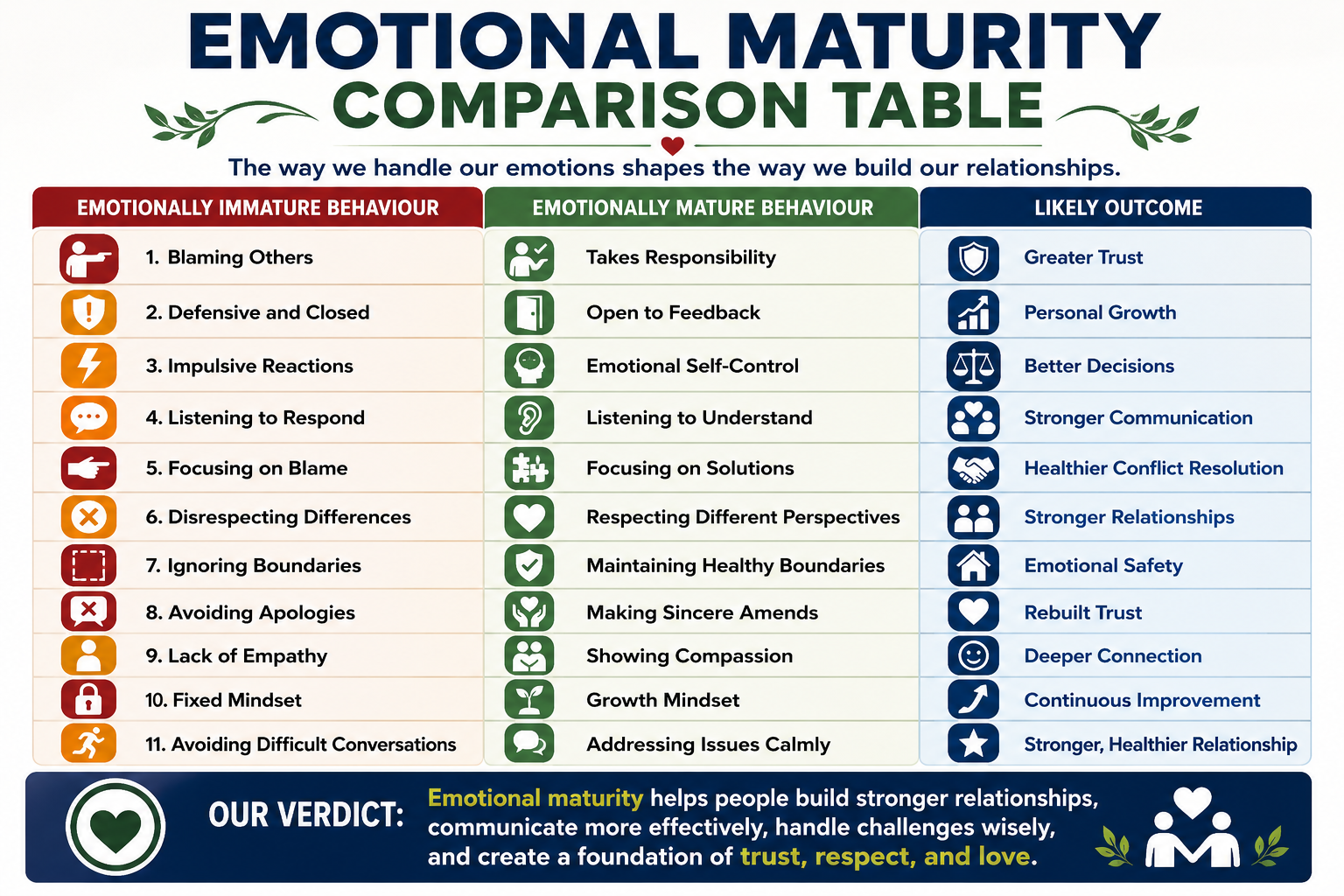
Emotional Maturity Comparison Table
Recommended Resources
Emotional maturity is one of the strongest foundations of a healthy, lasting relationship. The resources below will help you strengthen communication, emotional intelligence, trust, and the habits that build deeper, more meaningful relationships.
• 11 Powerful Signs Your Relationship Is Growing Stronger
• Relationship Processes Review: Can Relationship Counter Intentions Affect Love and Connection?
• 13 Signs of a Healthy Relationship (And How to Build One)
• 11 Relationship Habits That Build Trust and Strengthen Connection
• 13 Trust-Building Habits That Strengthen Relationships
• 9 Communication Mistakes That Damage Relationships (And How to Fix Them)
• 15 Powerful Ways to Build Emotional Connection in a Relationship
• 9 Powerful Ways to Rebuild Trust After It Has Been Broken
Related Relationship Articles
• 11 Powerful Ways to Forgive and Move Forward in a Relationship
• 9 Powerful Relationship Boundaries That Create Respect and Trust
• 11 Powerful Reasons Relationships Fail (And How to Avoid Them)
Related Personal Growth Articles
• How to Build Self-Confidence Naturally: 10 Proven Strategies for Personal Growth
• What Is Personal Empowerment? 7 Ways to Take Control of Your Life
• How to Build Personal Power: 9 Practical Ways to Feel More Confident and in Control
• How Successful People Think Differently: 7 Success Mindset Habits
• 7 Proven Strategies for Overcoming Limiting Beliefs and Personal Growth
Related Kevin Trudeau Programs
• Superpower Processes: 9 Powerful Benefits of Kevin Trudeau’s Live Training
• Money Processes: 9 Powerful Benefits of Kevin Trudeau’s Live Training
• Kevin Trudeau Products: 11 Popular Programs Reviewed in 2026
Additional Learning Resources
External Resources
Frequently Asked Questions
Q: What is emotional maturity?
A: Emotional maturity is the ability to understand, manage, and express emotions in a healthy and responsible way while maintaining respect for others.
Q: Why is emotional maturity important in relationships?
A: Emotional maturity helps improve communication, strengthen trust, reduce conflict, increase empathy, and create healthier relationships.
Q: Can emotional maturity be developed?
A: Yes. Emotional maturity can be strengthened through self-awareness, personal growth, reflection, communication, and life experience.
Q: What are signs of emotional immaturity?
A: Common signs include blaming others, defensiveness, emotional manipulation, impulsive reactions, poor communication, and difficulty accepting responsibility.
Q: How does emotional maturity affect relationship success?
A: Emotionally mature people are often better equipped to handle conflict, communicate effectively, maintain healthy boundaries, and build long-term trust.
Develop Greater Emotional Maturity Together
Need a Flexible Payment Option?
Many participants choose a payment plan so they can begin strengthening their relationships sooner. Explore the available payment options and choose the option that best supports your journey toward greater emotional maturity, healthier communication, and lasting trust.
Final Thoughts
Emotional maturity is one of the most valuable qualities a person can bring into a relationship.
While love, attraction, and compatibility are important, long-term relationship success often depends on how people communicate, handle challenges, manage emotions, and support one another during difficult times.
Emotionally mature people are not perfect. They make mistakes, experience setbacks, and face challenges like everyone else.
The difference is that they take responsibility, remain open to growth, communicate respectfully, and focus on solutions rather than blame.
By developing emotional maturity, people can strengthen trust, improve communication, deepen emotional connection, and create healthier relationships built on respect and understanding.
Strong relationships are not built by perfect people.
They are built by people who are willing to learn, grow, and mature together.
Emotional Maturity Self-Assessment
Answer Yes or No.
• Do you remain calm during disagreements?
• Do you listen without interrupting?
• Can you accept responsibility for your mistakes?
• Do you communicate your feelings honestly?
• Do you respect your partner’s perspective?
• Can you forgive and move forward after conflict?
• Do your actions consistently build trust?
• Are you committed to growing together as a couple?
If you answered “Yes” to four or more questions, your relationship demonstrates many of the qualities associated with emotional maturity. Continue strengthening these habits through empathy, communication, accountability, and mutual respect.